

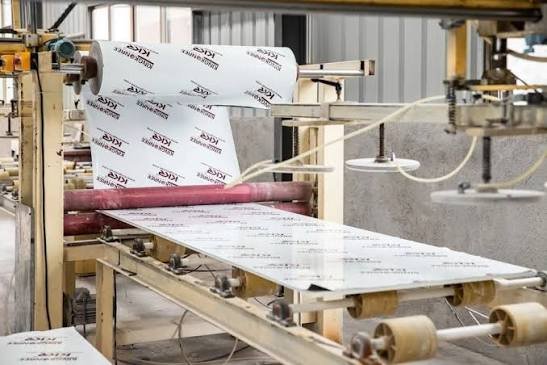
Selecting the right solid surface manufacturer is an important decision for construction companies, interior designers, distributors, and commercial project developers. The quality of the finished material can influence the appearance, durability, maintenance requirements, and overall success of an installation. With different suppliers offering similar product categories, buyers need to look beyond price and evaluate the capabilities behind the products.
A professional manufacturer should provide more than standard solid surface sheets. Reliable production systems, consistent material quality, technical knowledge, customization options, and dependable customer support all contribute to a successful purchasing experience. Understanding what distinguishes a capable Solid Surface Manufacturer can help buyers identify suppliers that are better equipped to meet their project requirements.
1. Consistent Product Quality
Product consistency is one of the most important qualities to evaluate when selecting a manufacturer. Solid surface materials should maintain reasonably uniform characteristics across different production batches.
Variations in color, thickness, texture, or surface finish can create difficulties during installation, particularly in large commercial projects that require multiple sheets or coordinated components.
A professional manufacturer should have procedures for monitoring product quality throughout production. These may include raw material inspections, formulation controls, dimensional checks, and final visual assessments.
Buyers should request samples and compare them with the manufacturer’s stated specifications before placing large orders.
2. Experience in Solid Surface Manufacturing
Manufacturing experience can provide valuable insight into a supplier’s ability to manage different product requirements.
Experienced manufacturers are more likely to understand the technical challenges associated with material formulation, curing, surface finishing, and customized fabrication. They may also have experience supplying products for residential, hospitality, healthcare, retail, and commercial construction projects.
When assessing experience, consider:
- How long the company has operated in the industry
- Which types of solid surface products it manufactures
- Whether it serves domestic and international markets
- Its experience with customized orders
- The types of projects it has supplied
- Its knowledge of different application requirements
A company’s experience should be evaluated alongside its current equipment, quality procedures, and demonstrated production capabilities.
3. Advanced Manufacturing Equipment
Modern production equipment can improve manufacturing accuracy, efficiency, and repeatability.
A well-equipped facility may use automated mixing systems, controlled molding equipment, precision cutting machines, and specialized sanding or polishing tools.
These technologies can help manufacturers maintain consistent dimensions, reduce manual errors, and handle more complex production requirements.
However, advanced machinery alone does not guarantee quality. Equipment must be properly maintained and operated by trained personnel. Buyers should therefore consider both the technology available and the manufacturer’s ability to use it effectively.
4. Knowledge of Raw Materials and Formulation
Solid surface products are engineered using combinations of resins, mineral fillers, pigments, and other additives. The selection and proportioning of these ingredients influence the final material’s characteristics.
A professional manufacturer should understand how different formulations affect appearance, workability, surface properties, and intended applications.
Important questions include:
- What resin systems are used?
- Which mineral fillers are included?
- How are raw materials inspected?
- How are formulations controlled?
- Are product specifications available?
- Can the manufacturer explain differences between product grades?
Clear technical information helps buyers understand what they are purchasing rather than relying entirely on appearance or marketing descriptions.
5. Strong Quality Control Procedures
Quality control should be integrated into every stage of manufacturing. A supplier that only inspects products at the end of production may overlook problems that could have been detected earlier.
Professional manufacturers typically establish inspection procedures for incoming materials, production operations, finished sheets, and customized components.
Depending on the product and its intended use, quality checks may cover:
- Sheet thickness and dimensions
- Surface smoothness
- Color consistency
- Visible defects
- Hardness
- Flexural performance
- Chemical resistance
- Water absorption
Buyers should ask about the manufacturer’s inspection standards and request relevant test reports where necessary. If a project requires compliance with particular standards, the supplier should be able to provide applicable documentation.
6. Wide Product Range and Application Knowledge
A capable manufacturer should offer products that address different design and construction requirements.
Solid surface materials are used in many applications, including kitchen countertops, bathroom vanities, reception desks, wall panels, commercial washroom fixtures, and integrated sinks.
A broad product range can make it easier for buyers to source coordinated materials from one supplier. However, variety is valuable only when products are supported by suitable specifications and consistent quality.
Application knowledge is equally important. A manufacturer should understand how factors such as moisture exposure, cleaning routines, usage intensity, and installation conditions influence material selection.
7. Customization and Design Flexibility
Many construction and interior design projects require products that differ from standard dimensions or designs.
Customization capabilities allow manufacturers to accommodate specific colors, thicknesses, dimensions, shapes, and surface finishes. Some may also produce customized basins, sinks, vanity tops, and other molded components.
When evaluating customization services, consider whether the manufacturer can provide:
- Custom color development
- Special dimensions and thicknesses
- Different surface finishes
- Integrated product designs
- Curved or shaped components
- Project-specific fabrication
- Prototype or sample development
Buyers should also clarify minimum order quantities, sample approval procedures, tooling requirements, and production lead times before confirming a customized order.
8. Reliable Production Capacity
Production capacity is especially important for distributors, contractors, and developers managing large projects.
A manufacturer should have sufficient equipment, workforce, raw material availability, and production planning systems to fulfill orders within the agreed schedule.
Buyers should evaluate whether the supplier can manage both regular orders and periods of increased demand.
Useful questions include:
- What is the standard production capacity?
- Can the facility handle large-volume orders?
- How are production schedules organized?
- What happens if demand increases?
- Are customized orders included in the stated lead time?
- How does the manufacturer manage production delays?
A realistic production commitment is more valuable than an ambitious delivery promise that cannot be supported by the facility’s resources.
9. Relevant Certifications and Technical Documentation
Certifications and technical documents can help buyers evaluate a manufacturer’s management systems and product performance.
Depending on the manufacturer and target market, relevant documentation may include quality management certifications, environmental management certifications, product test reports, and declarations of compliance with applicable standards.
It is important to distinguish between company-level certifications and product-specific testing. A management system certificate does not automatically prove that every product meets a particular technical requirement.
Before purchasing, buyers should check:
- Whether certificates are current
- Which organization issued them
- What facilities or processes they cover
- Whether test reports identify the relevant product
- Whether the documentation matches the destination market’s requirements
This verification is particularly important for commercial projects with formal procurement specifications.
10. Competitive and Transparent Pricing
Price is an important consideration, but the lowest quotation does not always represent the best overall value.
Manufacturing costs may depend on raw material composition, product thickness, color complexity, finishing requirements, order quantity, and customization. Packaging and transportation can also affect the final purchasing cost.
A professional supplier should provide a clear quotation that explains the main cost components.
Buyers should compare quotations based on equivalent specifications, including material type, dimensions, finish, quantity, and included services.
Transparent pricing makes it easier to identify differences between suppliers and reduces the risk of unexpected expenses during production or delivery.
11. Skilled Technical and Production Teams
Manufacturing equipment is only one part of a successful production operation. Skilled personnel are essential for controlling processes, maintaining machinery, inspecting products, and solving technical problems.
A professional manufacturer should employ staff with relevant knowledge of material preparation, production management, quality inspection, and product development.
Technical teams can also support buyers by explaining product specifications, identifying suitable materials, and providing guidance on fabrication or installation considerations.
This expertise becomes particularly valuable when projects involve customized designs or unusual application requirements.
12. Responsive Communication and Customer Support
Clear communication helps prevent misunderstandings throughout the purchasing process.
A reliable manufacturer should respond to technical questions, provide accurate product information, and communicate changes that may affect production or delivery schedules.
Good customer support may include:
- Product selection assistance
- Sample coordination
- Quotation preparation
- Technical documentation
- Order progress updates
- Shipping coordination
- Assistance with product-related concerns
International buyers should also consider language support, communication time differences, and the availability of a consistent contact person.
13. Safe Packaging and Export Experience
For buyers sourcing solid surface materials internationally, packaging and shipping experience are essential.
Sheets and customized components can be damaged by impacts, poor stacking, moisture exposure, or inadequate handling during transportation.
A professional manufacturer should use packaging appropriate for the product’s size, weight, shape, and shipping method.
Depending on the order, protective films, foam, corner guards, reinforced cartons, pallets, or wooden crates may be required.
Export experience is another useful advantage. Manufacturers familiar with international shipments are generally better prepared to coordinate documentation, packaging requirements, freight arrangements, and delivery schedules.
14. Commitment to Continuous Improvement
The solid surface industry continues to respond to changing design preferences, construction requirements, and production technologies.
Professional manufacturers should be willing to improve their processes and product offerings over time.
Continuous improvement may involve:
- Updating production equipment
- Refining material formulations
- Improving quality inspection methods
- Developing new colors and patterns
- Reducing material waste
- Improving energy efficiency
- Strengthening employee training
A commitment to improvement can help manufacturers remain competitive and respond more effectively to evolving customer expectations.
15. A Practical Checklist for Comparing Manufacturers
Before making a final decision, buyers can use a structured checklist to compare potential suppliers.
| Evaluation area | What to verify |
|---|---|
| Product quality | Consistent dimensions, finish, and appearance |
| Manufacturing experience | Relevant industry and project experience |
| Equipment | Suitable and maintained production machinery |
| Raw materials | Clear composition and sourcing information |
| Quality control | Documented inspection and testing procedures |
| Customization | Ability to meet specific design requirements |
| Production capacity | Realistic order volumes and lead times |
| Certifications | Valid and relevant technical documentation |
| Pricing | Clear quotations based on comparable specifications |
| Customer service | Responsive communication and technical support |
| Shipping | Appropriate packaging and export experience |
Comparing suppliers against the same criteria makes the selection process more objective and helps buyers identify strengths and potential weaknesses.
Conclusion
Choosing a professional solid surface manufacturer requires careful evaluation of product quality, manufacturing experience, production technology, raw material knowledge, and quality control procedures. Customization capabilities, production capacity, technical documentation, pricing transparency, and customer support are also important factors.
Rather than focusing exclusively on product appearance or initial cost, buyers should examine how consistently a manufacturer can meet technical specifications and fulfill project requirements. Reviewing samples, checking documentation, asking detailed questions, and comparing suppliers using clear criteria can reduce purchasing risks.
A manufacturer with reliable production processes and a commitment to quality can become a valuable long-term partner for distributors, contractors, architects, and businesses working with solid surface materials.