

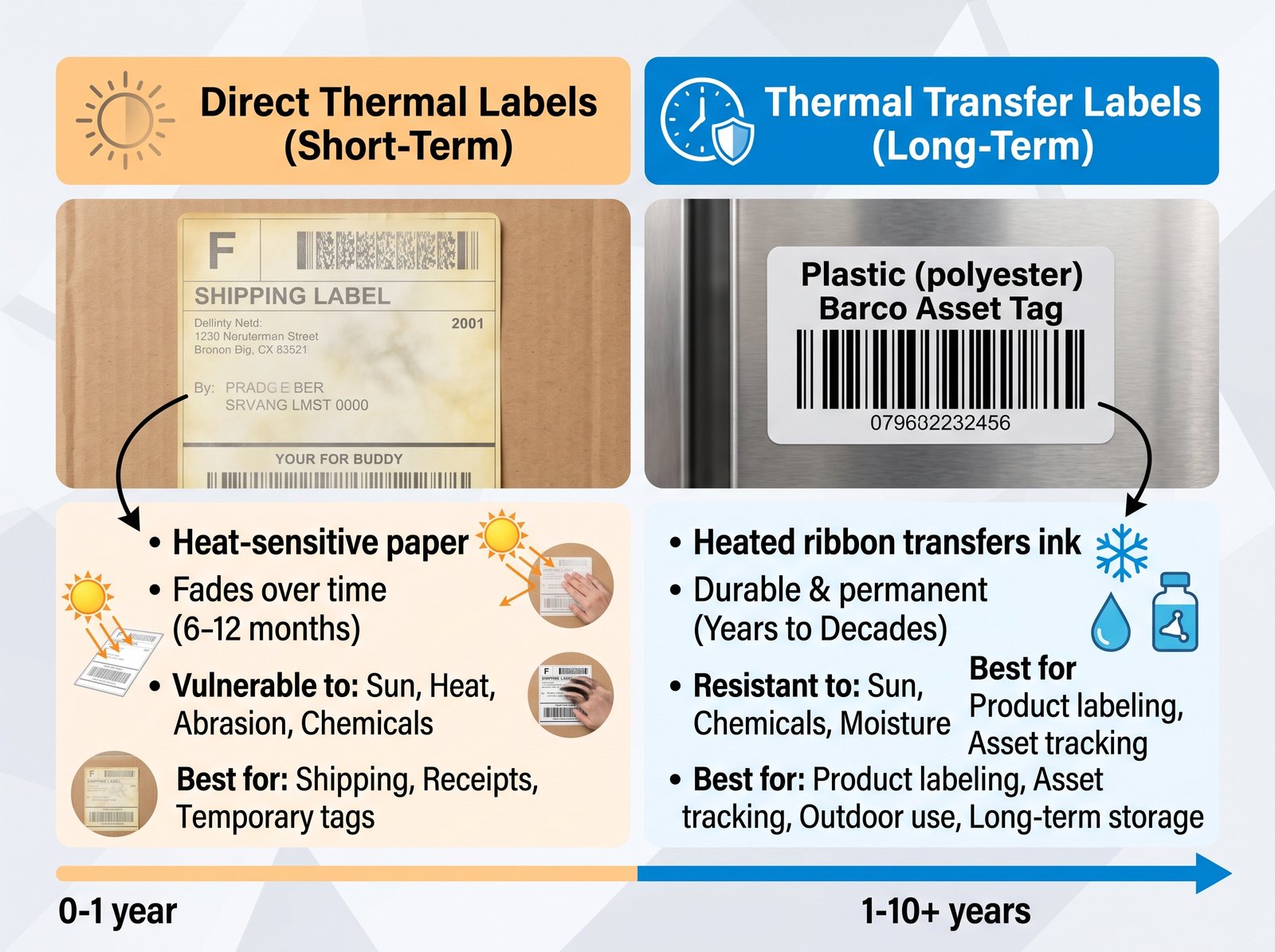
The lifespan of a printed label depends on more than the printer itself. Label material, printing technology, storage conditions, exposure to heat and sunlight, and the purpose of the label all influence how long the information remains readable.
A thermal label printer may use direct thermal or thermal transfer technology, and the two methods have different durability characteristics. A shipping label that only needs to remain readable for a few days has very different requirements from an equipment label expected to last for several years.
What Determines Label Lifespan?
There is no single lifespan that applies to every thermal label. The conditions surrounding the label matter just as much as the printing method.
Several factors can affect how long the printed information remains clear:
- Printing technology
- Label material
- Ribbon type, when applicable
- Heat exposure
- Sunlight and UV exposure
- Moisture
- Chemicals
- Friction and handling
- Storage conditions
Understanding these factors helps you select the right combination of printer and media for your application.
Direct Thermal Label Lifespan
Direct thermal labels contain a heat-sensitive coating that creates the printed image when heated by the printhead. This eliminates the need for a ribbon.
The limitation comes from the same heat-sensitive coating that makes the printing process possible. The image can gradually fade or change when exposed to environmental factors.
Direct thermal labels often work well for short-term applications such as shipping, delivery, receipts, tickets, and temporary inventory identification.
What Can Cause Direct Thermal Labels to Fade?
Heat remains one of the biggest concerns. Prolonged exposure to high temperatures can darken or degrade the label surface.
Direct sunlight and UV exposure can also affect readability. Frequent rubbing or contact with chemicals may further shorten the useful life of the printed image.
Thermal Transfer Label Lifespan
Thermal transfer printing uses a ribbon to transfer ink onto the label material. The finished image does not depend on a heat-sensitive coating in the same way as direct thermal printing.
This allows thermal transfer systems to produce labels with greater resistance to environmental conditions when you select suitable ribbons and media.
For this reason, thermal transfer often suits applications that require labels to remain readable for long periods.
How Long Can Thermal Transfer Labels Last?
The answer depends on the combination of materials and the environment. A durable synthetic label paired with an appropriate resin ribbon may withstand demanding conditions much better than a basic paper label.
Applications that require multi-year durability may use specialized media designed for resistance to abrasion, moisture, chemicals, or outdoor exposure.
The printer alone does not determine durability. The ribbon and label material play equally important roles.
Does Label Material Affect Lifespan?
Yes. Paper and synthetic materials behave differently under environmental stress.
Paper labels may work well for indoor applications with moderate conditions. Synthetic materials can provide greater resistance when labels face moisture, handling, or other demanding conditions.
When selecting media, consider where the label will remain and how long you expect it to stay attached and readable.
How Does Heat Affect Thermal Labels?
Heat can have a particularly strong effect on direct thermal media because the printing process depends on a heat-sensitive coating.
Storing or using these labels near heat sources can cause unwanted darkening or fading. Avoid placing direct thermal labels in areas with temperatures outside the media manufacturer’s recommended range.
Thermal transfer labels generally handle heat better, but their performance still depends on the selected label and ribbon combination.
What About Sunlight and UV Exposure?
Direct sunlight can gradually affect printed labels. Ultraviolet radiation may cause fading, particularly when labels remain outdoors or near windows for extended periods.
If the label must remain outdoors, select media and printing materials designed for outdoor exposure. Thermal transfer printing with suitable synthetic media may provide better results for these applications.
Can Water Damage Thermal Labels?
Moisture resistance varies considerably between label materials. Basic paper labels may absorb water and lose their appearance or adhesion.
Water-resistant synthetic labels can provide better performance in damp environments. However, the adhesive also matters because a label needs to remain attached as well as readable.
For refrigerated, frozen, or wet applications, choose media specifically designed for those conditions.
Does Friction Affect Label Durability?
Frequent rubbing can damage the printed surface, especially when using labels designed for short-term applications.
This matters for equipment, containers, tools, and products that experience regular handling.
Thermal transfer printing can provide better abrasion resistance when paired with an appropriate ribbon and durable label material.
How Should Thermal Labels Be Stored?
Proper storage can help preserve unused labels before they enter the printer.
Keep label rolls in a clean, dry environment away from excessive heat and direct sunlight. Follow the media manufacturer’s recommended storage conditions.
Avoid storing rolls where they may become wet, crushed, contaminated, or exposed to extreme temperature changes.
How Do You Choose Labels for Long-Term Use?
Start by identifying the conditions the label will face throughout its expected lifespan.
For long-term applications, consider:
- Synthetic label materials
- Thermal transfer printing
- Suitable resin or wax-resin ribbons
- Resistance to moisture
- Resistance to abrasion
- Chemical resistance
- Outdoor or UV exposure requirements
The exact combination depends on the application. A laboratory label may need chemical resistance, while an outdoor equipment label may need strong UV and weather resistance.
How Can You Test Label Durability?
If durability matters, conduct a practical test before ordering large quantities. Print samples using the intended printer, ribbon, and label material.
Place the samples in conditions similar to their actual environment. Check them periodically for fading, smearing, peeling, cracking, or loss of readability.
This approach provides a more useful indication of performance than relying solely on general claims about label lifespan.
Final Thoughts
Thermal labels do not have one universal lifespan. Direct thermal labels often suit temporary applications, while thermal transfer labels can provide much greater durability when paired with appropriate media and ribbons.
Consider the label’s environment, expected service life, exposure to heat or moisture, and amount of handling before choosing your printing method. Matching the printer technology with the right label material can help keep important information readable for as long as you need it.