

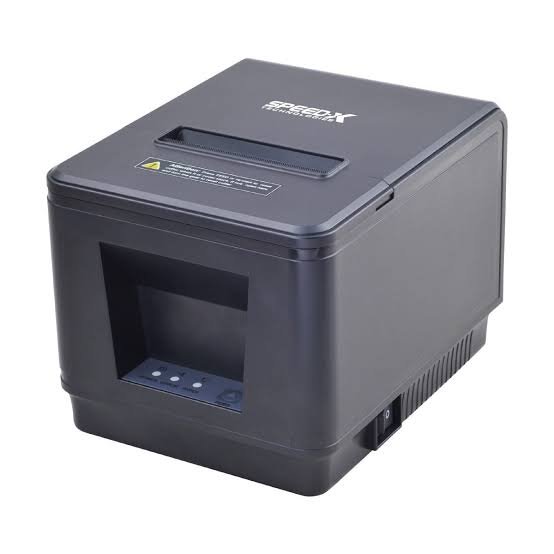
Thermal printing technology continues to evolve as businesses demand faster, more reliable, and more adaptable printing solutions. Retailers, logistics companies, healthcare providers, and industrial organizations increasingly depend on printed receipts, product labels, shipping information, and identification tags. These applications create opportunities for manufacturers to improve printer performance while responding to changing business requirements.
The future of the industry will be influenced by developments in electronics, connectivity, materials, automation, and software integration. A forward-looking Thermal Printer Manufacturer must evaluate these innovations and determine how they can improve product reliability, manufacturing efficiency, and customer experience. Understanding emerging technologies provides useful insight into the direction of thermal printer development.
1. More Advanced Thermal Printhead Technology
The printhead is central to thermal printer performance because it generates the heat required to produce text, graphics, and barcodes. Improvements in printhead design can influence printing resolution, speed, energy consumption, and durability.
Future developments may focus on more precise heating elements and improved thermal control. These improvements could help printers produce clearer output while managing heat more efficiently.
Manufacturers may also explore materials and protective coatings that improve resistance to wear. This is particularly relevant for equipment used in high-volume environments where printheads experience repeated heating cycles.
Continued progress in printhead technology can support more consistent printing across a wider range of applications.
2. Integration of Artificial Intelligence in Manufacturing
Artificial intelligence is creating new possibilities for monitoring and improving industrial production processes. Thermal printer manufacturers may use AI-based systems to analyze production data, identify recurring defects, and improve equipment maintenance planning.
Potential applications include:
- Detecting unusual patterns in assembly data.
- Identifying possible quality problems.
- Predicting equipment maintenance requirements.
- Improving production scheduling.
- Analyzing component performance.
- Supporting more accurate demand forecasting.
AI can help manufacturing teams make better-informed decisions, although its effectiveness depends on reliable data and appropriate system integration.
It is likely to become increasingly useful as factories adopt more connected production equipment.
3. Smart Factory Automation
Automation is changing how electronic and mechanical products are assembled. In thermal printer manufacturing, automated equipment can support component placement, fastening, inspection, and product testing.
Robotic systems may help perform repetitive tasks with consistent movement and positioning. Automated inspection equipment can also identify certain assembly or surface defects more quickly than manual checks alone.
Future smart factories may connect production machines, inventory systems, and quality monitoring platforms.
This integration can provide manufacturers with a clearer view of production performance and help identify bottlenecks before they cause significant delays.
4. Improved Wireless Connectivity
Wireless communication is already an important feature in many modern thermal printers. Bluetooth and Wi-Fi allow compatible printers to connect with mobile devices, computers, and business networks without requiring direct cables.
Future connectivity improvements may focus on easier device configuration, stronger connection stability, and more efficient communication with business software.
These developments could benefit applications such as:
- Mobile point-of-sale operations.
- Delivery and transportation services.
- Warehouse inventory management.
- Retail environments.
- Field service operations.
Manufacturers will need to consider wireless module compatibility, firmware development, security, and testing when introducing new connectivity features.
5. Cloud-Based Printer Management
As businesses operate across multiple locations, managing individual printers can become difficult. Cloud-based management platforms offer opportunities to monitor connected devices through centralized systems.
Depending on the platform, these systems may support remote configuration, device status monitoring, firmware management, and maintenance notifications.
For businesses with several branches or warehouses, centralized management could simplify equipment administration.
Manufacturers may increasingly focus on developing printers that integrate with suitable cloud-based services and provide reliable communication with management platforms.
Security and data protection will remain important considerations, particularly when printers are connected to business networks.
6. Energy-Efficient Printer Designs
Energy efficiency is becoming an important consideration across the electronics industry. Thermal printers use electrical power to operate their printheads, motors, sensors, and communication systems.
Manufacturers may improve efficiency through better electronic design, optimized heating control, and lower-power components.
Potential developments include:
- More efficient printhead operation.
- Improved power management circuits.
- Reduced standby power consumption.
- Better battery performance in portable models.
- Optimized motor control.
- More efficient electronic components.
These improvements can help reduce operating expenses, especially in businesses that use large numbers of printers.
7. Development of More Durable Materials
The materials used in printer housings and internal components influence product durability, weight, appearance, and manufacturing cost.
Future material innovations may focus on improved impact resistance, heat tolerance, dimensional stability, and reduced environmental impact.
Manufacturers may evaluate advanced polymers and alternative material formulations for suitable product applications.
Mechanical components such as rollers and gears may also benefit from improvements in material properties and manufacturing precision.
Material selection must remain application-specific. A compact retail printer and an industrial labeling device may require different levels of mechanical protection and structural strength.
8. Compact and Portable Thermal Printing Solutions
Mobile business operations are increasing demand for printers that can be transported and used in different locations.
Portable thermal printers are particularly useful for delivery personnel, field technicians, mobile retailers, and transportation services.
Future product development may focus on smaller dimensions, lighter construction, improved battery capacity, and easier wireless pairing.
Designers may also work on more convenient paper-loading mechanisms and durable housings that can withstand regular transportation.
Compact designs will need to balance portability with printing performance, battery life, and ease of maintenance.
9. Better Battery and Power Management Technologies
Battery-powered thermal printers depend on reliable energy storage and efficient power management.
Advances in battery technology may support longer operating periods, improved charging performance, and more practical portable printing solutions.
Manufacturers may also develop smarter power management systems that adjust energy use according to printing activity and device status.
Important development areas include:
- Battery capacity and operating time.
- Charging efficiency.
- Battery protection systems.
- Power consumption monitoring.
- Thermal management.
- Long-term battery reliability.
These improvements could make portable printers more useful for mobile workers who need dependable printing throughout a working shift.
10. Enhanced Sensor Accuracy
Sensors play an important role in thermal printer operation. They detect paper conditions, label gaps, black marks, cover status, and other operating information.
More accurate sensing technologies could help reduce paper-positioning errors and improve printing consistency.
For label printers, precise media detection is particularly important because incorrect positioning can waste labels and interrupt automated workflows.
Future sensor development may focus on improved detection accuracy, faster response, and better integration with printer control systems.
Manufacturers will need to evaluate sensor performance under different media types and operating conditions.
11. Greater Software Integration and Compatibility
Thermal printers are increasingly connected to business software used for sales, inventory, shipping, and product identification.
Future development may place greater emphasis on standardized communication methods, improved driver support, and easier software integration.
Manufacturers may provide more comprehensive software development kits and technical documentation to help developers connect printers with different applications.
This could reduce integration difficulties for businesses that use specialized platforms or manage equipment across multiple locations.
Software compatibility will remain a major consideration as operating systems and business applications continue to evolve.
12. Cybersecurity for Connected Thermal Printers
As thermal printers gain wireless and network connectivity, cybersecurity becomes an increasingly important part of product development.
Connected devices may communicate with point-of-sale systems, business networks, and cloud platforms. Poor security arrangements could expose these systems to unauthorized access or disruption.
Future printer designs may place greater emphasis on:
- Secure device configuration.
- Protected communication channels.
- Access control.
- Firmware update security.
- Stronger administrative settings.
- Regular software maintenance.
Manufacturers should consider security during product design rather than treating it as an optional feature added after production.
Businesses should also follow appropriate network security practices when installing connected printing equipment.
13. Sustainable Manufacturing Practices
Environmental considerations are influencing manufacturing decisions across many industries. Thermal printer producers may explore ways to reduce material waste, improve energy efficiency, and use resources more responsibly.
Possible initiatives include:
- Reducing production scrap.
- Improving packaging efficiency.
- Using recyclable packaging materials.
- Optimizing electricity consumption.
- Extending product service life.
- Improving component replacement options.
Manufacturers may also evaluate the environmental characteristics of materials used in product housings and accessories.
Sustainable manufacturing requires attention to the entire product lifecycle, including component sourcing, production, transportation, use, and end-of-life handling.
14. Improvements in Quality Inspection Technology
Quality assurance is essential for maintaining consistent printer performance. Traditional inspection procedures may be strengthened through automated testing equipment, machine vision, and digital production records.
For example, camera-based systems can help identify visible assembly defects, while automated test stations can evaluate printing functions and communication performance.
Digital inspection records can also make it easier to trace product batches and identify recurring quality issues.
Future quality systems may combine automated equipment with human technical evaluation to provide more comprehensive product assessment.
15. Customization Through Modular Product Design
Businesses often require thermal printers with different communication interfaces, media configurations, and branding features.
Modular product design may make it easier for manufacturers to offer different configurations using shared product platforms.
For example, a printer platform could support different connectivity modules or selected accessories depending on customer requirements.
This approach may reduce the need to develop completely separate products for every market.
However, modular designs must be carefully engineered to ensure component compatibility, mechanical stability, and consistent performance.
16. Growth of Automated Labeling and Logistics Applications
E-commerce, warehouse automation, and international shipping continue to create demand for accurate product and package identification.
Thermal label printers are important in these environments because they can produce shipping labels, barcodes, inventory tags, and tracking information.
Future printer innovations may focus on faster media handling, improved barcode accuracy, and easier integration with warehouse management systems.
Manufacturers may also develop products suited to automated packaging lines and other environments where printing equipment operates as part of a larger production system.
Reliability and compatibility will be especially important in these applications because printing interruptions can affect wider business operations.
17. Data-Driven Product Development
Manufacturers can use product performance information and customer feedback to identify areas for improvement.
Data from maintenance records, technical support requests, and product testing may reveal recurring issues involving printheads, rollers, connectivity, or software compatibility.
By analyzing this information, development teams can prioritize improvements according to real operating conditions.
Data-driven development may also help manufacturers identify which features customers value most in different market segments.
The result can be more focused product development and fewer unnecessary design changes.
18. Preparing for the Future of Thermal Printer Manufacturing
Future innovation will require manufacturers to balance technical improvements with practical production requirements.
Not every new technology will be appropriate for every printer category. Some businesses need affordable receipt printers with straightforward operation, while others require advanced label printing systems with specialized connectivity and integration features.
Manufacturers should evaluate innovations according to:
- Customer application requirements.
- Product development costs.
- Component availability.
- Manufacturing complexity.
- Regulatory considerations.
- Reliability and maintenance needs.
- Long-term market demand.
This approach helps ensure that new features provide genuine value rather than adding complexity without a clear business benefit.
Conclusion
The global thermal printer manufacturing industry is likely to be shaped by advances in printhead technology, artificial intelligence, factory automation, wireless connectivity, cloud management, energy efficiency, and sustainable materials. Improvements in cybersecurity, software integration, sensor accuracy, and modular design may also influence how future printing equipment is developed.
For manufacturers, adopting these innovations will require continued investment in engineering, testing, and production capabilities. For buyers, understanding these developments can help identify products that are better suited to changing business requirements. Companies that combine practical innovation with reliable manufacturing processes will be better positioned to serve the evolving needs of the global thermal printing market.