

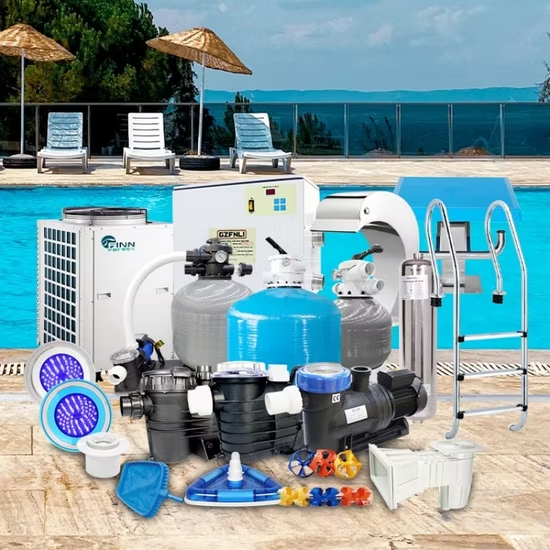
Choosing the right pool equipment is an important decision for homeowners, pool contractors, hotels, fitness centers, and commercial facility managers. Pumps, filters, heaters, and control systems all influence water quality, energy consumption, maintenance requirements, and the overall swimming experience. Selecting suitable equipment starts with finding a manufacturer that can meet the project’s technical and operational needs.
However, comparing manufacturers involves more than reviewing product prices or brand names. Buyers should understand product quality, performance specifications, warranty coverage, technical support, and long-term availability before making a commitment.
Asking the right questions early can help prevent compatibility issues, unexpected costs, and maintenance difficulties. The following questions provide a practical framework for evaluating potential manufacturers.
1. What Types of Pool Equipment Do You Manufacture?
Start by identifying the manufacturer’s product range. Some companies specialize in particular equipment categories, while others offer solutions for several aspects of pool operation.
Depending on the company, its product range may include circulation pumps, filtration systems, heating equipment, water treatment components, automation controls, and related accessories.
Understanding the available products helps determine whether the manufacturer can support your entire project or only specific requirements. It also makes it easier to assess whether different components can work together.
Ask for a product catalog, technical specifications, and information about the applications each product is designed to serve.
2. Do Your Products Meet My Pool’s Requirements?
Not every pool requires the same equipment. Residential pools, hotel swimming areas, indoor aquatic facilities, and public pools have different demands based on size, usage, operating hours, and environmental conditions.
Before selecting a manufacturer, explain the pool’s dimensions, water volume, expected usage, plumbing configuration, and any special operating requirements.
Ask whether the proposed equipment is appropriately sized for the installation. For example, a pump must provide suitable flow under the system’s actual resistance, while a filter must have enough capacity for the intended application.
Correct sizing can improve performance, avoid unnecessary energy consumption, and reduce the risk of premature equipment wear.
3. What Quality Control Procedures Do You Follow?
Equipment quality directly affects reliability and maintenance costs. A manufacturer should be able to explain how it checks materials, components, assembly processes, and finished products.
Ask questions such as:
- What inspections are performed during production?
- Are finished products tested before shipment?
- What performance and durability tests are conducted?
- Which quality management systems or product certifications apply?
- Can you provide relevant test reports or technical documentation?
The answers should be specific enough to help you understand how product quality is verified. Where certifications are important, confirm that they apply to the exact product model and intended installation rather than relying on general marketing statements.
4. How Energy-Efficient Is Your Equipment?
Energy consumption can account for a substantial portion of a pool’s ongoing operating expenses, particularly when pumps and heating systems run for long periods.
Ask manufacturers to provide information about power consumption, operating efficiency, and performance under different conditions. For pumps, variable-speed capabilities may offer useful savings when flow requirements vary throughout the day.
For heating equipment, compare energy performance, operating conditions, and suitability for the local climate. A system’s efficiency rating should be evaluated alongside its capacity and the conditions under which the rating was measured.
Choosing energy-efficient equipment can reduce operating costs, but the greatest benefit comes from combining efficient products with proper sizing, installation, and operating schedules.
5. What Materials Are Used in Your Products?
Swimming pool equipment operates in environments exposed to moisture, pool chemicals, temperature changes, and sometimes saltwater. Materials must be suitable for the conditions in which the equipment will be installed.
Ask which materials are used for major components, seals, housings, fittings, and other parts exposed to water or corrosive environments.
If the pool uses saltwater chlorination or operates in a coastal location, confirm that the equipment is suitable for those conditions. Do not assume that a product described as corrosion-resistant is appropriate for every chemical concentration or environment.
Material specifications and maintenance instructions can help you evaluate expected durability and determine whether additional precautions are necessary.
6. What Warranty Coverage Do You Provide?
Warranty terms can make a significant difference when equipment needs repair or replacement. Before purchasing, ask for the complete written warranty rather than relying on a verbal summary.
Important details include:
- The length of the warranty period.
- Which components and defects are covered.
- Whether labor, transportation, and replacement parts are included.
- Which installation or maintenance conditions must be followed.
- What circumstances may invalidate the warranty.
- How claims are submitted and processed.
Also ask whether warranty service is available in your location. A longer warranty may appear attractive, but its practical value depends on the coverage, exclusions, and accessibility of support.
7. Can You Provide Technical Support and Installation Guidance?
Even high-quality equipment can perform poorly when installed incorrectly. Buyers should confirm whether the manufacturer provides installation manuals, technical drawings, wiring requirements, troubleshooting resources, and product-specific guidance.
Ask whether technical staff are available to answer questions before and after installation. For more complex projects, determine whether the manufacturer can review system specifications or coordinate with the pool designer and installer.
A reliable support process can help resolve issues involving flow rates, equipment settings, electrical requirements, and component compatibility.
Installation should still be completed by qualified professionals where required, particularly when electrical systems, pressurized equipment, or regulated commercial installations are involved.
8. Are Replacement Parts Readily Available?
Equipment may require replacement seals, filters, motors, control components, or other parts during its service life. If these items are difficult to obtain, even a minor failure can cause extended downtime.
Ask the manufacturer how long it expects to support a product model and whether commonly needed replacement parts are stocked or ordered on demand.
It is also worth confirming whether parts can be purchased locally, how long deliveries typically take, and whether compatible components are available for older models.
For commercial pools, spare-part availability is particularly important because equipment failures may interrupt facility operations. Planning for maintenance and replacement needs can help reduce unexpected disruption.
9. What Are the Expected Operating and Maintenance Costs?
The purchase price represents only part of the total cost of owning pool equipment. Electricity, routine servicing, replacement parts, repairs, and eventual replacement can influence the overall budget.
Ask manufacturers for realistic information about maintenance intervals, recommended servicing procedures, consumable parts, and expected operating requirements.
Where possible, compare equipment using similar performance conditions. A low-cost pump may consume more electricity, while a more efficient model may require a larger initial investment but cost less to operate.
Avoid relying on unsupported claims about service life or savings. Instead, review published specifications, maintenance guidance, and warranty information to estimate the likely long-term costs.
10. Can Your Equipment Integrate With My Existing System?
Pool equipment often works as part of a connected system. Pumps, filters, heaters, automation controls, and water treatment equipment must be compatible with one another.
If you are upgrading an existing pool, provide details about the current equipment, plumbing dimensions, electrical supply, and control system.
Ask whether the proposed products can integrate with the existing installation and whether additional fittings, wiring, adapters, or control components will be required.
Compatibility checks are especially important when combining products from different brands. Confirming these details before ordering can prevent installation delays and unexpected modification costs.
11. Do You Offer Customization or Specialized Solutions?
Some pool projects have requirements that standard products cannot easily meet. These may include unusual equipment-room dimensions, specific control functions, specialized flow demands, or integration with existing infrastructure.
Ask whether the manufacturer offers custom configurations or alternative models. If customization is available, clarify minimum order quantities, design approval procedures, testing, production lead times, and warranty implications.
Not every project needs customized equipment. Standard products may be more economical and easier to maintain when they meet the required specifications.
The important point is to determine whether the manufacturer can provide a technically appropriate solution without adding unnecessary complexity.
12. What Is Your Production Capacity and Delivery Schedule?
Delivery delays can affect construction timelines, renovation schedules, and facility opening dates. Buyers should understand whether equipment is available from existing stock or must be manufactured after an order is placed.
Ask for estimated production and shipping timelines, minimum order quantities, and details about how delivery dates are confirmed.
For large projects, verify that the manufacturer can supply the required quantity within the agreed schedule. If several equipment categories are being ordered, check whether they will arrive together or in separate shipments.
It is also useful to ask how the company communicates delays and what options are available if a component becomes unavailable.
13. Do You Have Experience With Similar Projects?
A manufacturer with experience in projects similar to yours may better understand the practical challenges involved.
For example, a residential pool installation may prioritize quiet operation, compact equipment, and straightforward maintenance. A commercial facility may require higher capacity, extended operating hours, and dependable access to service parts.
Ask whether the manufacturer has supplied equipment for comparable applications and whether it can provide relevant product examples, case studies, or technical references.
Experience alone does not guarantee quality, but it can help establish whether the company understands the requirements of your project.
14. How Do You Handle Product Failures and Warranty Claims?
Even well-designed equipment can occasionally develop faults. What matters is how clearly the manufacturer explains the process for investigating and resolving problems.
Ask who should be contacted when a product fails, what documentation is required, and whether troubleshooting can be provided remotely.
Find out whether the manufacturer offers repair services, replacement units, or assistance through authorized service partners. You should also understand the expected response process and whether shipping costs apply to returned equipment.
For commercial installations, ask how service issues can be managed to minimize downtime. Clear procedures can make a significant difference when reliable pool operation is essential.
15. How Should I Compare Your Products With Other Manufacturers?
A fair comparison should use consistent criteria rather than relying only on brand reputation or purchase price.
When reviewing alternatives, compare:
- Product capacity and performance specifications.
- Energy consumption under comparable conditions.
- Materials and construction quality.
- Applicable certifications and test documentation.
- Warranty terms and support availability.
- Spare-part access and maintenance requirements.
- Delivery schedules and total installed cost.
If you are researching potential options, a Pool Equipment Manufacturer can be a starting point for exploring pool-related products and learning about available solutions. Before choosing a supplier or manufacturer, verify its specific product offerings and confirm that the equipment matches your technical requirements.
A written comparison makes it easier to identify meaningful differences and avoid paying for features that your pool does not need.
Creating a Manufacturer Evaluation Checklist
Once you have gathered answers, organize the information in a simple evaluation checklist. This helps keep the decision process consistent when comparing multiple companies.
| Evaluation area | What to confirm |
|---|---|
| Product suitability | Equipment meets the pool’s capacity and operating requirements |
| Quality assurance | Testing procedures and relevant documentation are available |
| Energy performance | Efficiency information is clear and comparable |
| Warranty | Coverage, exclusions, and claims procedures are documented |
| Technical support | Installation and troubleshooting resources are accessible |
| Spare parts | Common replacement components can be obtained |
| Delivery | Production and shipping timelines meet project needs |
| Total cost | Purchase, installation, energy, and maintenance costs are considered |
| Compatibility | Equipment integrates with the planned or existing system |
Not every category carries equal importance for every project. A small residential pool and a busy public swimming facility may require different priorities. Focus on the factors that have the greatest effect on performance, safety, budget, and long-term reliability.
Conclusion
Selecting a pool equipment manufacturer requires careful evaluation of product quality, technical suitability, energy efficiency, warranty coverage, delivery schedules, and after-sales support. Asking detailed questions before purchasing helps establish what a manufacturer can provide and whether its products are appropriate for the intended installation.
Buyers should also consider the total cost of ownership, replacement-part availability, and compatibility with other pool components. For complex or commercial projects, qualified pool professionals can help review technical specifications and ensure that the equipment is correctly selected and installed.
By comparing manufacturers systematically and requesting clear documentation, pool owners and project managers can make better-informed decisions and build swimming pool systems designed for dependable, efficient operation.