

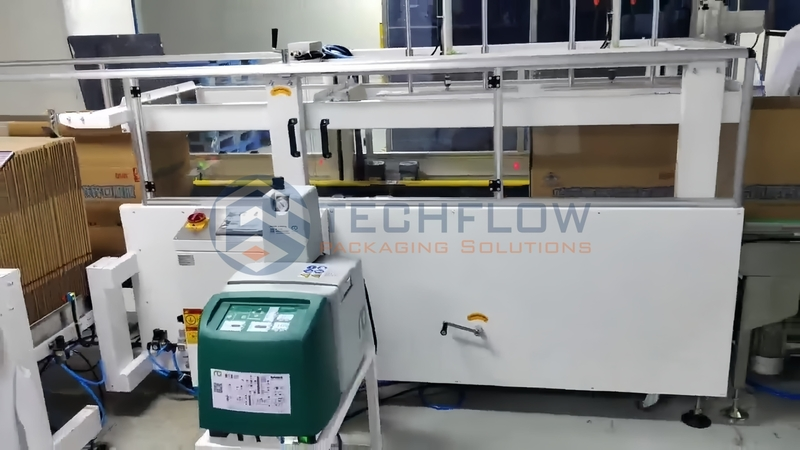
Packaging automation has become an important part of modern manufacturing as businesses look for ways to increase production efficiency, maintain consistent packaging quality, and reduce repetitive manual operations. With growing customer demands and higher production targets, manufacturers need reliable equipment that can support continuous packaging activities. One area that often requires improvement is carton preparation, where flat cardboard blanks must be converted into properly formed boxes before products can be packed.
An Automatic Case Erector plays an important role in addressing this requirement by automating the carton forming process. It opens flat carton blanks, folds the bottom flaps, and secures the cases so they are ready for product loading. By incorporating this equipment into packaging operations, manufacturers can improve workflow consistency and create a more organized production environment.
The Importance of Carton Preparation in Packaging Automation
Carton preparation is one of the initial stages of many packaging processes. Before products can be loaded into shipping cases, cartons must be opened, shaped, and secured properly.
When this process is performed manually, employees must repeatedly handle flat blanks and assemble boxes individually. This can slow production, increase labor requirements, and create inconsistencies in carton formation.
Automated carton erection helps eliminate many of these challenges by performing repetitive preparation tasks through a controlled mechanical process. This allows packaging lines to maintain a more consistent supply of ready-to-use cases.
1. Improves Overall Production Efficiency
Production efficiency depends on how smoothly different packaging activities work together. Delays in carton preparation can affect product loading, case sealing, and other downstream operations.
An automatic case erector helps maintain a steady flow of prepared cartons by completing multiple forming operations automatically.
Instead of relying on employees to assemble every box manually, manufacturers can use automated equipment to support continuous carton preparation. This is particularly useful in facilities handling large production volumes or operating multiple shifts.
2. Reduces Dependence on Manual Labor
Manual carton assembly involves repetitive movements such as opening blanks, folding flaps, and securing carton bottoms. These tasks require continuous employee attention and can become demanding during long production shifts.
Automation reduces the need for workers to perform these activities individually. Operators can focus on monitoring machine performance, replenishing carton supplies, and managing other production responsibilities.
This helps manufacturing facilities distribute their workforce more effectively while reducing repetitive manual work.
3. Maintains Consistent Carton Formation
Packaging consistency is essential for protecting products during handling, storage, and transportation. Incorrectly assembled cartons may have misaligned flaps, uneven dimensions, or improperly secured bottoms.
Automatic case erectors use mechanical forming mechanisms and controlled operating sequences to produce more uniform cartons.
Consistent carton preparation can improve compatibility with automatic case packers and sealing machines. It also helps reduce packaging problems caused by variations in manual assembly.
4. Supports Faster Packaging Operations
Modern packaging lines often operate at high production speeds, making manual carton preparation a potential bottleneck.
An automatic case erector helps overcome this limitation by preparing cartons according to a consistent operating cycle. Depending on its specifications, the equipment can process cartons at rates that support the requirements of the wider production system.
When carton preparation is properly synchronized with product loading and case sealing, manufacturers can maintain a smoother packaging workflow.
5. Reduces Packaging Errors and Material Waste
Improper carton assembly can result in damaged blanks, incorrect folding, and unsuccessful sealing. These problems may require employees to remove defective cartons and repeat the preparation process.
Automated carton forming helps minimize such variations by using controlled feeding, opening, and folding mechanisms.
Although machine setup and carton quality still influence results, consistent operation can reduce avoidable preparation errors and unnecessary material waste.
6. Improves Workplace Ergonomics
Repeated manual carton assembly can involve frequent bending, lifting, and repetitive hand movements. These activities may contribute to employee fatigue and physical discomfort over time.
Automating carton preparation reduces the need for workers to perform these tasks continuously.
This can support better workplace ergonomics by allowing employees to focus on machine supervision and other activities that involve less repetitive handling. Appropriate safety training and machine guarding remain important parts of any automated packaging installation.
7. Optimizes Packaging Material Storage
Flat carton blanks generally require less storage space than fully assembled boxes. However, manually converting these blanks into usable cartons can create additional handling requirements.
An automatic case erector allows manufacturers to form cartons as production requires them. This reduces the need to store large quantities of preassembled boxes.
It can also help improve material organization and support more efficient inventory management within manufacturing facilities.
8. Integrates Easily with Other Packaging Equipment
One of the major advantages of packaging automation is the ability to connect individual machines into a coordinated production line.
An automatic case erector can be integrated with several types of equipment, including:
- Conveyor systems: Transfer formed cartons between packaging stations.
- Automatic case packers: Load products into prepared cartons.
- Case sealers: Secure the upper flaps after products have been packed.
- Labeling systems: Apply product identification and shipping information.
- Palletizing equipment: Arrange completed cases for storage and transportation.
Proper synchronization between these machines helps reduce manual handling and maintain a consistent material flow.
9. Provides Flexibility for Different Industries
Different industries have different carton sizes, product characteristics, and packaging requirements. An automatic case erector can support various applications depending on its design and configuration.
For example:
Food and Beverage Industry: Manufacturers use carton erection equipment to prepare cases for bottled beverages, packaged foods, canned products, and other consumer goods.
Pharmaceutical Industry: Packaging facilities use properly formed cartons to support the organized packing and transportation of packaged medical products.
Electronics Industry: Manufacturers prepare cartons for electronic devices, accessories, and components that require suitable outer packaging.
Personal Care Industry: Automated carton preparation supports packaging operations involving cosmetics, hygiene products, and household items.
The ability to accommodate different carton specifications makes this equipment useful across a wide range of manufacturing environments.
10. Supports Long-Term Business Growth
As manufacturing businesses expand, their packaging requirements often increase. Manual carton preparation may become difficult to manage when production volumes grow or additional product lines are introduced.
Automating carton erection provides a foundation for handling higher packaging demands. It also makes it easier to coordinate carton preparation with other automated processes.
With suitable equipment capacity and proper maintenance, manufacturers can develop packaging operations that adapt to changing production requirements.
Factors to Consider When Implementing an Automatic Case Erector
Although automated carton preparation offers several advantages, selecting the right equipment requires careful planning.
Manufacturers should evaluate the following factors before installation:
- Production capacity: The machine should match the required carton output of the facility.
- Carton dimensions: Check compatibility with the sizes and styles of boxes used in production.
- Sealing technology: Determine whether tape or hot-melt adhesive is more appropriate.
- Available space: Ensure sufficient room for installation, operation, and maintenance.
- Integration requirements: Confirm compatibility with existing conveyors and packaging machinery.
- Maintenance needs: Evaluate cleaning procedures, spare parts availability, and technical support.
- Operator training: Ensure employees understand machine operation and safety procedures.
Considering these requirements helps businesses avoid unnecessary equipment limitations and improve the effectiveness of their automation investment.
The Role of Maintenance in Packaging Automation
Reliable equipment performance depends on regular maintenance and appropriate operating practices. Even automated machines require periodic inspection to maintain consistent carton feeding, opening, folding, and sealing.
Operators should regularly inspect suction cups, feeding mechanisms, folding components, sensors, and sealing systems. Removing cardboard dust and adhesive residue can also help prevent operational problems.
Following the manufacturer’s maintenance recommendations and replacing worn components when necessary can reduce unexpected downtime.
Conclusion
An automatic case erector is an important component of modern packaging automation because it simplifies carton preparation and supports efficient production workflows. By automating carton feeding, opening, folding, and bottom sealing, manufacturers can reduce repetitive manual tasks, improve carton consistency, and maintain a reliable supply of prepared cases.
Its ability to integrate with conveyors, case packers, sealing machines, and other packaging equipment makes it a valuable part of coordinated manufacturing operations.
For businesses looking to improve packaging efficiency and prepare for increasing production demands, automating carton erection can be a practical step toward building a more consistent and scalable packaging process.