

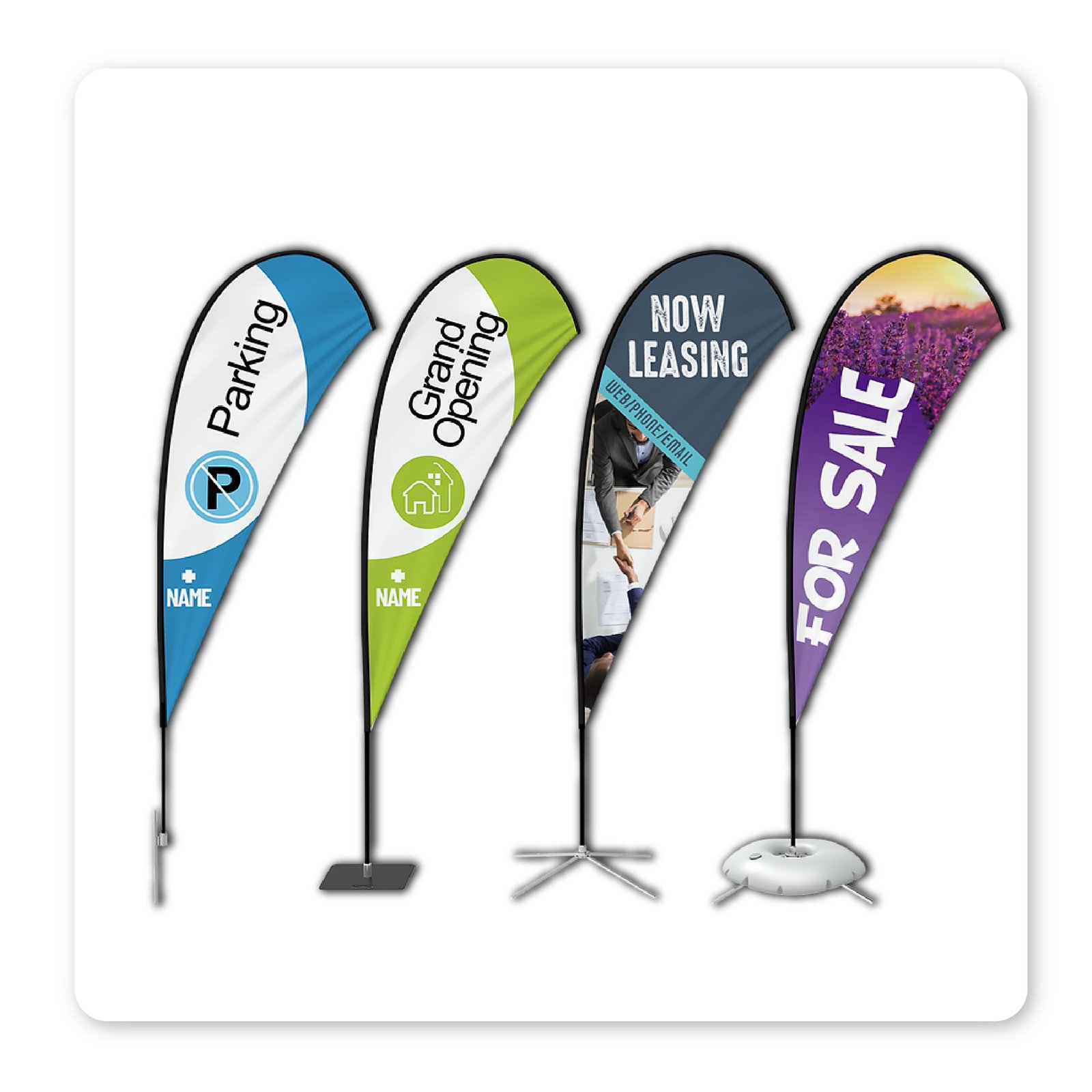
Outdoor advertising helps businesses introduce their products, services, and brand identities to people in busy public spaces. Whether displayed outside a retail store, at a sporting event, or near a promotional booth, an effective sign should be easy to notice and understand. Choosing the right display format can make a difference in how a business communicates with passing audiences.
A Flipflag is a type of promotional flag display designed to present branding and advertising messages in an eye-catching format. Its distinctive structure and fabric movement can help attract attention in outdoor environments, making it a useful option for businesses that want to improve the visibility of temporary campaigns, storefront promotions, and event displays.
What Is a Flipflag?
A flipflag is a flag-style advertising display that uses a supporting pole and printed fabric to showcase a promotional message. Depending on the design, its flexible structure allows the fabric to move with the surrounding air, creating a dynamic appearance compared with many stationary signs.
These displays are commonly used in outdoor marketing because they can combine a relatively lightweight construction with a noticeable vertical profile. Businesses can customize the printed surface with logos, brand colors, product information, or short promotional messages.
The exact shape, dimensions, and support system can vary by manufacturer, so it is important to review product specifications before selecting a model.
How Flipflags Improve Outdoor Advertising
A well-positioned promotional flag can support a business’s marketing efforts in several ways. Its effectiveness depends on the design, location, viewing distance, and surrounding conditions.
They Help Capture Attention
Movement can make a display more noticeable in environments filled with stationary signs and other promotional materials. When a flag responds to a light breeze, its changing appearance may encourage passersby to look in its direction.
This can be especially useful outside shops, at festivals, and around event entrances where businesses compete for attention.
They Increase Brand Visibility
A flag positioned above or beside a promotional area can make a business easier to identify. Large logos, recognizable colors, and concise messages help audiences associate the display with a particular brand.
Using the same visual identity across multiple flags can also create a consistent appearance at larger events or across several business locations.
They Communicate Offers Quickly
Outdoor audiences often have limited time to read promotional material. Flipflags can provide a compact space for communicating a key message, such as a new product launch, seasonal offer, or special event announcement.
A short headline and a clear visual element are generally more effective than lengthy descriptions.
They Support Flexible Promotional Campaigns
Businesses frequently change their advertising messages to match seasons, product launches, and special occasions. Replaceable or customizable flag graphics can make it easier to adapt displays to different campaigns, depending on the product’s construction.
Portable support systems may also allow businesses to use the same equipment at multiple approved locations.
Where Can Flipflags Be Used?
Flipflags can suit a variety of promotional settings. Selecting the right placement helps ensure that the display reaches its intended audience.
Retail Stores and Shopfronts
Retail businesses can position promotional flags near their entrances or designated outdoor display areas. They may use them to highlight discounts, new arrivals, seasonal collections, or special shopping events.
The display should remain clear of doorways, pedestrian routes, and other areas where it could create an obstruction.
Trade Shows and Exhibitions
At exhibitions, businesses often need to make their booths recognizable from a distance. A flag can help identify a stand, introduce a brand, or direct visitors toward a product demonstration.
Consistent graphics across several displays can also create a coordinated exhibition setup.
Sporting Events
Sports competitions attract spectators, participants, sponsors, and vendors. Flipflags can be used around approved event areas to identify sponsor spaces, registration points, merchandise stalls, and activity zones.
Their visibility can help visitors locate important sections of a venue more easily.
Festivals and Outdoor Gatherings
Markets, concerts, food festivals, and community celebrations often contain numerous vendors and activities. Promotional flags can distinguish individual stalls and help businesses communicate their presence in crowded surroundings.
For temporary events, portability and straightforward installation are particularly useful considerations.
Restaurants and Hospitality Businesses
Restaurants, cafes, and hotels can use outdoor flags to announce special menus, seasonal services, and promotional events. A concise message placed near an appropriate entrance can help potential customers understand what the business offers.
Choosing the Right Flipflag for Your Business
Not every promotional flag is suitable for every advertising environment. Before purchasing, consider the following factors.
Size and Display Height
The flag should be large enough to remain visible from the expected viewing distance. A compact display may work well near a storefront, while a larger event area may require a taller option.
Check the available installation space and any height restrictions imposed by the venue.
Fabric and Printing Quality
The fabric should be appropriate for the intended conditions and capable of displaying the artwork clearly. Outdoor exposure can involve sunlight, moisture, dust, and repeated movement.
Ask about fabric specifications, printing methods, color durability, and cleaning recommendations before making a selection.
Pole Construction
The supporting pole must be compatible with the flag’s size and design. Flexible materials may help the display respond to air movement, while the overall construction should provide suitable support.
Inspect connectors and joints, particularly if the equipment will be assembled and dismantled frequently.
Base and Installation Requirements
The base plays an important role in supporting the flag. Different surfaces may require different solutions, such as ground spikes for suitable soil or weighted bases for compatible hard surfaces.
Consider the ground type, expected weather, and manufacturer’s installation instructions. Do not use a display in wind conditions beyond its stated operating limits.
Portability and Storage
Businesses that attend multiple events may benefit from equipment that can be disassembled and transported conveniently. Carrying cases and detachable components can simplify storage and reduce the risk of damage during transportation.
Designing an Effective Flipflag
A suitable display structure provides the foundation, but the graphic determines how clearly the advertising message reaches its audience.
Keep the Message Short
Choose one main idea for the flag. A business name, product category, promotional offer, or event message can provide a clear starting point.
Avoid filling the available space with detailed descriptions that people may not have time to read.
Use Readable Typography
Select fonts that remain clear from a distance. Make the main headline larger than supporting details, and avoid overly decorative lettering that reduces readability.
Maintain Brand Consistency
Use the company’s established logo, colors, and visual style. Consistency across storefront signs, banners, packaging, and digital promotions helps audiences recognize the business.
Select Suitable Images
High-quality product photographs or simple graphics can strengthen a promotional message. Ensure that artwork has sufficient resolution for the final print size and is positioned correctly within the flag’s shape.
Common Mistakes to Avoid
A poorly planned display may fail to deliver the intended advertising benefits. Businesses should avoid:
- Using too much text in a limited graphic area.
- Selecting a flag that is difficult to see from the intended distance.
- Choosing unsuitable materials for outdoor exposure.
- Installing the display on an incompatible or unstable base.
- Positioning flags where they obstruct walkways or entrances.
- Ignoring local signage rules and venue restrictions.
- Leaving damaged displays in use.
- Keeping promotional graphics unchanged after an offer has expired.
Reviewing the design and installation before each campaign can help prevent these issues.
Maintaining Flipflags for Repeated Use
Regular maintenance helps preserve both the appearance and functionality of promotional flags. Inspect the fabric, pole, connectors, and base before installation. Look for frayed edges, loose joints, cracks, or other signs of wear.
Clean the fabric according to the manufacturer’s instructions and allow it to dry completely before packing it away. Disassemble the pole carefully rather than forcing individual sections apart.
When the equipment is not in use, store it in a protective case or another clean, dry location. During severe weather, remove the display if conditions exceed its recommended limits.
Conclusion
Flipflags provide businesses with a flexible way to present promotional messages in outdoor environments. Their visible structure, potential for movement, and customizable graphics can help attract attention at retail locations, exhibitions, sporting events, and community gatherings.
To get the most from this advertising format, businesses should consider display size, material quality, pole construction, base compatibility, and graphic design. Careful placement and regular maintenance can further support a clear, professional presentation across different promotional campaigns.