

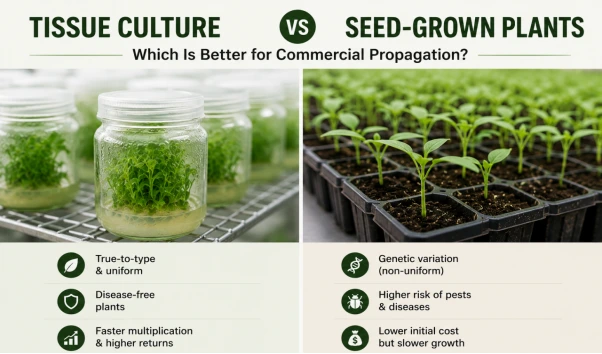
Plant health is one of the most important considerations when purchasing tissue culture plants in commercial quantities. A healthy batch can provide a stronger starting point for acclimatization and further cultivation, while weak or contaminated material may require additional attention after delivery.
When evaluating Tissue Culture Plants Wholesale, buyers should look at more than the appearance of individual plantlets. Development stage, rooting, uniformity, contamination control, handling, and shipping conditions all contribute to the overall health of a batch.
Check the General Appearance
Healthy tissue culture plants should display growth that is appropriate for their development stage. Leaves, shoots, and roots should generally appear normal for the particular species and cultivar.
Unusual discoloration, tissue damage, excessive browning, or abnormal growth may indicate that further investigation is needed before accepting a large shipment.
Examine Root Development
Root development is an important indicator when plants are supplied as rooted plantlets. A suitable root system can help plants transition into growing media and establish during acclimatization.
However, the expected root characteristics vary between plant species. Buyers should compare root development against the normal requirements of the specific crop rather than using one standard for every plant.
Evaluate Shoot and Leaf Development
Shoots should have developed sufficiently for the plant’s stated production stage. Leaves should also show appropriate development without obvious signs of severe stress or physical damage.
Uniform shoot and leaf development across a batch can make subsequent nursery management easier, particularly when large numbers of plants are being transplanted at the same time.
Look for Signs of Contamination
Contamination is a major concern in tissue culture production. Bacterial or fungal contamination can affect plant material and compromise an entire batch if it is not detected and managed properly.
Buyers should ask about the supplier’s quality-control procedures and how cultures are monitored during propagation. Visible contamination in culture vessels should be treated as a significant quality concern.
Consider Genetic Uniformity
Plant health and genetic consistency are related but separate considerations. A plant can appear healthy while still requiring verification that it matches the intended cultivar.
Reliable source material and controlled propagation procedures can help maintain the expected characteristics of a tissue culture batch.
Understand the Plant’s Production Stage
The condition of a plant should always be evaluated in relation to its production stage. A recently developed tissue culture shoot should not be judged by the same criteria as an acclimatized plant ready for nursery production.
Before ordering, confirm whether the plants are supplied as shoots, rooted plantlets, or acclimatized material. This information helps buyers understand what care will be required after arrival.
Review Acclimatization Requirements
Plants grown under controlled laboratory conditions can be sensitive to changes in humidity, light, temperature, and airflow. They normally need a gradual transition into nursery conditions.
Buyers should prepare an appropriate acclimatization area before the shipment arrives and understand the supplier’s recommendations for handling the plants during this period.
Consider Transportation Effects
Plant health can change during transportation if plants are exposed to excessive heat, cold, physical movement, or extended delays.
When working with a supplier such as Young Plants, buyers should confirm packaging and delivery arrangements in advance and inspect the plants promptly after arrival.
Keep Batch Records
Maintaining accurate records can make plant health easier to monitor over time. Record the supplier, cultivar, batch number, quantity received, plant stage, arrival condition, and establishment results.
These records can help growers identify recurring issues and compare the performance of different batches or production cycles.
Establish a Receiving Inspection
A consistent inspection process is useful when receiving wholesale quantities. Staff should check the shipment against the purchase order and identify any visible issues before plants are moved into the acclimatization area.
A receiving checklist can include:
- Plant quantity and cultivar
- Plant development stage
- Root and shoot condition
- Visible contamination
- Physical damage
- Packaging condition
- Signs of temperature or transit stress
- Required documentation
Monitor Plants After Arrival
Initial inspection does not replace continued observation. Some stress symptoms may become apparent only after plants enter the acclimatization environment.
Regular monitoring of new growth, root development, leaf condition, moisture, and environmental conditions can help growers identify problems early and adjust management practices when necessary.
Final Thoughts
Understanding plant health is essential when purchasing tissue culture plants wholesale. Buyers should evaluate plant development, root and shoot condition, contamination controls, cultivar identity, transportation, and acclimatization requirements as parts of the same process.
A careful inspection before and after delivery, combined with accurate batch records, can help commercial growers manage tissue culture plants more effectively and create suitable conditions for their establishment and continued growth.