
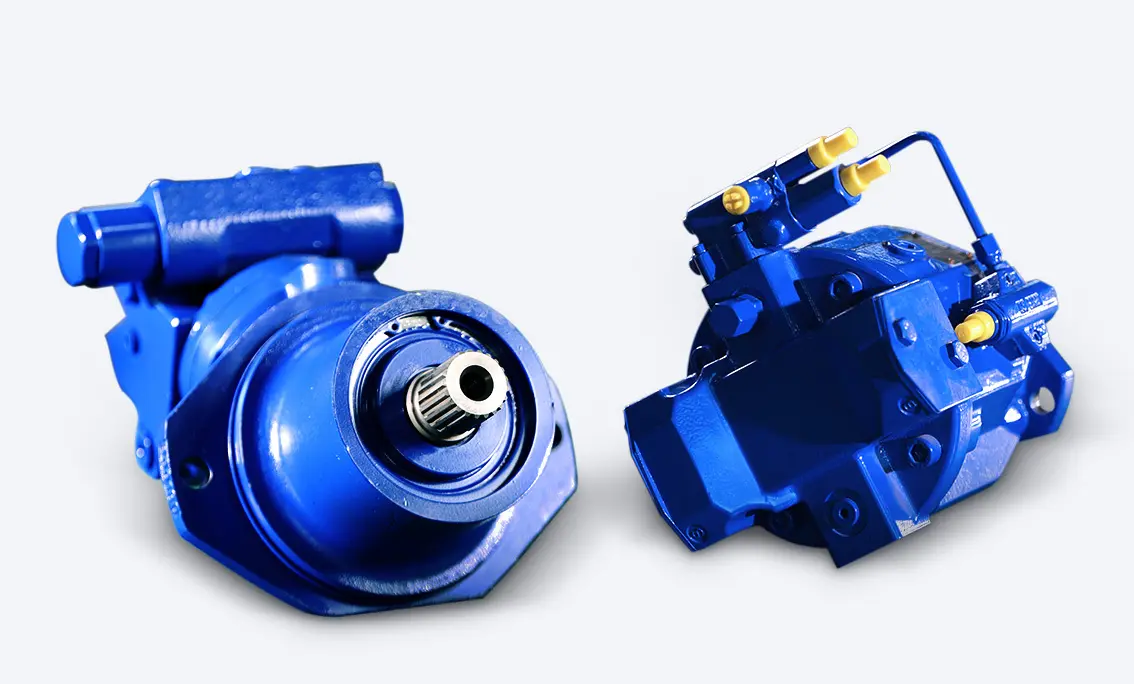
Reliable hydraulic motor performance is essential for industrial equipment that operates under demanding loads, pressures, and duty cycles. A motor that performs consistently can help reduce unplanned downtime, maintenance requirements, and interruptions to production.
A hydraulic motor manufacturer contributes to reliability through engineering, material selection, precision manufacturing, testing, and quality control. However, dependable performance also depends on selecting a motor that is properly matched to the hydraulic system and its operating environment.
Designing Motors for the Intended Application
Reliability begins during the design stage. Manufacturers must consider how the motor will be used, including its expected pressure, flow, speed, torque, load profile, and operating hours.
A motor designed for continuous industrial operation may have different requirements from one used intermittently in mobile machinery. Understanding these differences allows manufacturers to select appropriate components and operating limits.
Selecting Suitable Materials
Material selection plays an important role in the durability of hydraulic motors. Components such as housings, shafts, gears, pistons, bearings, and seals must withstand mechanical forces and exposure to hydraulic fluid.
The appropriate materials depend on factors such as operating pressure, temperature, speed, corrosion exposure, and expected service life. Using suitable materials can help minimize wear and maintain performance over time.
Precision Machining and Component Control
Hydraulic motors contain components that must work together with relatively precise clearances. Manufacturing inaccuracies can contribute to leakage, friction, vibration, or reduced efficiency.
Modern machining and inspection processes help manufacturers maintain critical dimensions. Consistent tolerances are particularly important for components that directly influence pressure retention and mechanical movement.
Controlling Internal Clearances
Internal clearances affect hydraulic motor performance. Excessive clearance can increase internal leakage and reduce volumetric efficiency, while insufficient clearance may increase friction and heat generation.
Manufacturers therefore need to maintain appropriate dimensional relationships between moving and stationary components. Proper clearance control contributes to smooth operation and consistent output.
Using Reliable Sealing Systems
Seals help prevent hydraulic fluid from escaping and contaminants from entering sensitive areas of the motor.
Seal selection should account for pressure, temperature, fluid compatibility, shaft speed, and environmental conditions. Using an inappropriate sealing material can result in leakage or premature deterioration.
For applications involving extreme temperatures or demanding environments, specialized sealing solutions may be necessary.
Maintaining Consistent Assembly Processes
Even accurately manufactured components can perform poorly if assembly is inconsistent. Manufacturers use controlled assembly procedures to ensure that parts are installed correctly and according to specified requirements.
Proper assembly can help prevent problems involving alignment, fastening, lubrication, sealing, and component positioning.
Standardized processes also make production more repeatable when motors are manufactured in larger quantities.
Conducting Pressure and Performance Testing
Testing helps verify whether completed motors meet their specified operating requirements. The exact tests vary by motor type and application, but may include pressure, leakage, speed, torque, and performance checks.
Testing can identify manufacturing problems before the product reaches the customer. This is particularly important for motors intended for critical machinery where component failure could result in significant downtime.
Checking Hydraulic Efficiency
Hydraulic motor efficiency affects both performance and energy consumption. Manufacturers can evaluate efficiency by examining how effectively the motor converts hydraulic energy into mechanical output.
Two important considerations are volumetric efficiency and mechanical efficiency. Maintaining appropriate internal clearances, surface finishes, sealing, and component quality can help reduce energy losses.
Managing Heat Generation
Excessive heat can negatively affect hydraulic components, seals, and hydraulic fluid. Manufacturers therefore consider thermal behavior when designing motors for particular operating conditions.
The hydraulic system itself also plays a role. Appropriate fluid viscosity, flow, cooling capacity, and operating pressure can help keep temperatures within acceptable limits.
Performing Quality Inspections
Quality control should take place throughout production rather than only at the final stage.
A comprehensive inspection process may involve:
- Incoming material checks
- Dimensional inspections
- Component surface inspections
- Assembly verification
- Pressure testing
- Leakage checks
- Performance testing
- Final product inspection
These controls help identify deviations before products are shipped.
Maintaining Production Consistency
Reliable performance requires consistency across production batches. If two motors with the same specifications perform significantly differently, the equipment manufacturer may face installation and maintenance problems.
Manufacturers can improve consistency through standardized processes, controlled machining parameters, calibrated inspection equipment, and documented quality procedures.
This becomes especially important for customers purchasing motors repeatedly for the same equipment platform.
Matching the Motor to the Hydraulic System
Even a well-manufactured motor may perform poorly if it is incorrectly selected. The motor must be compatible with the hydraulic pump, valves, flow rate, pressure, load, and control system.
For example, operating a motor outside its recommended speed or pressure range can accelerate wear and reduce service life.
Manufacturers and buyers should therefore consider the complete hydraulic circuit rather than evaluating the motor as an isolated component.
Supporting Proper Installation
Correct installation is another factor in reliable operation. Incorrect alignment, unsuitable hoses or fittings, contaminated fluid, or improper mounting can create problems even when the motor itself meets all quality requirements.
Manufacturers can support customers by providing dimensional drawings, installation instructions, operating recommendations, and maintenance guidance.
Clear technical documentation reduces the likelihood of installation-related problems.
Protecting Against Contamination
Hydraulic fluid contamination is a common cause of component wear. Particles can damage precision surfaces, increase internal leakage, and accelerate deterioration of bearings and other components.
Manufacturers can design motors with appropriate filtration and fluid-quality requirements, but the equipment operator must also maintain the hydraulic system properly.
Clean fluid, suitable filters, and regular system maintenance are essential for preserving motor performance.
Considering Environmental Conditions
Operating conditions can vary significantly between applications. Hydraulic motors may be exposed to dust, moisture, extreme temperatures, vibration, corrosive substances, or outdoor conditions.
Manufacturers need to account for these factors when selecting materials, seals, coatings, and protective features. Buyers should provide accurate environmental information so that the motor can be specified appropriately.
Using Feedback to Improve Products
Long-term reliability can also be improved through field feedback. Information about operating conditions, failure modes, maintenance issues, and customer applications can help manufacturers identify opportunities for design or process improvements.
Continuous improvement is particularly valuable for products used across different industries and operating environments.
What Buyers Should Ask Manufacturers
Industrial buyers can gain useful insight into reliability by asking potential suppliers specific technical questions.
Consider asking about:
- Pressure and speed ratings
- Recommended flow ranges
- Materials and sealing systems
- Quality-control procedures
- Pressure and performance testing
- Expected service conditions
- Maintenance requirements
- Spare-parts availability
- Installation recommendations
- Technical support
The answers can help determine whether the manufacturer’s approach to reliability aligns with the application’s requirements.
Reliability Is a Shared Responsibility
Manufacturing quality is only one part of hydraulic motor reliability. Correct sizing, proper installation, clean hydraulic fluid, suitable operating conditions, and regular maintenance also influence service life.
A high-quality motor operated outside its specified limits may fail prematurely, while a properly selected and maintained motor can provide dependable performance for a much longer period.
Conclusion
Hydraulic motor manufacturers ensure reliable performance through a combination of application-focused design, suitable materials, precision machining, controlled assembly, effective sealing, and comprehensive testing.
For industrial buyers, understanding these practices makes supplier evaluation more meaningful. The best approach is to consider both manufacturing quality and the motor’s compatibility with the complete hydraulic system. When product selection, manufacturing, installation, and maintenance are properly coordinated, hydraulic motors can deliver consistent performance and long-term service.