

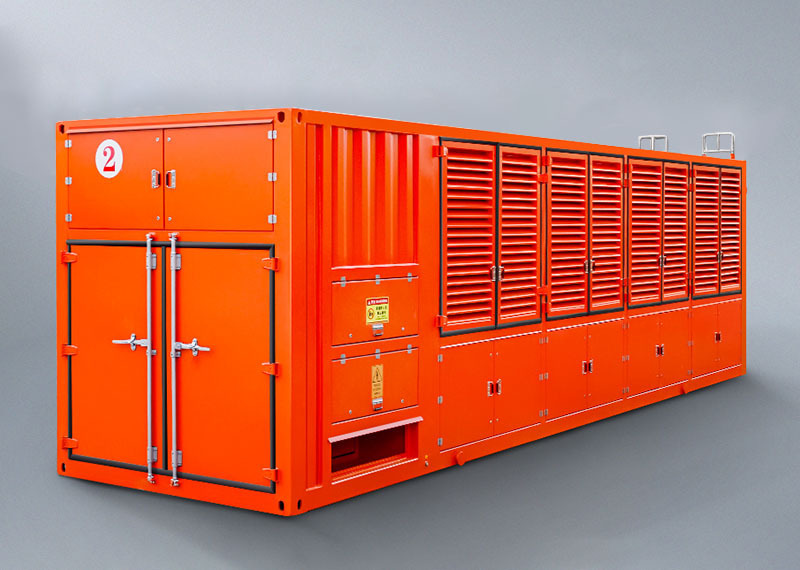
Generator testing is an essential part of maintaining reliable power systems. Whether used in hospitals, data centers, manufacturing facilities, or power plants, generators must be tested regularly to ensure they perform efficiently during power outages or emergency situations. Accurate testing verifies that generators can handle real operating conditions and deliver stable power when needed. This is where an RLC load bank manufacturer plays a crucial role.
RLC load banks are designed to simulate real electrical loads by combining resistive, inductive, and capacitive elements. Unlike traditional resistive load banks, they create a more realistic testing environment that closely matches actual field conditions. A trusted RLC load bank manufacturer designs advanced testing equipment that helps engineers obtain precise results, identify hidden issues, and improve generator performance.
Simulating Real Operating Conditions
One of the biggest advantages of an RLC load bank is its ability to replicate actual electrical loads. Most generators in real-world applications power equipment with varying power factors, including motors, transformers, HVAC systems, and electronic devices.
An RLC load bank accurately simulates these complex load conditions by combining:
- Resistive loads
- Inductive loads
- Capacitive loads
This realistic simulation allows engineers to evaluate generator performance under conditions that closely resemble everyday operation.
Accurate Power Factor Testing
Power factor has a significant impact on generator performance. Resistive-only testing cannot fully evaluate how a generator responds to reactive loads.
A professional RLC load bank manufacturer designs equipment capable of testing generators across different power factor conditions. This enables engineers to verify:
- Voltage regulation
- Frequency stability
- Reactive power handling
- Overall system efficiency
Accurate power factor testing provides a more complete assessment of generator performance.
Detecting Hidden Performance Problems
Some generator issues only appear when reactive loads are applied. Problems such as unstable voltage, poor frequency control, overheating, or inadequate load response may remain undetected during basic testing.
Using an RLC load bank allows technicians to identify:
- Voltage fluctuations
- Frequency instability
- Cooling deficiencies
- Load-sharing issues
- Control system faults
Early detection helps prevent costly failures during actual operation.
Improving Testing Precision
Modern RLC load banks feature advanced digital control systems that provide highly accurate load adjustment.
These systems allow operators to:
- Apply precise load levels
- Control load increments
- Monitor performance in real time
- Record testing data automatically
Greater precision produces more reliable testing results while reducing the possibility of operator error.
Supporting Generator Commissioning
Before a newly installed generator enters service, comprehensive commissioning tests are required to verify proper operation.
A trusted RLC load bank manufacturer provides equipment that allows engineers to perform complete commissioning tests, including:
- Capacity verification
- Voltage stability testing
- Frequency response evaluation
- Load acceptance testing
- Full-load performance validation
These tests ensure generators are fully prepared for real operating conditions before installation is completed.
Enhancing Reliability of Backup Power Systems
Many facilities rely on generators as emergency backup power sources. Hospitals, airports, telecommunications centers, and data centers cannot afford unexpected generator failures.
Accurate testing with an RLC load bank helps verify that backup generators can:
- Start quickly
- Accept sudden load changes
- Maintain stable output
- Operate continuously under rated capacity
- Perform reliably during emergencies
Reliable testing increases confidence in emergency power systems.
Advanced Monitoring Capabilities
A modern RLC load bank manufacturer integrates intelligent monitoring systems into its equipment.
Operators can continuously observe important parameters such as:
- Voltage
- Current
- Frequency
- Power
- Power factor
- Temperature
- Load percentage
Real-time monitoring enables immediate detection of abnormal operating conditions and supports more accurate performance analysis.
Automatic Load Control
Many modern RLC load banks include programmable automatic load sequencing.
Automatic control allows operators to simulate realistic load variations without manual intervention. This feature provides:
- Consistent testing procedures
- Improved repeatability
- Reduced human error
- Faster testing
Automatic load management is especially useful during large commissioning projects and scheduled maintenance programs.
Improving Preventive Maintenance
Routine generator testing is an important part of preventive maintenance. Accurate testing helps maintenance teams identify wear and performance degradation before failures occur.
By working with a dependable RLC load bank manufacturer, organizations can establish consistent testing procedures that support:
- Early fault detection
- Reduced maintenance costs
- Extended generator lifespan
- Improved equipment reliability
Preventive testing minimizes unexpected downtime and improves long-term operational efficiency.
Supporting Multiple Industries
Accurate generator testing is important across numerous industries, including:
- Power generation
- Healthcare
- Data centers
- Manufacturing
- Oil and gas
- Marine
- Renewable energy
- Utility companies
Each of these industries depends on reliable generators to maintain safe and continuous operations.
Delivering Reliable Testing Equipment
Beyond manufacturing quality equipment, leading manufacturers provide valuable technical support throughout the equipment lifecycle.
Their services often include:
- Equipment selection guidance
- Installation assistance
- Commissioning support
- Operator training
- Maintenance recommendations
- Technical troubleshooting
This ongoing support helps customers maximize testing accuracy and equipment performance.
Conclusion
A trusted RLC load bank manufacturer plays a vital role in improving generator testing accuracy by providing realistic load simulation, precise power factor testing, advanced digital controls, automatic load management, intelligent monitoring, and dependable technical support. These capabilities allow engineers to evaluate generator performance under real operating conditions, identify hidden problems, and verify system reliability before equipment enters service. By investing in high-quality RLC load bank solutions, organizations can improve generator performance, reduce operational risks, and ensure dependable backup power for critical applications.