
Block manufacturers working with large orders or demanding production schedules need equipment that can handle regular operation without compromising product consistency. Construction-material suppliers may face pressure to meet delivery deadlines, maintain multiple product lines, and respond to changing customer requirements. In these conditions, machine durability and serviceability become important parts of the purchasing decision.
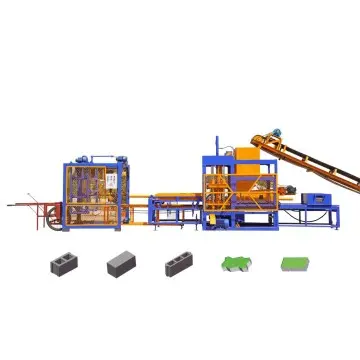
A Heavy Duty Block Making Machine is designed for demanding manufacturing environments where a robust structure and dependable operation are priorities. Depending on the model, it may incorporate a reinforced frame, durable forming components, a hydraulic or mechanical compaction system, and industrial controls. Buyers should assess the actual construction and specifications of the equipment rather than relying on the heavy-duty description alone.
What Makes a Machine Suitable for Demanding Work?
A machine intended for regular production must withstand repeated mechanical movement, vibration, and the forces involved in forming concrete blocks. The frame, mold assembly, supporting components, and moving mechanisms all contribute to its ability to operate reliably.
The quality of these parts matters more than appearance or machine weight alone. A heavy structure is not automatically durable if critical components are poorly designed or difficult to maintain.
Ask suppliers for information about the materials used in major assemblies, the design of high-wear components, recommended operating limits, and the maintenance schedule.
1. Structural Strength and Stable Operation
The machine frame supports the forming mechanism and helps maintain alignment during operation. A well-designed structure can reduce unwanted movement and provide a stable base for repeated production cycles.
Buyers should inspect welds, mounting points, fasteners, mold supports, and other structural areas. Technical drawings and a physical inspection can help clarify how the equipment is assembled.
The machine must also be installed on a suitable foundation or operating surface. Even robust equipment can experience problems if it is positioned incorrectly or used outside the manufacturer’s specified conditions.
2. Reliable Forming Components
The mold, compaction mechanism, vibration system, and associated moving parts directly influence block formation. These components are exposed to repeated contact with concrete materials and may experience wear over time.
Their condition affects product dimensions and surface quality. Regular inspection can identify worn mold surfaces, loose connections, damaged mounts, or irregular machine movement before they cause extensive production problems.
When comparing machines, ask whether replacement molds and wear components are available. Confirm the expected servicing requirements and the process for obtaining parts.
3. Capacity for Regular Production
Heavy-duty equipment may be considered by manufacturers that need to operate for extended periods or handle substantial order volumes. However, the machine’s actual output depends on the product size, mold arrangement, cycle time, material supply, and operating schedule.
The entire factory must support the intended production level. Mixers, conveyors, pallets, labor, curing areas, and storage facilities can all limit output.
Request realistic production estimates for the exact block type required. Include planned cleaning, maintenance, and product changeovers when calculating saleable daily capacity.
4. Adaptability to Different Block Products
Some heavy-duty machines support multiple block designs through interchangeable molds. This can help manufacturers serve different customer groups without purchasing separate forming equipment for every product.
Compatibility should be confirmed for each intended design. Ask about available mold dimensions, changeover procedures, and whether adjustments to the machine are needed.
A business should prioritize products with established demand. Maintaining too many low-volume designs can increase mold expenses and make production planning more complicated.
5. Maintenance for Long-Term Reliability
Heavy-duty equipment still requires preventive maintenance. Hydraulic systems, electrical controls, motors, vibration components, bearings, fasteners, and moving assemblies should be inspected according to the manufacturer’s instructions.
A planned maintenance schedule helps reduce the risk of unexpected interruptions. Operators should record inspections, repairs, component replacements, and unusual operating conditions.
It is also important to confirm that the supplier can provide technical assistance and replacement parts within a reasonable timeframe. Service access can make a significant difference when the machine is central to daily production.
6. Safe Operation and Workforce Training
A robust machine must be operated correctly. Workers need training in machine controls, safe material feeding, emergency procedures, cleaning, and maintenance isolation.
Guards and safety devices should remain in place during operation. Repairs and adjustments must follow the manufacturer’s procedures, with the equipment safely isolated before work begins.
Clear operating instructions help ensure that different shifts follow the same production practices.
Choosing Equipment for Long-Term Use
A heavy-duty block-making machine can be appropriate for businesses that require regular production and want equipment designed for demanding operating conditions. Its suitability depends on structural quality, forming components, capacity, maintenance requirements, and available technical support.
Before purchasing, inspect the equipment, verify production figures, review the warranty, and calculate the full installation and operating costs. A decision based on these factors is more likely to deliver dependable performance over the machine’s working life.