

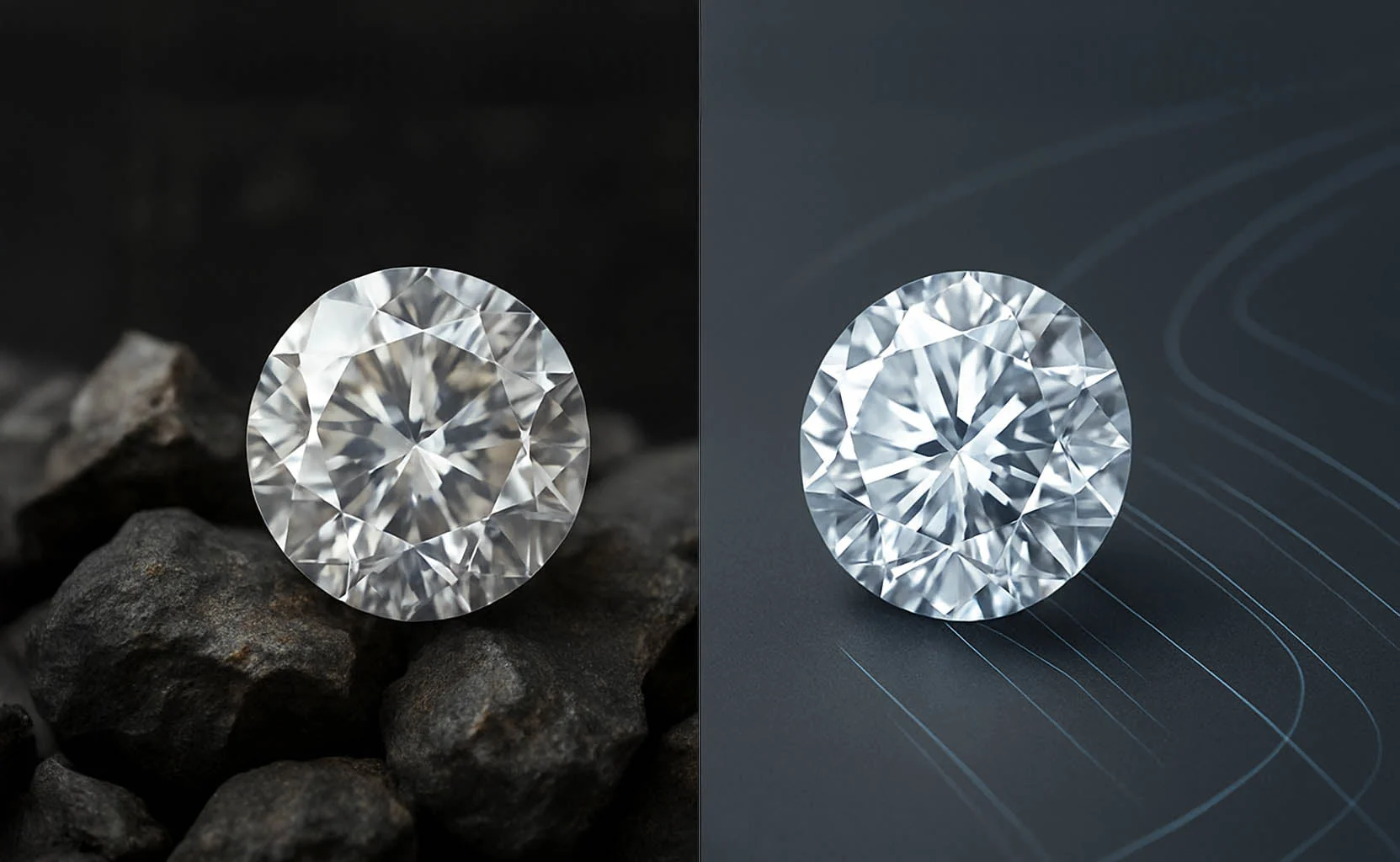
Lab-grown diamonds have transformed the modern jewelry industry by offering an alternative to traditionally mined diamonds. These diamonds are created in controlled laboratory environments using advanced technology that replicates the natural conditions under which diamonds form deep within the Earth. The result is a real diamond with the same chemical composition, crystal structure, and physical properties as a natural diamond.
Understanding how these diamonds are produced helps jewelry businesses, retailers, and consumers make more informed purchasing decisions. From selecting suitable growth methods to cutting, polishing, and quality inspection, every manufacturing stage contributes to the final diamond’s appearance and quality. Working with an experienced Lab Grown Diamond Manufacturer can also help jewelry businesses understand production standards and source diamonds that meet their requirements.
What Are Lab Grown Diamonds?
Lab-grown diamonds are diamonds produced through technological processes rather than geological formation. They consist of crystallized carbon atoms arranged in the same structure found in natural diamonds.
Unlike diamond simulants such as cubic zirconia and moissanite, lab-grown diamonds are not simply imitations. They have comparable hardness, brilliance, and optical characteristics to mined diamonds.
The primary difference between the two is their origin. Natural diamonds develop over millions or billions of years beneath the Earth’s surface, while laboratory-grown diamonds can be produced in controlled environments within a much shorter period.
Main Methods Used to Manufacture Lab Grown Diamonds
There are two primary technologies used in commercial lab-grown diamond production: High Pressure High Temperature (HPHT) and Chemical Vapor Deposition (CVD).
Both methods create genuine diamonds, but they use different processes and operating conditions.
1. High Pressure High Temperature (HPHT) Method
The HPHT method recreates the extreme pressure and temperature conditions associated with natural diamond formation.
In this process, manufacturers place a small diamond seed and a carbon source inside specialized equipment. The chamber is subjected to extremely high pressure and temperatures, allowing carbon to dissolve and crystallize onto the seed.
The process generally involves the following stages:
- Seed preparation: A small diamond crystal is selected to initiate growth.
- Carbon placement: A carbon source is introduced into the growth chamber.
- Pressure and temperature application: Specialized equipment creates the conditions required for diamond formation.
- Crystal growth: Carbon atoms gradually arrange themselves into a diamond crystal structure.
- Cooling and removal: The newly formed diamond is carefully cooled and extracted.
HPHT technology is widely used in diamond production and can produce crystals suitable for different jewelry applications.
2. Chemical Vapor Deposition (CVD) Method
Chemical Vapor Deposition is another widely used technology for manufacturing lab-grown diamonds. Unlike HPHT, this method relies on a controlled gas mixture and a specialized chamber rather than extremely high pressure.
The process begins by placing a thin diamond seed plate inside a vacuum chamber. The chamber is filled with carbon-containing gases, commonly methane and hydrogen.
Energy is then introduced through a plasma or another suitable activation method. This breaks down the gas molecules and allows carbon atoms to deposit onto the diamond seed, gradually forming a larger crystal.
The major stages include:
- Seed preparation: A suitable diamond seed plate is cleaned and positioned inside the chamber.
- Vacuum creation: Air and unwanted gases are removed to establish controlled conditions.
- Gas introduction: Hydrogen and carbon-containing gases are introduced in carefully managed proportions.
- Plasma activation: Energy activates the gases and releases carbon species.
- Layer-by-layer growth: Carbon atoms deposit onto the seed and develop into a diamond crystal.
- Crystal removal: Once the required growth stage is complete, the diamond is removed for further processing.
CVD technology offers considerable control over the growth environment and is commonly used to produce high-quality diamond crystals for jewelry manufacturing.
Step-by-Step Process of Turning Diamond Crystals into Jewelry-Ready Stones
Producing a diamond crystal is only one part of the manufacturing process. Before a lab-grown diamond can be used in jewelry, it must pass through several additional stages.
1. Initial Crystal Inspection
After the growth process, manufacturers inspect the rough diamond crystal to evaluate its size, shape, internal characteristics, and potential imperfections.
This inspection helps determine how the crystal should be cut to achieve the best possible balance between weight retention and visual performance.
2. Laser Cutting and Planning
Diamond crystals are extremely hard, making precision essential during cutting. Manufacturers use advanced imaging systems and laser technology to plan and execute the cutting process.
The objective is to remove unwanted material while preparing the crystal for its intended shape and dimensions.
Common diamond shapes include round, oval, emerald, pear, cushion, princess, and marquise.
3. Diamond Bruting and Shaping
Bruting is a process used to establish the basic outline of a diamond. Depending on the cutting method and diamond shape, specialized equipment is used to create the required proportions.
Accurate shaping is important because it influences the diamond’s symmetry, final appearance, and potential brilliance.
4. Faceting and Polishing
Once the basic shape has been established, manufacturers create individual facets on the diamond’s surface.
These carefully positioned surfaces control how light enters, reflects within, and exits the diamond. Polishing then smooths the facets to produce the desired finish.
The precision of these stages has a major influence on the diamond’s overall visual performance.
5. Final Cleaning and Inspection
After cutting and polishing, diamonds are cleaned to remove processing residue and surface contaminants.
They are then inspected to assess their appearance, proportions, symmetry, polish, and overall quality. Stones that do not meet the required specifications may undergo additional processing or be classified differently.
How Quality Is Evaluated in Lab Grown Diamonds
The quality of a lab-grown diamond is commonly evaluated using the same four fundamental characteristics used for natural diamonds, known as the 4Cs.
Cut
Cut refers to how effectively a diamond’s proportions, angles, and facets interact with light. A well-cut diamond generally displays stronger brilliance and visual appeal.
Color
Color grading evaluates how much color is visible in a diamond. Colorless diamonds are generally considered desirable, although different jewelry designs may call for different color grades.
Clarity
Clarity measures the presence of internal inclusions and external blemishes. These characteristics develop during the growth and processing stages and can influence the diamond’s appearance.
Carat Weight
Carat measures a diamond’s weight rather than its physical dimensions. Two diamonds with identical carat weights may have different appearances depending on their shapes and proportions.
Understanding these characteristics helps jewelry businesses select diamonds that match their product positioning and customer expectations.
The Importance of Certification and Transparency
Certification and grading documentation provide important information about a diamond’s characteristics and laboratory-grown origin.
Independent gemological laboratories can assess diamond quality and issue reports describing relevant grading details. These reports may include measurements, color, clarity, cut information, and identification of the diamond as laboratory-grown.
For jewelry businesses, maintaining accurate documentation is essential for product descriptions, customer communication, and transparent sales practices.
Manufacturers should be able to explain their grading procedures and provide appropriate documentation for the diamonds they supply.
Factors That Influence Lab Grown Diamond Manufacturing Costs
Although lab-grown diamonds are generally more affordable than comparable natural diamonds, their production still involves specialized equipment, technical expertise, and operational expenses.
Several factors influence manufacturing costs:
- Growth technology: HPHT and CVD production involve different equipment, operating requirements, and processing conditions.
- Growth time: The time required to produce a diamond crystal can affect production efficiency.
- Crystal quality: Internal characteristics and growth conditions influence the usable quality of the rough material.
- Cutting requirements: Complex shapes and precision cutting may require additional processing.
- Quality grading: Inspection, documentation, and certification contribute to the overall cost.
- Energy consumption: Manufacturing equipment requires substantial energy to maintain controlled growth conditions.
These factors help explain why lab-grown diamonds with different specifications can have significantly different market prices.
Why Manufacturing Technology Matters for Jewelry Businesses
For jewelry businesses, understanding diamond manufacturing provides more than technical knowledge. It helps retailers evaluate suppliers, compare product specifications, and communicate accurately with customers.
A manufacturer with suitable technology and established quality control procedures can offer greater consistency across different orders. This is particularly important for businesses that require matching stones, customized sizes, or specific diamond characteristics.
Knowledge of production methods also helps businesses explain the differences between CVD and HPHT diamonds without presenting one method as universally superior.
The most suitable choice depends on the required specifications, available documentation, quality expectations, and intended jewelry application.
Conclusion
The manufacturing process behind lab-grown diamonds combines advanced technology, controlled growth environments, and precise craftsmanship. From the initial creation of diamond crystals through HPHT or CVD methods to cutting, polishing, and final quality inspection, every stage contributes to the finished stone.
For jewelry businesses, understanding these processes makes it easier to assess diamond quality, evaluate manufacturing capabilities, and establish reliable sourcing relationships. As production technologies continue to develop, lab-grown diamonds are expected to remain an important part of the evolving jewelry industry.