

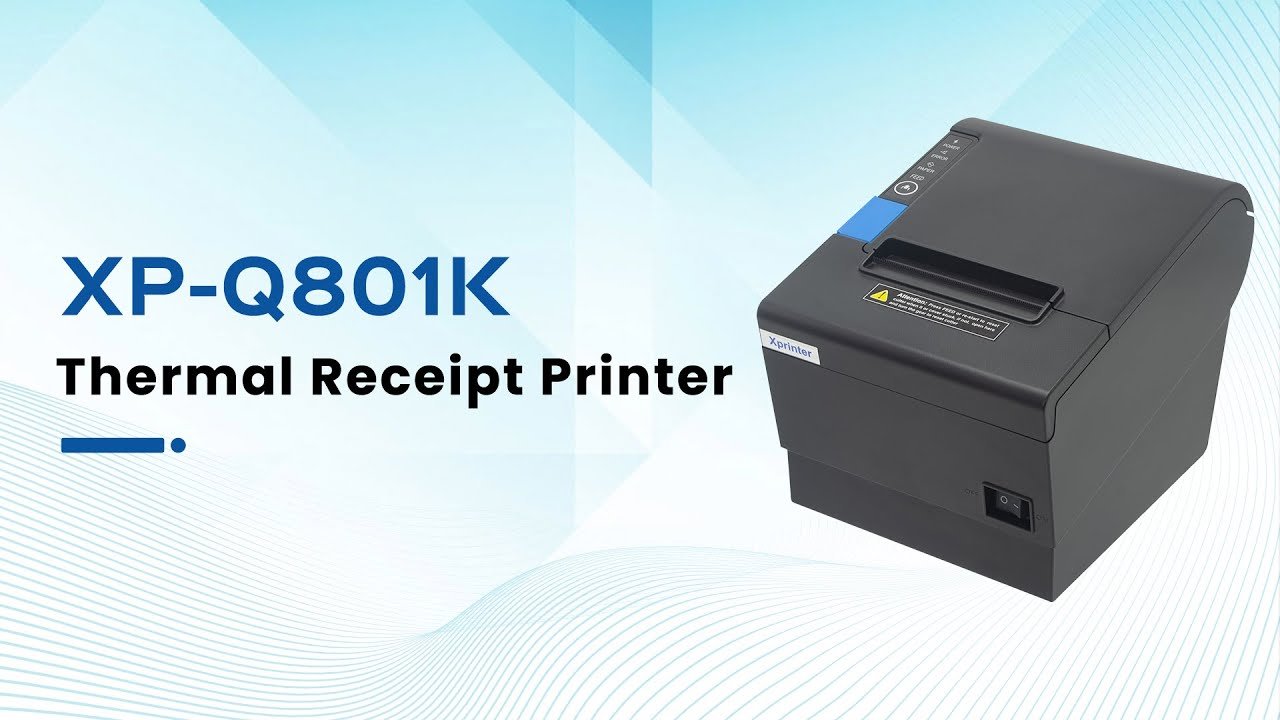
Businesses across many sectors depend on reliable receipt and transaction printing to keep daily operations organized. From retail checkouts to restaurant billing counters, printed documents often provide customers with transaction records while helping employees manage sales and payments efficiently.
An 80mm Thermal Printer is widely used for these purposes because it can produce receipts quickly without relying on traditional ink cartridges or toner. Its relatively wide paper format also provides enough space for detailed transaction information, product descriptions, barcodes, and other business-related content.
Why Businesses Use 80mm Thermal Printers
Thermal printing is well suited to environments where receipts need to be produced frequently. Direct thermal models use heat-sensitive paper, allowing them to print without liquid ink or toner.
The technology can simplify routine maintenance while supporting fast transaction processing. Depending on the model, businesses can also choose different connectivity options and features to match their POS infrastructure.
Retail Stores and Shops
Retail is one of the most common applications for 80mm thermal printing. Stores use receipt printers at checkout counters to provide customers with records of purchases.
A typical retail receipt may include product names, quantities, prices, taxes, discounts, payment information, and return policies. The wider format can provide additional room for this information without making the receipt excessively long.
Thermal printers can also be integrated with barcode scanners, cash drawers, and POS systems to create a more organized checkout workflow.
Restaurants and Cafés
Restaurants and cafés frequently require printed bills and transaction records. An 80mm printer can produce customer receipts containing menu items, quantities, prices, taxes, service charges, and payment details.
In busy establishments, fast printing can help employees complete transactions without unnecessary delays. Depending on the POS setup, printers may also be used for other operational documents.
Supermarkets and Grocery Stores
Supermarkets handle large numbers of transactions, particularly during peak shopping hours. Receipt printing speed and reliability can therefore have a direct effect on checkout efficiency.
An 80mm format provides sufficient width for product descriptions and transaction information. Thermal printing also allows receipts to be generated quickly as customers move through checkout lanes.
Hotels and Hospitality Businesses
Hotels may use thermal printers for payment receipts, café or restaurant bills, parking transactions, and other point-of-sale activities.
The ability to connect printers with hotel management or POS systems can help staff produce transaction records efficiently. Compact printer designs can also be useful at reception desks and other locations where counter space is limited.
Healthcare and Pharmacy Environments
Medical practices, pharmacies, and healthcare facilities may use receipt printers for payment confirmations and other transactional documents.
In these settings, clear and accurate printing is important because customers may need to retain receipts for reimbursement, accounting, or personal records. Businesses should ensure that printed information complies with their applicable privacy and record-handling requirements.
Transportation and Ticketing
Transportation businesses can use thermal printers to produce payment receipts, ticket-related documents, or transaction confirmations.
The compact nature of many thermal printers makes them suitable for environments where equipment needs to occupy limited space. Portable or network-enabled configurations can provide additional flexibility depending on the application.
Entertainment and Event Venues
Cinemas, amusement centers, museums, and event venues often process a high number of customer transactions in relatively short periods.
Thermal printers can be used to print payment receipts, ticket confirmations, food and beverage receipts, or other transaction records. Fast output can help staff handle queues more efficiently during busy events.
Parking and Service Stations
Parking facilities and service businesses may also benefit from thermal receipt printing. Customers can receive printed payment confirmations or transaction records immediately after completing a purchase.
For these applications, reliability and easy operation can be more important than advanced printing features. The equipment should be selected according to the environment and expected transaction volume.
Small Businesses and Independent Shops
Small businesses often need a straightforward printing solution without the complexity of larger commercial systems.
An 80mm thermal printer can work with compatible POS software to provide receipts while keeping equipment requirements relatively simple. Businesses can select connectivity and features according to their specific operating needs.
Warehouses and Logistics
Although thermal printing is strongly associated with customer receipts, printers can also have supporting roles in warehouse and logistics environments.
Depending on the equipment and software, thermal printing technology may be used for transaction records, dispatch documentation, or other operational printouts. Businesses should select a printer specifically designed for the required application when labels or specialized media are involved.
Advantages Across Different Industries
The widespread use of thermal printers is partly due to their practical operating characteristics.
Key advantages include:
- Fast receipt production
- No traditional ink cartridges for direct thermal printing
- Compact equipment designs
- Compatibility with many POS environments
- Straightforward paper replacement
- Relatively simple routine maintenance
- Support for detailed transaction receipts
The actual benefits depend on the printer model, software, paper quality, and operating environment.
Choosing a Printer for Your Industry
Different industries have different priorities, so businesses should avoid choosing equipment solely because it is widely used in another sector.
Consider transaction volume, receipt content, required connectivity, available counter space, operating conditions, software compatibility, and maintenance requirements. A restaurant may prioritize fast output, while a small shop might place greater emphasis on affordability and simple installation.
It is also important to verify that the printer supports the appropriate paper format and is compatible with the existing POS system.
Conclusion
80mm thermal printers have applications across a broad range of industries, from retail and hospitality to healthcare, transportation, entertainment, and small business operations. Their combination of fast output, practical paper width, and ink-free direct thermal printing makes them suitable for many transaction-based environments.
The most effective choice depends on the specific workflow and operating conditions of the business. By considering transaction volume, POS compatibility, connectivity, paper requirements, and maintenance needs, organizations can select a thermal printing solution that supports reliable day-to-day operations.