
Packaging films are used across industries to protect products, simplify handling, and support efficient distribution. However, different films are designed to perform very different functions. Conventional plastic films are generally intended to remain intact after use, while water-soluble films are designed to interact with water and break down under appropriate conditions.
Understanding these differences is important when selecting packaging materials for single-dose products, chemicals, detergents, agriculture, and other specialized applications. PVA Water Soluble Film is one option for applications where controlled water solubility is required, and manufacturers such as POLYVA develop film solutions for different packaging requirements.
What Is PVA Water Soluble Film?
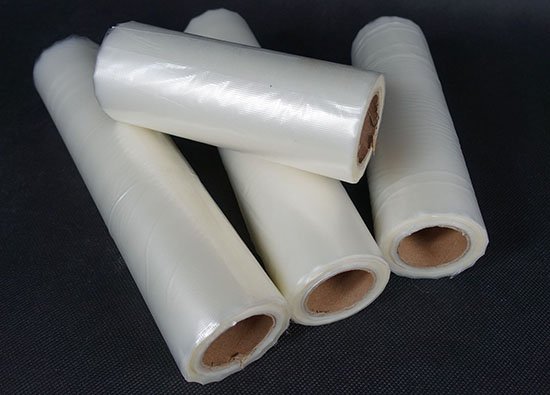
PVA water soluble film is generally produced from polyvinyl alcohol, a polymer that has a strong interaction with water. Depending on its formulation and manufacturing specifications, the material can be designed to dissolve or disperse when exposed to particular water conditions.
This characteristic makes PVA film different from many conventional packaging films. Rather than simply serving as a permanent physical barrier, the film can become part of the product-use process by disappearing after contact with water.
PVA film is commonly considered for applications where individual doses need to be packaged separately while minimizing the need for users to directly handle the contents.
What Are Conventional Plastic Films?
Conventional plastic films include materials such as polyethylene, polypropylene, polyester, and other polymers used for flexible packaging.
These films are typically designed to maintain their structure during storage and use. Their resistance to moisture and durability can make them suitable for food packaging, shipping materials, protective wraps, industrial packaging, and many other applications.
Unlike water-soluble PVA film, most conventional plastic films do not dissolve when exposed to water under normal conditions.
Their long-lasting physical structure can be an advantage when permanent packaging protection is required, but it can also create different considerations when the package reaches the end of its useful life.
Key Difference: How the Film Behaves in Water
The most obvious difference between the two material categories is their interaction with water.
PVA water soluble film is engineered to interact with water. Once sufficient water reaches the film, the polymer can hydrate and gradually dissolve or disperse, depending on its formulation and environmental conditions.
Conventional plastic films generally resist water and retain their physical structure.
This distinction makes each material appropriate for different packaging objectives. A conventional plastic film may be selected when water resistance is essential, while PVA film may be considered when water dissolution is part of the intended product experience.
Dissolution Versus Water Resistance
Water resistance is often an important property of conventional packaging.
For products that need protection from humidity, rain, spills, or condensation, a film that maintains its structure when exposed to water can be beneficial.
PVA film takes a different approach. Its interaction with water is often a functional characteristic rather than an unwanted effect.
The appropriate material therefore depends on whether water exposure should be prevented or deliberately incorporated into the package’s end use.
Differences in Single-Dose Packaging
Single-dose packaging is an area where water-soluble film can provide a distinctive approach.
A measured quantity of powder, liquid, or other compatible material can be enclosed in a soluble film pouch. The user can then place the packaged dose into the intended water environment without opening conventional packaging first.
With conventional plastic packaging, the outer package normally has to be opened, removed, or discarded before the contents are used.
This difference can simplify certain dispensing processes and reduce direct contact with concentrated products.
Handling and User Convenience
Packaging material can influence how easily a product is handled.
Conventional plastic films often require users to tear open, cut, peel, or otherwise remove the package. For some products, this process can be straightforward and familiar.
Water-soluble film can eliminate some of these steps when the application is specifically designed around dissolution. A sealed pouch may be placed directly into water, allowing the package to perform its intended function without traditional opening.
However, water-soluble film also requires appropriate handling before use because moisture can affect its physical properties.
Mechanical Strength
Conventional plastic films are available in a wide range of thicknesses and grades, many of which are engineered for high tensile strength, puncture resistance, flexibility, and impact resistance.
PVA film can also provide useful mechanical performance, but its properties are generally selected around the requirements of the intended water-soluble application.
Film thickness, polymer characteristics, additives, production conditions, and storage environment can all influence mechanical strength.
Therefore, material selection should consider both the demands of the packaging process and the desired behavior after water exposure.
Storage Requirements
Storage is another area where the materials can differ.
Many conventional plastic films are relatively resistant to ordinary humidity and can be stored under a broad range of conditions, depending on the polymer and application.
PVA water soluble film requires more careful moisture management because unwanted exposure to humidity can influence its flexibility, strength, and handling characteristics.
Protective packaging and suitable temperature and humidity conditions can help preserve film quality during storage and transportation.
Packaging Equipment Compatibility
Both material types can be manufactured and converted using specialized packaging equipment, but the processing requirements are not necessarily identical.
PVA film needs to be handled under controlled environmental conditions in many applications. Sealing temperature, sealing pressure, film thickness, pouch dimensions, and machine settings can all influence package quality.
Conventional plastic films also require appropriate equipment settings, particularly for heat sealing, forming, cutting, and printing.
Before switching from one film type to another, manufacturers should evaluate equipment compatibility rather than assuming that existing settings will produce the same results.
Environmental Considerations
Environmental performance is an increasingly important part of packaging decisions, but materials should be assessed according to their complete life cycle and intended application.
Conventional plastic films can remain in the environment for extended periods when they are not properly collected and managed. Their end-of-life behavior depends on polymer type, waste-management infrastructure, recycling availability, and other factors.
PVA film offers a different end-of-use pathway in applications where water dissolution is appropriate. However, its environmental profile also depends on formulation, application, wastewater treatment, disposal conditions, and other factors.
For this reason, water solubility should not be treated as the only measure of overall environmental performance.
Product Compatibility
Material compatibility is essential regardless of which type of film is selected.
The packaged substance should not negatively affect the film during its expected storage period. Similarly, the film should maintain adequate strength until the package is intentionally exposed to its intended use environment.
For PVA film, manufacturers may evaluate factors such as:
- Product moisture content
- Chemical compatibility
- Package weight
- Storage duration
- Film thickness
- Required dissolution conditions
- Sealing performance
Conventional plastic films require their own compatibility assessments based on the packaged product and expected conditions.
Dissolution Requirements Can Vary
Not all PVA films dissolve at the same speed.
Dissolution can be influenced by film formulation, thickness, water temperature, water movement, water chemistry, and other variables.
Some applications may require rapid dissolution, while others may need more controlled behavior.
This is an important difference from conventional plastic films, where maintaining structural integrity is usually the primary objective during water exposure.
Testing should therefore be performed under conditions that represent the actual intended application.
When Conventional Plastic Film May Be Appropriate
Conventional plastic films can be suitable when the package needs to remain intact and provide long-term protection.
Typical applications include:
- Moisture-resistant packaging
- Stretch and protective wrapping
- Transportation packaging
- Flexible consumer packaging
- Industrial liners
- Products requiring strong water barriers
In these situations, water resistance and structural durability may be more important than dissolution.
When PVA Water Soluble Film May Be Appropriate
PVA film can be considered when water interaction is an important part of product use.
Potential applications include:
- Single-dose detergent packaging
- Agricultural product sachets
- Water-soluble chemical packaging
- Industrial dosing systems
- Specialty cleaning products
- Controlled-release packaging formats
The suitability of the material depends on the specific product, package design, dissolution requirements, and handling environment.
Comparing the Two Materials
The following factors provide a practical way to distinguish PVA film from conventional plastic films:
| Property | PVA Water Soluble Film | Conventional Plastic Film |
|---|---|---|
| Water interaction | Designed to dissolve or disperse under suitable conditions | Generally designed to resist water |
| End-use behavior | Can disappear during intended water exposure | Usually remains physically intact |
| Single-dose packaging | Well suited to certain applications | Usually requires opening or removal |
| Moisture sensitivity during storage | Requires careful moisture control | Often comparatively resistant |
| Mechanical performance | Designed according to application requirements | Wide range of strength and durability options |
| Dissolution control | Can be engineered for specific conditions | Generally not a functional feature |
| Typical role | Specialized water-soluble packaging | Broad conventional packaging |
This comparison shows why neither material can be considered universally suitable. The correct choice depends on the purpose of the package.
How to Select Between PVA and Conventional Plastic Film
The selection process should begin with the intended function of the packaging.
Ask whether the package needs to remain intact after contact with water or whether water dissolution is actually part of the product-use process.
Next, consider the product itself, package weight, sealing method, storage conditions, transportation requirements, and expected environmental conditions.
For PVA film, dissolution testing should be conducted using the actual or representative water temperature, water volume, agitation, and product conditions. For conventional plastic film, testing may instead focus heavily on barrier properties, mechanical strength, seal integrity, and resistance to environmental exposure.
Conclusion
PVA water soluble film and conventional plastic films serve different packaging purposes. Conventional plastic films are generally valued for durability, structural stability, and resistance to water, while PVA film is designed to interact with water and dissolve under appropriate conditions.
The choice between them should be based on the complete packaging requirement rather than on a single material characteristic. Product compatibility, mechanical strength, storage conditions, equipment requirements, dissolution behavior, and end-of-use considerations should all be evaluated.
When water dissolution can simplify dosing or product handling, PVA film provides a specialized alternative to traditional plastic packaging. When long-lasting water resistance and structural protection are the priority, conventional plastic films may be more appropriate for the application.