
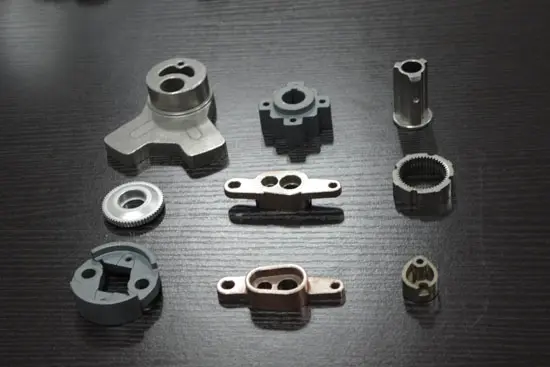
The performance of a powder metallurgy component begins with the material used to manufacture it. A gear, bushing, filter, or structural part may share a similar production route but require very different material characteristics. Strength, hardness, wear resistance, corrosion behavior, density, and porosity can all influence the suitability of a powder blend. Choosing the right grade is therefore a fundamental engineering decision rather than a routine purchasing detail.
When comparing PM Material Grades, designers and buyers should connect the material specification to the component’s actual function. The grade must be compatible with the forming and sintering process and must provide the properties required under real operating conditions. A material name alone is not enough to establish suitability.
What a powder metallurgy material grade represents
A material grade identifies a defined composition or property range used for a particular class of components. Depending on the applicable standard or supplier specification, it may describe chemical composition, density-related expectations, mechanical properties, or other characteristics.
Powder metallurgy materials are not always directly equivalent to wrought or cast grades with similar alloy names. Their properties can be influenced by powder characteristics, compaction, sintering, porosity, and secondary processing. Buyers should therefore check the actual specification and test conditions rather than assuming that two materials with similar chemical compositions will behave identically.
Common material families
Iron-based powders are widely used in structural powder metallurgy components. They can be formulated with alloying additions to support different combinations of strength, hardness, and hardenability. Applications may include gears, sprockets, hubs, and other mechanical parts.
Bronze-based powders are used in certain bearing and bushing products. Their suitability depends on the required sliding characteristics, lubrication arrangement, load, and operating environment.
Stainless steel powders may be selected where corrosion resistance is important. They can be used in components exposed to moisture, certain chemicals, or conditions where surface cleanliness matters. The appropriate grade still depends on the specific environment because corrosion behavior varies between stainless compositions.
Other specialized powder materials may be chosen for magnetic, thermal, electrical, or wear-related requirements. The selection should be based on verified properties and application testing.
Connect material properties to the application
A useful selection process begins with the component’s function. A gear must transmit torque and resist tooth wear. A bearing must support movement while managing friction. A filter needs a controlled porous structure and suitable chemical compatibility. These applications cannot be served by the same material specification simply because they are all produced using powder metallurgy.
Mechanical loading is an important consideration. Engineers should establish whether the component experiences steady loads, repeated cycling, impact, or vibration. Temperature and environmental exposure can further affect material behavior.
For sliding components, the interaction between contacting surfaces matters. Shaft hardness, surface finish, lubricant, and operating speed may influence wear as much as the nominal bushing material.
Understand density and porosity
Density is particularly important in powder metallurgy because compaction and sintering determine how closely the material approaches its theoretical density. Higher density often supports improved mechanical strength, although the relationship depends on material composition and processing.
Some products require controlled porosity rather than maximum density. Oil-impregnated bearings need pores that can retain lubricant, while sintered filters depend on interconnected openings that provide a defined flow path. These products require different pore structures and performance criteria.
The target density or porosity should therefore be specified according to function. Treating density as a single measure of quality can be misleading when the component is intentionally porous.
Consider secondary processing
Heat treatment, sizing, machining, impregnation, and surface finishing can change the final properties of a powder metallurgy component. A grade that performs well in its as-sintered condition may be used differently after heat treatment or another finishing operation.
Manufacturers should confirm that the proposed material is compatible with the complete process route. Secondary operations should be included in the specification and quality plan.
Verify the supplier’s documentation
Buyers should request the material designation, chemical composition where applicable, relevant mechanical data, density or porosity information, and inspection records. For critical applications, sample testing can verify whether the material performs as expected in the finished component.
It is also important to establish how material substitutions will be handled. Changes to powder source, composition, or processing can affect performance and should not be introduced without appropriate review.
Select by measurable requirements
The right PM material grade is the one that meets the component’s functional requirements through a controlled and repeatable manufacturing route. By evaluating loads, environment, density, porosity, finishing, and verification data together, engineers can make a more reliable selection and reduce the risk of material-related problems in production.