

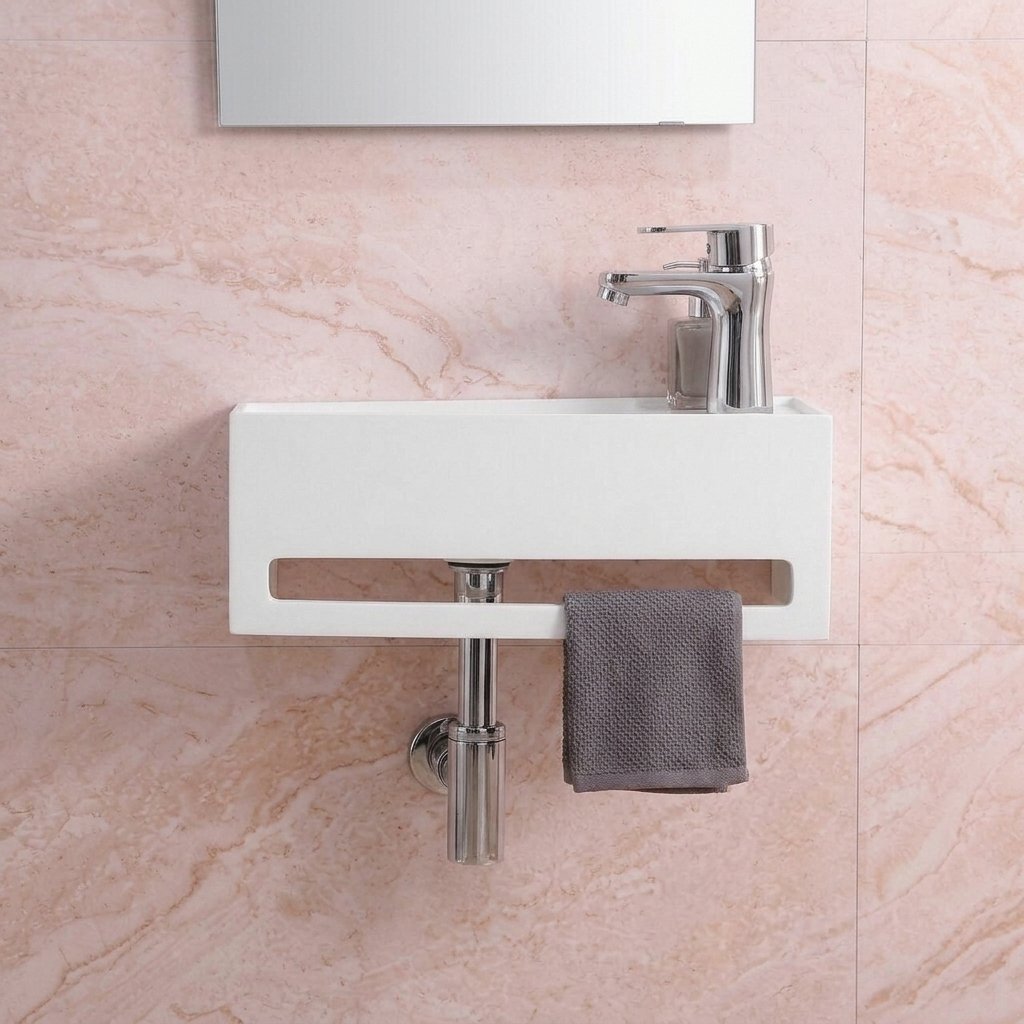
Choosing a faucet and drain may seem like a minor part of a bathroom renovation, yet these fittings have a direct effect on how well the basin works. Their size, position, and design influence water flow, splashing, drainage speed, and cleaning. A poor combination can make even a well-designed bathroom fixture inconvenient to use.
When selecting fittings for a Small bathroom basin, the main goal is to match the faucet and waste assembly with the bowl’s dimensions and construction. A compact basin needs a faucet with suitable reach and height, along with a drain that fits its outlet correctly. Understanding the available combinations helps homeowners avoid compatibility issues and unnecessary plumbing changes.
Why Faucet and Drain Compatibility Matters
A faucet and drain serve different purposes, but their positions need to work together. The faucet controls how water enters the bowl, while the drain determines how efficiently it leaves. Their placement affects the entire washing area.
A faucet with excessive reach may direct water toward the front edge. A spout that sits too close to the rear wall may make handwashing uncomfortable. Similarly, an unsuitable waste fitting can create leaks or prevent proper drainage.
Before choosing individual fittings, check the basin’s technical drawing. It should show the tap-hole arrangement, drain opening, overflow position, and recommended installation method.
Best Faucet Types for Compact Basins
Different faucet styles suit different basin designs. The right option depends on the available mounting space, bowl depth, and position of the water supply connections.
Single-Hole Mixer Faucet With Pop-Up Waste
A single-hole mixer faucet is a practical choice for many compact basins. It combines hot and cold water controls in one fitting, reducing the number of holes needed on the basin or countertop.
Pairing it with a compatible pop-up waste creates a convenient arrangement. The drain opens and closes through a control mechanism, often operated by a lever behind the faucet or an integrated push mechanism.
This combination works well with basins that have a designated tap hole and overflow opening. Confirm that the waste mechanism matches the basin’s construction before ordering.
Short-Reach Faucet With Standard Waste
A short-reach faucet can suit shallow bowls and narrow countertops. Its spout extends only far enough to direct water into the basin, helping preserve space around the fixture.
Pair it with a standard waste fitting that matches the outlet diameter. This setup is generally straightforward and avoids unnecessary complexity.
However, short reach should not mean insufficient clearance. Check that the water stream falls near the center of the bowl and leaves enough room for comfortable handwashing.
Wall-Mounted Faucet With Bottle Trap
A wall-mounted faucet keeps the countertop clear and gives the basin area a simple appearance. It works particularly well with wall-hung basins and minimalist bathroom layouts.
A bottle trap can complement this arrangement when the basin has an exposed waste connection. Its compact shape may suit installations where the plumbing remains visible beneath the bowl.
This combination requires accurate pipe positioning. The faucet outlet must align with the basin, and the waste trap needs enough clearance from the wall and nearby fixtures.
Tall Faucet With Vessel Basin Waste
Countertop vessel basins usually sit above the vanity surface. They often need a taller faucet to provide enough space between the spout and the bowl.
A matching vessel basin waste may have a wider or more decorative top section. The waste must still match the outlet size and overflow requirements of the basin.
Check the combined height of the countertop and bowl before selecting the faucet. A tap that looks suitable beside the basin in a product image may sit too high or too low once installed.
Understanding the Main Drain Options
The waste fitting needs to match the basin’s outlet and overflow design. Different drain types offer different levels of convenience and visual appeal.
Pop-Up Waste
A pop-up waste allows users to open and close the drain without placing a separate plug into the bowl. It often works with mixer faucets that include a lift rod or with push-operated mechanisms.
This option suits basins with compatible drain openings. Buyers should check the mechanism type and installation space beneath the bowl.
Click-Clack Waste
A click-clack waste opens and closes when the top is pressed. It has a simple appearance and does not require a separate control lever.
Some models suit basins with overflow openings, while others are designed for overflow-free bowls. The distinction matters because an incompatible waste may not seal or fit correctly.
Open Grid Waste
An open grid waste allows water to drain continuously. It does not close like a conventional plug, making it suitable for basins that do not need to hold water.
This design is useful in commercial washrooms and other settings where users generally wash their hands under running water. Check the grid size and outlet compatibility before purchase.
Bottle Trap and P-Trap
The trap connects the basin waste to the drainage pipe and helps prevent sewer gases from entering the room.
A bottle trap has a compact vertical design and often works well with exposed plumbing. A P-trap uses a curved pipe arrangement and suits many standard drainage layouts.
The correct choice depends on the position of the wall or floor waste outlet. The trap should also remain accessible for cleaning and maintenance.
How to Match Faucet Height and Spout Reach
Faucet height and reach have a major influence on comfort. A suitable fitting gives enough room for hands to move beneath the water stream without directing water onto the countertop.
The distance between the faucet outlet and the basin floor also matters. A very low spout may restrict hand movement, while an excessively high outlet can increase splashing.
Use these points when comparing faucet dimensions:
- Spout height: Check the vertical clearance above the bowl.
- Spout reach: Confirm that water falls inside the basin rather than near its edge.
- Handle clearance: Make sure the control does not hit the wall or mirror.
- Water flow: Consider whether the aerator produces a controlled stream.
- Mounting position: Confirm that the faucet fits the available tap hole or wall connection.
Whenever possible, compare the faucet drawing with the basin’s dimensions. This provides a more reliable indication of compatibility than appearance alone.
Choosing Finishes That Work Together
Faucet and drain finishes do not have to match exactly, although a coordinated appearance usually creates a more consistent bathroom design.
Chrome remains a common choice because it works with white basins, neutral tiles, and many cabinet finishes. Brushed nickel offers a softer metallic appearance and may show fingerprints less clearly than highly polished surfaces. Matte black creates contrast and suits bathrooms with darker accessories.
Consider the following combinations:
| Faucet Finish | Suitable Drain Finish | Design Effect |
| Chrome | Chrome | Clean and familiar |
| Matte black | Matte black | Strong contrast |
| Brushed nickel | Brushed nickel | Soft metallic appearance |
| Brushed brass | Matching brass tone | Warm decorative detail |
| Polished nickel | Polished nickel | Reflective and refined |
Check the manufacturer’s finish descriptions before ordering. Similar color names do not always mean identical shades or surface textures.
What to Check Before Buying a Faucet and Drain Set
A coordinated set can simplify purchasing, but it still needs to match the basin. Some packages include a faucet and waste fitting without providing every connection required for installation.
Review the following specifications:
- Tap-hole size: Confirm that the faucet fits the basin or countertop opening.
- Drain diameter: Match the waste fitting to the basin outlet.
- Overflow compatibility: Select a waste designed for a basin with or without an overflow.
- Water connections: Check the hot and cold supply requirements.
- Trap dimensions: Confirm that the trap fits the available space.
- Included accessories: Check for hoses, mounting hardware, seals, and waste components.
- Warranty and replacement parts: Review the coverage and availability of service components.
For renovation projects, compare these details with the existing plumbing. For new installations, coordinate the faucet and waste positions with the plumber before the countertop or wall openings are finalized.
Common Faucet and Drain Pairing Mistakes
Even standard fittings can cause problems when buyers overlook small compatibility details.
Using a faucet with excessive reach: Water may strike the front edge and splash onto the countertop. Choose a spout that directs water into the usable bowl area.
Pairing an incompatible waste with the overflow: The waste assembly may not seal correctly or may leave the overflow connection unsupported.
Ignoring the faucet mounting method: A wall-mounted faucet cannot replace a deck-mounted model without suitable plumbing provisions.
Choosing a decorative trap without checking clearance: The trap may interfere with a drawer, cabinet panel, or wall connection.
Buying fittings before measuring the basin: Standard product descriptions do not guarantee that every faucet or waste will fit every basin.
These issues are easier to prevent during product selection than to correct after installation.
Best Combinations for Different Bathroom Setups
The most suitable combination depends on the basin style and how the bathroom will be used.
| Bathroom Setup | Recommended Faucet | Suitable Drain Arrangement |
| Small wall-hung basin | Short-reach single-hole mixer | Compatible pop-up or click-clack waste |
| Minimalist guest bathroom | Wall-mounted faucet | Bottle trap with matching waste |
| Countertop vessel basin | Tall deck-mounted faucet | Vessel basin waste |
| Commercial washroom | Short-reach mixer or sensor faucet | Open grid waste |
| Compact vanity basin | Single-hole mixer | Pop-up waste with suitable trap |
These are general recommendations rather than universal rules. Always confirm the basin manufacturer’s fitting requirements before purchasing the components.
Maintenance Tips for Faucets and Drains
Faucets and drains need regular care to maintain reliable performance. Mineral deposits can collect around the spout and aerator, while hair, soap residue, and other debris may slow drainage.
Clean faucet surfaces with a soft cloth and a suitable mild cleaner. Follow the manufacturer’s instructions for plated or specialty finishes. Avoid abrasive pads that may scratch the surface.
Remove and clean the drain stopper when necessary. Check the trap for blockages and inspect visible connections for leaks. A slow drain may indicate a buildup inside the waste assembly rather than a problem with the basin itself.
For commercial properties, include faucet and drain inspections in the regular washroom maintenance schedule. Frequent use can cause loose connections and worn mechanisms that need attention.
Making the Right Choice
The best faucet and drain combination is one that fits the basin’s design, supports comfortable water flow, and connects properly to the plumbing. A short-reach mixer with a compatible pop-up waste suits many compact installations, while wall-mounted faucets and bottle traps work well in layouts that keep the countertop clear. Vessel basins need suitable faucet height and a matching waste assembly.
When comparing products from manufacturers such as kingkonree, review the basin specifications alongside the fitting details rather than purchasing components separately based only on appearance. Careful coordination helps avoid leaks, splashing, and installation adjustments while keeping the bathroom practical and visually consistent.