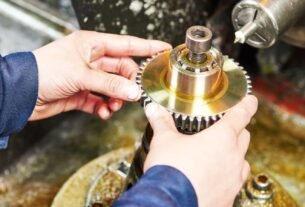

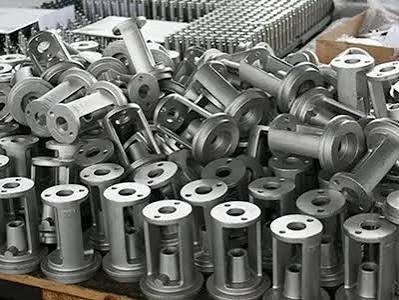
Construction and agricultural machinery operate in demanding environments where equipment must withstand heavy loads, vibration, impact, dust, moisture, and continuous use. From excavators and bulldozers to tractors and harvesting machines, these systems depend on durable mechanical components to maintain reliable performance. Iron castings play an important role in producing many of these parts because they can be manufactured in complex shapes with different combinations of strength, hardness, wear resistance, and machinability.
Manufacturers support these industries by developing cast components that meet specific engineering and operational requirements. An experienced Iron Castings Manufacturer works with equipment designers and industrial buyers to select suitable materials, control casting processes, and maintain consistent product quality. Understanding how iron casting supports construction and agricultural machinery highlights its importance in modern equipment manufacturing.
1. The Importance of Iron Castings in Heavy Machinery
Iron castings are widely used in machinery because the casting process allows manufacturers to produce components with complex geometries and substantial cross-sections. These characteristics are useful for equipment that requires strong housings, structural parts, and mechanical support components.
Different cast iron grades provide different performance advantages. Gray iron offers good vibration damping and machinability, while ductile iron provides greater tensile strength and ductility in suitable grades.
For construction and agricultural machinery, iron castings can help provide:
- Structural support for mechanical assemblies.
- Resistance to repeated operating loads.
- Vibration damping in selected components.
- Wear resistance in demanding applications.
- Complex shapes with integrated features.
- Reliable dimensions for machining and assembly.
The correct material and design depend on the component’s function and operating environment.
2. Supporting Construction Equipment Manufacturing
<AsyncImage query=”heavy construction excavator bulldozer machinery industrial components” aspectRatio=”16:9″ width=”100%”/>
Construction equipment performs demanding tasks such as excavation, material transportation, road building, and demolition. Its components must withstand substantial mechanical forces and repeated operating cycles.
Iron castings are used in selected parts of construction machinery, including housings, support structures, and mechanical assemblies.
Common applications include:
- Engine and transmission housings.
- Gearbox components.
- Pump bodies.
- Bearing housings.
- Equipment mounting structures.
- Selected hydraulic system components.
These parts help support the equipment’s mechanical systems and maintain alignment between connected components. Their design must account for load conditions, vibration, temperature, and the need for accurate machining.
3. Iron Castings for Excavators and Earthmoving Machinery
Excavators, loaders, and other earthmoving machines operate under continuous mechanical stress. Their engines, transmissions, hydraulic systems, and drive mechanisms rely on components that can maintain performance under challenging conditions.
Iron castings are used in selected housings and structural parts within these systems.
For example, transmission housings protect internal gears and help maintain their positioning. Pump housings provide the structure needed for fluid-handling assemblies, while bearing housings support rotating shafts.
Ductile iron may be suitable for components requiring higher strength and toughness, whereas gray iron may be selected for parts where vibration damping and machinability are important.
Material selection should reflect the specific mechanical demands of each component rather than the overall size of the machine.
4. Supporting Agricultural Machinery Production
<AsyncImage query=”modern agricultural tractor combine harvester farming machinery” aspectRatio=”16:9″ width=”100%”/>
Agricultural machinery operates across different terrains and weather conditions. Tractors, harvesters, seeders, and irrigation equipment must perform consistently despite exposure to dust, moisture, vibration, and changing workloads.
Iron castings help manufacturers produce durable components for these machines.
Common agricultural applications include:
- Tractor engine components.
- Gearbox and transmission housings.
- Pump bodies.
- Bearing supports.
- Mechanical brackets.
- Equipment mounting components.
These parts contribute to the structural stability and functionality of agricultural equipment. Proper casting quality is important because component failure during planting or harvesting seasons can interrupt time-sensitive operations.
5. The Role of Cast Iron in Tractor Manufacturing
Tractors use multiple mechanical systems to transfer engine power to wheels, hydraulic equipment, and attached implements. Iron castings are used in selected components that support these systems.
Examples include engine blocks, transmission housings, axle housings, and other mechanical enclosures, depending on the equipment design.
Gray iron may be used in suitable engine and housing applications because of its vibration-damping properties and machinability. Ductile iron can be considered for parts that experience greater tensile or impact loads.
Manufacturers must also account for component weight, machining requirements, thermal behavior, and assembly tolerances when producing tractor castings.
6. Components Used in Harvesting Equipment
Harvesters and combines contain complex mechanical systems that must operate continuously during demanding agricultural work. Their components experience vibration, movement, and repeated loading as crops are cut, transported, and processed.
Iron castings can be used in selected drivetrain and support components, including:
- Gear housings.
- Bearing housings.
- Transmission components.
- Engine-related castings.
- Mechanical support structures.
- Pump housings.
The required material properties depend on the function of each component. Parts exposed to repeated mechanical stress may require different specifications from stationary housings or equipment bases.
Accurate casting dimensions and reliable machining are particularly important for assemblies containing rotating or moving parts.
7. Choosing the Right Cast Iron Grade for Machinery
Selecting a suitable cast iron grade is a major part of manufacturing reliable machinery components. Different grades offer different mechanical and physical characteristics.
Gray cast iron: Commonly selected for its machinability, compressive strength, and vibration-damping properties. It is useful for machine bases, selected housings, and other applications where these characteristics are important.
Ductile cast iron: Offers higher tensile strength and ductility than conventional gray iron. It is suitable for many components exposed to mechanical loads and impact.
Alloy cast iron: Contains additional alloying elements to improve specific characteristics such as wear resistance, hardness, or high-temperature performance.
Compacted graphite iron: Provides a balance of thermal conductivity, strength, and other properties that can be useful in selected engine applications.
The final choice should be based on engineering drawings, material standards, and actual operating conditions.
8. How Casting Design Supports Complex Machinery Components
Construction and agricultural machines often contain components with irregular shapes, internal passages, mounting points, and different wall thicknesses. Casting allows these features to be produced in a single component or with fewer separate parts.
Manufacturers use pattern design and mold engineering to develop the required geometry. Core systems can create internal cavities and passages that would be difficult to produce through conventional machining alone.
Important design considerations include:
- Uniformity of wall thickness.
- Appropriate draft angles.
- Shrinkage allowances.
- Core positioning.
- Gating and riser arrangements.
- Machining allowances.
- Cooling and solidification behavior.
Careful design helps reduce casting defects and improves the suitability of components for later machining and assembly.
9. Maintaining Strength and Durability Through Process Control
Machinery components must maintain their mechanical properties throughout their service life. Manufacturing quality therefore depends on controlling each major stage of casting production.
Important process controls include:
Chemical composition: Ensures that the molten iron meets the specified material grade.
Melting temperature: Helps maintain suitable metal conditions before pouring.
Mold preparation: Supports accurate geometry and reduces mold-related defects.
Pouring control: Helps prevent incomplete filling and excessive turbulence.
Cooling management: Reduces the risk of shrinkage problems and unwanted structural variations.
Heat treatment: May be used when required to improve specific properties or reduce residual stresses.
Consistent control of these variables helps manufacturers produce components with more predictable performance.
10. The Importance of Machining Accuracy
<AsyncImage query=”CNC machining cast iron industrial gearbox housing precision milling” aspectRatio=”16:9″ width=”100%”/>
Many cast components require additional machining before they can be installed in construction or agricultural machinery. Critical surfaces may need milling, drilling, boring, turning, or grinding to achieve the required dimensions.
Machining is particularly important for bearing seats, mounting surfaces, threaded holes, and connection points.
Manufacturers must consider machining allowances during casting design to ensure that enough material remains for finishing operations.
Accurate machining helps improve:
- Component alignment.
- Assembly compatibility.
- Bearing positioning.
- Sealing performance.
- Surface finish.
- Dimensional consistency.
Combining casting and machining capabilities can simplify production coordination and help maintain control over the final component specifications.
11. Quality Inspection for Construction and Agricultural Castings
Quality inspection helps verify that cast components meet the mechanical, dimensional, and material requirements of their intended applications.
Construction and agricultural machinery may operate under demanding conditions, so defects that affect strength or dimensional accuracy can lead to maintenance problems or equipment downtime.
Common inspection methods include:
Visual inspection: Identifies surface cracks, porosity, sand inclusions, and other visible defects.
Dimensional inspection: Checks component measurements against engineering drawings.
Chemical analysis: Verifies the composition of the cast iron.
Hardness testing: Evaluates resistance to indentation and helps confirm material consistency.
Tensile testing: Measures mechanical strength and elongation where required.
Non-destructive testing: Methods such as ultrasonic or radiographic inspection can identify certain internal discontinuities when appropriate.
The inspection plan should reflect the component’s function, material specification, and applicable industry requirements.
12. Improving Equipment Reliability and Reducing Downtime
Reliable cast components contribute to the overall performance of construction and agricultural machinery. A defective housing, support, or mechanical component can affect connected systems and interrupt equipment operation.
Consistent casting quality helps reduce the likelihood of premature component failure and unnecessary maintenance.
Manufacturers support equipment reliability by maintaining suitable material specifications, controlling production processes, and inspecting finished products.
For machinery operators, dependable components can contribute to:
- More predictable maintenance schedules.
- Reduced unexpected equipment interruptions.
- Better mechanical assembly performance.
- Longer component service life.
- More efficient equipment operation.
The actual service life also depends on equipment design, operating conditions, installation, lubrication, and maintenance practices.
13. Custom Iron Castings for Specialized Machinery
Not all construction and agricultural machines use the same component designs. Equipment manufacturers may require custom castings based on specific load conditions, dimensions, mounting arrangements, and performance targets.
Custom casting production typically begins with technical drawings or three-dimensional models. Engineers review the design, determine the appropriate material, and develop suitable patterns, molds, and production procedures.
Customization may involve:
- Special component dimensions.
- Complex internal cavities.
- Specific material grades.
- Different wall thicknesses.
- Integrated mounting features.
- Machining and finishing requirements.
Close communication between equipment designers and casting manufacturers helps ensure that custom components meet their intended functions.
14. How Modern Technology Improves Casting Production
Modern manufacturing technologies help foundries improve accuracy, production efficiency, and quality consistency.
Computer-aided design (CAD) allows engineers to create detailed component and mold models. Casting simulation software can help predict metal flow, mold filling, and solidification behavior before physical production begins.
Other technologies include automated molding systems, controlled melting equipment, digital temperature monitoring, and coordinate measuring machines.
These tools can help manufacturers:
- Identify potential casting defects earlier.
- Improve mold and gating design.
- Maintain repeatable production conditions.
- Reduce material waste.
- Improve dimensional accuracy.
- Monitor quality across production batches.
Technology also supports the development of complex castings that meet the increasingly detailed requirements of modern machinery manufacturers.
15. What Machinery Manufacturers Should Consider When Selecting a Casting Supplier
Choosing a suitable casting supplier is important for equipment manufacturers that depend on consistent component quality and reliable production schedules.
Before selecting a supplier, buyers should evaluate several factors.
Material capabilities: Confirm whether the supplier can produce the required gray iron, ductile iron, or alloy cast iron grades.
Production capacity: Check whether its facilities can support the required component sizes and order volumes.
Engineering support: Evaluate its ability to review drawings and recommend practical casting designs.
Machining capabilities: Determine whether additional machining and finishing services are available.
Quality control: Ask about material testing, dimensional inspection, and defect detection procedures.
Production consistency: Review how the supplier maintains specifications across repeated batches.
Delivery and communication: Consider production planning, lead times, and technical communication.
A careful evaluation helps buyers establish a manufacturing relationship that supports long-term equipment production.
Conclusion
Iron casting manufacturers support construction and agricultural machinery production by supplying components for engines, transmissions, pump systems, housings, bearing supports, and other mechanical assemblies. Different cast iron grades provide useful combinations of strength, machinability, vibration damping, and wear resistance for these demanding applications.
Consistent results depend on suitable material selection, accurate mold design, controlled melting and pouring, precision machining, and effective quality inspection. As construction and agricultural equipment continues to evolve, reliable iron casting production will remain an important part of manufacturing durable and efficient machinery.