

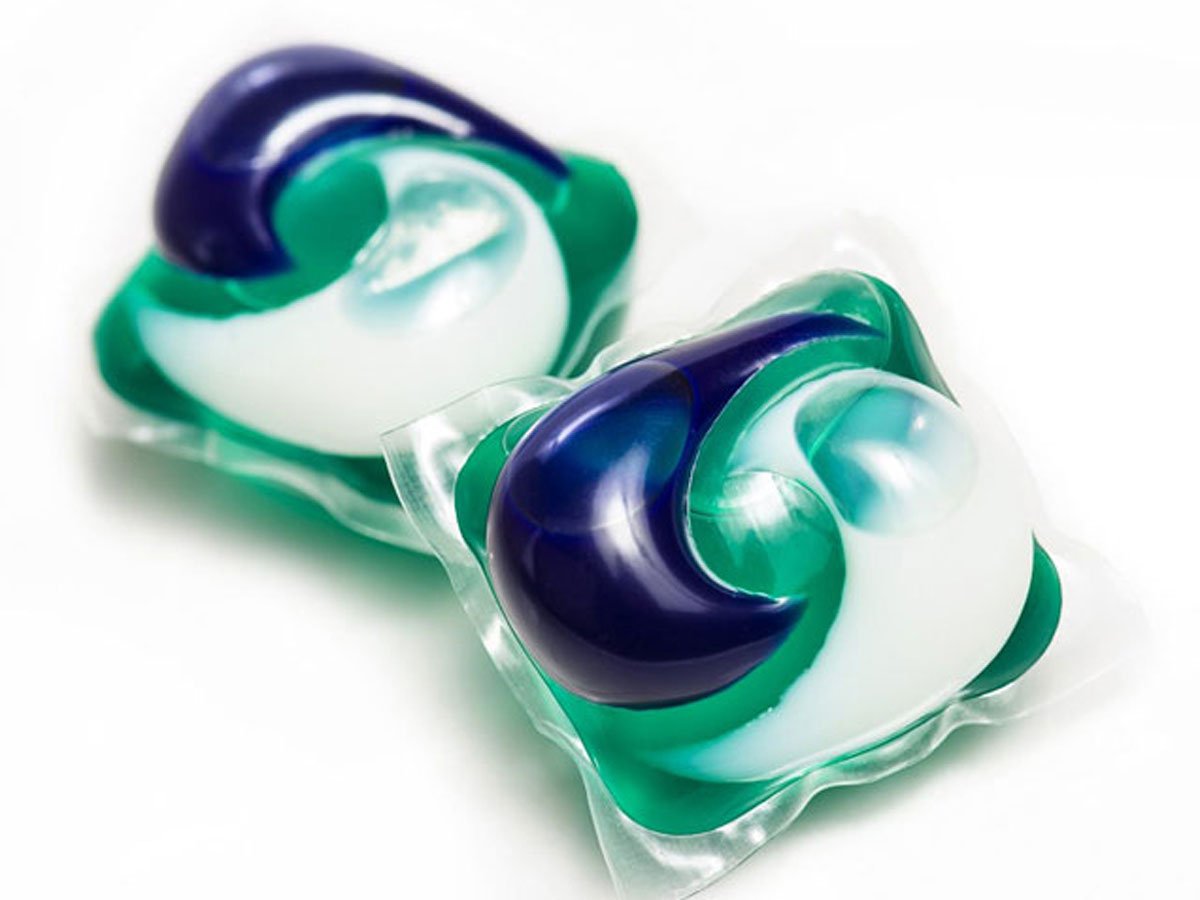
Laundry detergent pods have become an established format for convenient, pre-measured laundry care products. Producing these pods at commercial scale requires coordinated processes that can form the pouch, accurately dose detergent, seal the film, and prepare finished pods for handling.
A Laundry Pod Machine combines these processes into a controlled production system. POLYVA develops packaging equipment designed for applications involving water-soluble film and pre-measured detergent products.
What Is a Laundry Pod Machine?
A laundry pod machine is automated equipment used to manufacture detergent portions enclosed in water-soluble film. Instead of filling conventional bottles or containers, the system creates individual detergent units with a predetermined quantity of product.
The machine typically coordinates several stages, including film feeding, forming, dosing, sealing, cutting, and finished-pod collection.
Film Feeding
The manufacturing process begins with water-soluble film. The film is supplied to the machine and guided through controlled rollers and forming components.
Consistent film movement is important because uneven tension or alignment can affect the shape and dimensions of the finished pod. Automated feeding systems help maintain a steady material path during production.
Pouch Formation
After feeding, the film is shaped into cavities that will hold the detergent. Forming conditions depend on the characteristics of the film and the required pod design.
The forming stage must create consistent cavities so that each portion receives the intended quantity of detergent and the final package has a uniform appearance.
Detergent Dosing
Once the cavities are prepared, the detergent is introduced through a dosing system. Accurate dosing is one of the most important parts of pod manufacturing because each unit is intended to contain a controlled amount of product.
The appropriate dosing method depends on detergent characteristics such as viscosity, flow behavior, and formulation.
Handling Liquid Detergent
Many laundry pods contain liquid or gel detergent. These products require controlled pumping and filling to minimize variations between individual pods.
Filling speed, pump performance, product temperature, and viscosity can all influence dosing consistency.
Sealing the Pod
After filling, another layer of water-soluble film is positioned over the product. The machine then seals the film around the detergent.
Sealing conditions must be controlled carefully. Factors such as temperature, pressure, timing, film condition, and machine speed can influence seal quality.
Cutting and Individual Pod Formation
Once the film has been sealed, the continuous sheet is separated into individual detergent pods. Cutting or forming systems need to maintain accurate positioning to produce consistent shapes.
Proper synchronization between forming, filling, sealing, and cutting helps reduce material waste and production interruptions.
Multi-Compartment Pods
Modern detergent products may use multi-compartment designs to keep different formulations or ingredients separated until use.
Producing these formats requires more precise forming and dosing because multiple cavities or sections must be created and filled correctly within the same pod.
Quality Control
Quality checks are an important part of detergent pod manufacturing. Production teams may monitor characteristics such as:
- Pod dimensions
- Filling quantity
- Seal integrity
- Film alignment
- Visual appearance
- Production consistency
Automated sensors and inspection systems can help identify certain deviations during production.
Environmental Control
Water-soluble film can be sensitive to humidity and temperature. For this reason, the manufacturing environment can have an important influence on film handling and sealing.
Film should be stored and processed according to its specified environmental requirements. Maintaining suitable conditions can support more stable production.
Automation and Production Efficiency
Automation reduces the need for manual handling during repetitive production stages. Film feeding, dosing, forming, sealing, and pod transfer can be coordinated through machine controls.
Automated monitoring can also provide information about production status, alarms, and operating conditions, allowing operators to respond to issues more quickly.
Machine Maintenance
Regular maintenance helps preserve consistent machine performance. Common maintenance activities may include inspecting film guides, cleaning filling components, checking sealing areas, calibrating dosing systems, and examining sensors.
The maintenance schedule should reflect production volume, detergent characteristics, machine configuration, and manufacturer recommendations.
Operator Responsibilities
Although laundry pod manufacturing can be highly automated, operators remain important to the process. They may load film, monitor product supply, verify machine settings, inspect finished pods, and respond to alarms.
Proper training helps operators recognize changes in film behavior, dosing performance, and sealing quality before they develop into larger production problems.
Why Process Coordination Matters
Each production stage affects the next. A film alignment problem can influence forming, while inconsistent dosing can affect sealing. Excessive machine speed can also create problems across several stages simultaneously.
For this reason, reliable pod production depends on maintaining coordination between material handling, filling, forming, sealing, and quality control.
Conclusion
Laundry pod machines bring multiple manufacturing steps together to produce pre-measured detergent products in water-soluble film. From film feeding and cavity formation to accurate dosing, sealing, cutting, and inspection, each stage contributes to the final pod.
Understanding how these processes work helps manufacturers evaluate equipment requirements, maintain consistent production, and identify the factors that influence pod quality and operational performance.