

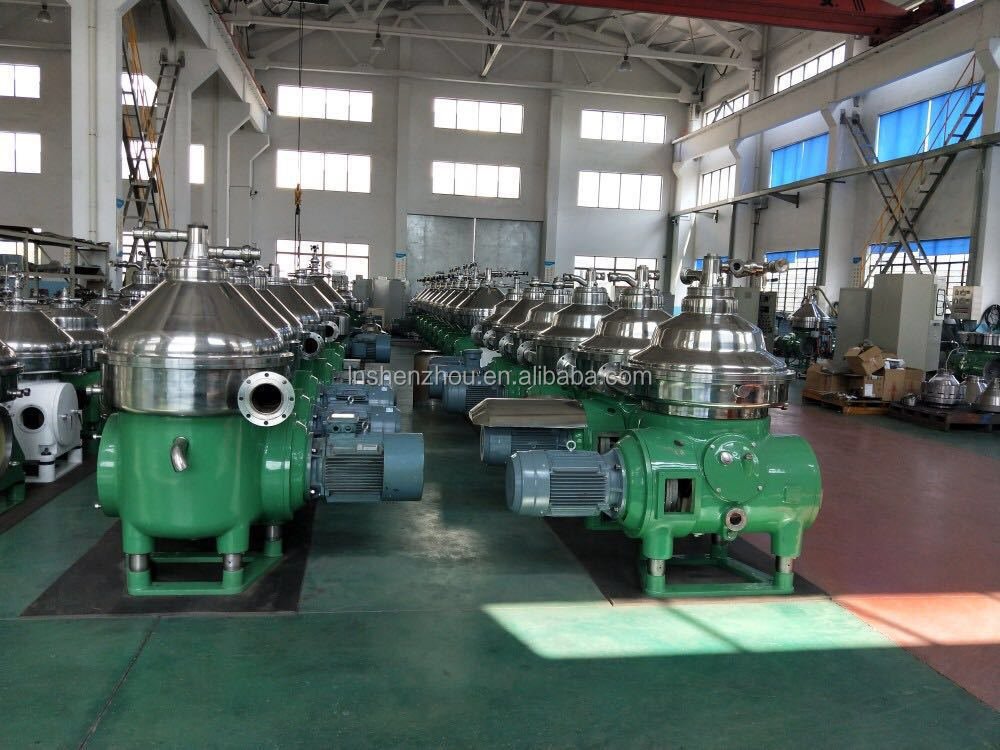
Industrial separation processes can vary considerably depending on the material being treated, required throughput, and desired separation result. A system suitable for clarifying a low-solids liquid may not be the best choice for a process involving heavy solids or multiple liquid phases. Understanding the differences between centrifuge designs can therefore help processing facilities make more suitable equipment decisions.
A Disc Centrifuge uses a rapidly rotating bowl and closely spaced discs to increase the effective separation area inside the machine. Although the underlying principle remains the same, centrifuge designs can differ in bowl configuration, discharge method, flow arrangement, automation, and materials of construction.
Why Centrifuge Design Matters
The internal design of a centrifuge determines how material moves through the separation zone and how separated components are collected or discharged.
Important design characteristics can influence:
- Separation efficiency
- Processing capacity
- Solids-handling ability
- Liquid recovery
- Energy consumption
- Cleaning requirements
- Maintenance frequency
- Suitability for continuous operation
Choosing the correct design means matching these characteristics to the actual requirements of the process.
Clarifying Centrifuge Designs
Some disc centrifuges are primarily configured for clarification, where the main objective is removing suspended solids from a liquid.
These systems are useful when the feed contains relatively low or moderate concentrations of solids and the desired product is a cleaner liquid. Applications can include beverage clarification, process-water treatment, and removal of fine particles from industrial liquids.
The design needs to provide sufficient centrifugal force and effective residence conditions for the particles to migrate out of the liquid.
Separating Liquid Phases
Other designs are optimized for separating two immiscible liquids with different densities.
Inside the rotating bowl, the heavier liquid moves toward the outer region while the lighter liquid migrates toward the center. The internal geometry helps maintain the separation interface and direct each phase toward its appropriate outlet.
This configuration can be useful in applications involving oil and water, chemical liquids, and other immiscible mixtures.
Three-Phase Separation Designs
Some processing applications require the simultaneous separation of two liquid phases and suspended solids. A suitable three-phase configuration can separate the components within a single continuous operation.
For example, an industrial feed may contain:
- A lighter liquid phase
- A heavier liquid phase
- Solid particles
The centrifuge must be designed to manage all three components efficiently. Feed properties, solids concentration, density differences, and flow rate become particularly important when selecting this type of system.
Different Solids Discharge Arrangements
Solids-handling design is another major difference between centrifuge configurations.
Some machines are intended for applications where solids accumulate gradually and can be removed periodically. Others incorporate mechanisms that allow accumulated solids to be discharged at controlled intervals during operation.
The appropriate arrangement depends on solids concentration and production requirements. A process with continuous feed and significant solids loading may require more frequent discharge capability than a low-solids clarification application.
Manual and Automated Operation
Centrifuge systems can also differ in their level of automation.
Basic systems may require operators to monitor operating conditions and control certain functions manually. More automated systems can incorporate sensors and control systems for parameters such as:
- Bowl speed
- Feed flow
- Temperature
- Vibration
- Discharge cycles
- Operating pressure
Automation can help maintain consistent processing conditions and reduce manual intervention, particularly in facilities operating around the clock.
Open and Hygienic Processing Requirements
The materials being processed can influence the required equipment construction.
Food, beverage, pharmaceutical, and biotechnology applications may place greater emphasis on hygienic design, cleanability, surface finish, and compatible materials. Chemical applications may instead require construction materials capable of resisting aggressive substances.
The centrifuge design should therefore reflect both the physical properties of the feed and the standards applicable to the industry.
Comparing Capacity Requirements
Processing capacity is another key consideration when comparing designs. A centrifuge must accommodate the required feed rate while maintaining acceptable separation performance.
A higher-capacity design may be appropriate for large production facilities, but operating requirements should be evaluated carefully. Capacity can be affected by viscosity, solids concentration, particle size, density differences, and separation targets.
Rather than selecting equipment based solely on its maximum rated flow, processors should consider the expected working capacity under real operating conditions.
Speed and Separation Performance
Different centrifuge designs may have different operating characteristics, but rotational speed remains a fundamental factor in centrifugal separation.
Higher speed generates stronger centrifugal force, which can improve the migration of fine particles and accelerate liquid-phase separation. However, speed must remain within the equipment’s recommended operating range.
Performance should be evaluated alongside energy consumption, mechanical stress, feed characteristics, and required separation quality.
Comparing Maintenance Requirements
Design differences can also affect maintenance.
A system handling high concentrations of solids may experience more frequent internal buildup and require regular cleaning or inspection. Equipment used with corrosive materials may require special attention to wetted components and seals.
Before selecting a design, consider:
- Ease of access to internal components
- Cleaning procedures
- Expected wear
- Replacement-part availability
- Inspection intervals
- Service requirements
A design that is easy to maintain can help reduce downtime over the equipment’s operating life.
Matching Designs to Common Industries
Different industries tend to have different separation priorities.
Food and Beverage
Food processing commonly emphasizes hygienic operation, product recovery, and reliable clarification. A suitable design may focus on fine particle removal while maintaining continuous product flow.
Dairy Processing
Dairy applications may involve milk clarification and cream separation. Equipment selection should account for temperature, product sensitivity, hygiene, and desired phase separation.
Chemical Processing
Chemical plants may require clarification or liquid-liquid separation involving materials with varying viscosity and chemical compatibility requirements.
Wastewater Treatment
Wastewater applications can involve significant solids loads. Solids-handling capability and reliable continuous operation may therefore be more important than extremely fine clarification alone.
Oil and Fuel Processing
Oil-related applications often focus on removing water and particulate contaminants. The density difference between phases, viscosity, and operating temperature can influence the appropriate configuration.
How to Compare Different Designs
A practical comparison should begin with the process rather than the machine itself. Define the feed characteristics, required capacity, separation objective, and operating schedule first.
Then compare available designs based on:
- Separation type
- Feed characteristics
- Required throughput
- Solids concentration
- Liquid density difference
- Discharge method
- Automation level
- Materials of construction
- Cleaning requirements
- Total operating cost
This approach makes it easier to identify which design provides the best overall fit.
Considering Long-Term Operating Costs
Purchase price is important, but it should not be the only factor in equipment selection. Energy consumption, maintenance, replacement components, cleaning time, and production downtime can all influence the total cost of ownership.
A design with efficient operation and manageable maintenance requirements may provide greater long-term value than a lower-cost machine that requires frequent servicing or creates process interruptions.
Shenzhou Machinery is one manufacturer associated with centrifugal separation equipment, but the most suitable design should ultimately be determined by the specific requirements of the processing application.
Conclusion
Disc centrifuge designs can vary significantly to meet different industrial processing requirements. Clarification systems, liquid-liquid separators, and three-phase configurations each address different separation challenges, while solids discharge methods, automation, materials of construction, and maintenance features further distinguish available options.
The best design is not necessarily the one with the highest speed or largest capacity. Instead, it should provide an appropriate balance between separation performance, throughput, solids handling, energy use, maintenance, and process compatibility. By evaluating these factors together, industrial facilities can select a centrifuge configuration that supports reliable and efficient separation.