

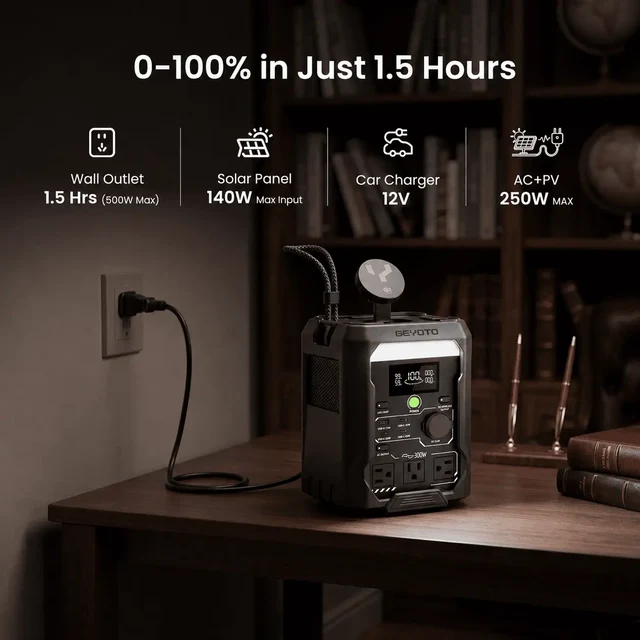
A portable power station is a practical solution for anyone who needs reliable electricity away from traditional power outlets. Whether you’re camping, traveling, working remotely, or preparing for emergencies, a compact power station can keep your essential devices charged without the noise and maintenance of a fuel-powered generator.
Among the many options available, a 256Wh 300W model strikes a balance between portability and everyday functionality. If you’re researching available features and specifications, the 256Wh 300W Portable Power Station is worth exploring to better understand what this size of power station can offer.
What Does 256Wh 300W Mean?
Understanding the specifications makes it easier to choose the right portable power station.
- 256Wh (Watt-hours): Represents the amount of energy the battery can store.
- 300W (Watts): Indicates the maximum continuous output the power station can deliver to connected devices.
In simple terms, the battery capacity determines how long your devices can run, while the output rating determines which devices the unit can safely power.
Who Is This Size Best For?
A 256Wh 300W portable power station is ideal for people who need lightweight, portable power for everyday electronics and outdoor activities.
It is well suited for:
- Campers
- Road travelers
- RV users
- Outdoor photographers
- Remote workers
- Students
- Emergency preparedness kits
Its compact size makes it easy to transport while providing enough power for many common devices.
Devices You Can Power
A 300W output is suitable for many low- to medium-power electronics.
Examples include:
- Smartphones
- Tablets
- Laptops
- Digital cameras
- Drones
- LED lights
- Portable fans
- Wi-Fi routers
- Portable speakers
- GPS devices
Always verify that the combined power consumption of connected devices does not exceed the unit’s continuous output rating.
Battery Capacity and Runtime
Battery runtime depends on the wattage of the connected device and how long it operates.
Here are some general examples:
| Device | Typical Power Usage | Estimated Runtime* |
|---|---|---|
| LED light | 10 W | Around 20–22 hours |
| Wi-Fi router | 15 W | Around 13–15 hours |
| Laptop | 60 W | Around 3–4 hours |
| Portable fan | 40 W | Around 5–6 hours |
| Smartphone charging | 10–15 W | Multiple full charges |
*Actual runtime varies depending on battery efficiency, operating conditions, and device power consumption.
Important Features to Consider
When comparing portable power stations, look beyond battery size.
Multiple Output Ports
A versatile unit should include several connection types, such as:
- USB-A ports
- USB-C ports
- AC outlets
- DC outputs
- 12V vehicle socket
This allows multiple devices to charge or operate simultaneously.
Charging Options
Flexible charging methods make the power station more useful in different environments.
Many models support:
- Wall outlet charging
- Vehicle charging
- Solar panel charging
Solar compatibility is particularly useful for camping and extended outdoor trips.
Portability
One of the biggest advantages of a 256Wh power station is its compact design. Lightweight construction and built-in carrying handles make transportation simple whether you’re hiking to a campsite or loading equipment into your vehicle.
Safety Features
A quality portable power station should include built-in protection systems that improve reliability and protect connected electronics.
Look for features such as:
- Overcharge protection
- Overload protection
- Short-circuit protection
- Temperature monitoring
- Battery Management System (BMS)
These features help ensure safe operation during everyday use.
What It May Not Power
Although a 300W portable power station is versatile, it is not intended for high-wattage household appliances.
Devices that may exceed its capacity include:
- Microwave ovens
- Electric kettles
- Hair dryers
- Space heaters
- Large coffee makers
- Full-size refrigerators
Always check an appliance’s power requirements before connecting it.
Tips for Getting the Best Performance
To maximize battery life and runtime:
- Fully charge the unit before each trip.
- Use energy-efficient devices whenever possible.
- Disconnect equipment once charging is complete.
- Store the power station in a cool, dry location.
- Recharge the battery periodically during long-term storage.
Following these simple practices helps maintain reliable performance over time.
Is a 256Wh 300W Power Station Right for You?
If your primary goal is powering personal electronics, camping equipment, communication devices, or small appliances, this size offers an excellent balance of portability and functionality. It provides enough energy for most daily essentials while remaining easy to carry and transport.
However, if you regularly need to run high-power appliances or require backup power for extended periods, you may want to consider a larger-capacity model.
Final Thoughts
A 256Wh 300W portable power station is an excellent choice for users who value portability, convenience, and reliable power for everyday devices. Whether you’re preparing for emergencies, enjoying outdoor adventures, or working remotely, it offers a dependable source of electricity without the noise or maintenance associated with traditional generators.
By understanding battery capacity, output limits, charging options, and safety features, you can confidently choose a portable power station that matches your needs and delivers reliable performance wherever you go.