
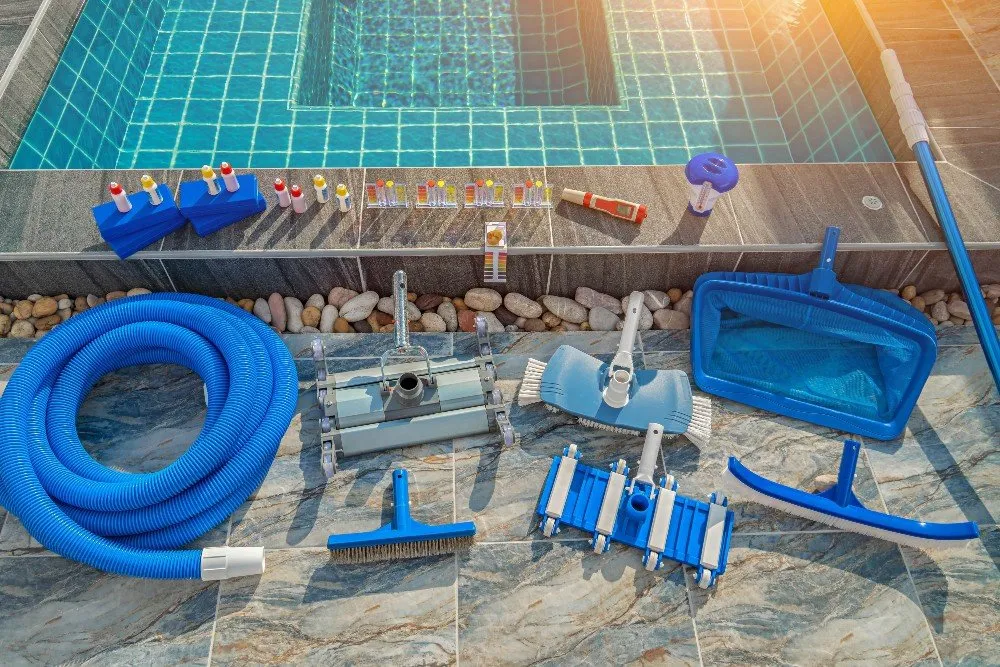
Swimming pools provide a refreshing place to relax, exercise, and spend time with family, but maintaining them can require significant amounts of water, electricity, and treatment chemicals. Traditional pool systems may consume more energy than necessary, lose water through evaporation, or rely on maintenance practices that create avoidable waste. Making thoughtful choices about pool equipment can help reduce these impacts while keeping the water clean and comfortable.
Choosing eco-conscious swimming pool equipment and supplies allows homeowners to take a more sustainable approach to pool ownership. Energy-efficient pumps, effective filtration systems, solar heating, pool covers, and responsible water treatment can all contribute to more efficient operation. By combining suitable products with consistent maintenance, pool owners can reduce resource consumption without compromising essential water quality or safety.
What Makes Swimming Pool Equipment Eco-Friendly?
Eco-friendly pool equipment is designed to use resources efficiently, reduce unnecessary waste, or limit environmental impacts during operation. Some products reduce electricity consumption, while others help conserve water or minimize the amount of chemicals needed for routine maintenance.
However, a product is not automatically sustainable simply because it is marketed as environmentally friendly. Its actual benefits depend on how it performs, how long it lasts, what maintenance it requires, and whether it suits the pool.
When evaluating equipment, consider these important factors:
- Energy efficiency: Does the product perform its function while using less electricity or fuel?
- Water conservation: Can it reduce evaporation, backwashing, leaks, or unnecessary refilling?
- Chemical management: Does it support accurate treatment and reduce avoidable chemical waste?
- Durability: Can it provide reliable service without frequent replacement?
- Repairability: Are compatible replacement parts and servicing readily available?
- Operating requirements: Does it need additional power, consumables, or maintenance that could offset its benefits?
Looking at these factors together provides a more realistic picture of a product’s environmental performance.
1. Energy-Efficient Variable-Speed Pool Pumps
<AsyncImage query=”modern variable speed swimming pool pump with digital control panel installed beside residential pool filtration system” aspectRatio=”16:9″ width=”100%” />
Pool pumps are among the most important pieces of equipment to consider when improving energy efficiency. They circulate water through the filtration system, helping distribute treated water and maintain suitable pool conditions.
Traditional single-speed pumps operate at a fixed speed whenever they are running. Variable-speed pumps allow the motor speed to be adjusted to match different circulation requirements.
Why Variable-Speed Pumps Can Be More Efficient
Routine filtration often does not require the highest possible pump speed. Running a compatible variable-speed pump at a lower speed for longer periods can use substantially less electricity than operating it continuously at high speed.
The potential savings depend on the pump model, plumbing resistance, operating schedule, and the pool’s circulation requirements. Correct sizing and programming are essential because inadequate circulation can undermine water quality.
Tips for Sustainable Pump Operation
Choose a pump that matches the pool’s hydraulic requirements rather than selecting one solely by its advertised power. Use suitable operating schedules and clean baskets and filters regularly to avoid unnecessary resistance.
If replacing an older pump, compare expected electricity consumption, installation costs, warranty coverage, and long-term service requirements. A more efficient model may cost more initially but can offer better value over its operating life.
2. Solar Pool Heating Systems
<AsyncImage query=”solar thermal swimming pool heating collectors installed on residential roof with pool below” aspectRatio=”16:9″ width=”100%” />
Heating pool water can require considerable energy, particularly when the pool is used frequently or maintained at a consistently warm temperature. Solar pool heating uses energy from sunlight to warm circulating water, reducing the need for conventional heating during suitable conditions.
How Solar Pool Heating Works
Solar collectors absorb heat from sunlight and transfer it to pool water as it passes through the system. A pump circulates water through the collectors before returning it to the pool.
Performance depends on available sunlight, collector area, roof orientation, local climate, and the pool’s heating requirements. Some installations use a conventional heater as a backup when solar energy is insufficient.
Making the Most of Solar Heating
Use an appropriate pool cover to reduce heat loss when the pool is not in use. Maintain the circulation system according to the manufacturer’s instructions, and ensure that the collector area and plumbing are designed for the pool.
Before investing, compare installation costs and expected heating performance with alternative options. Solar heating may be particularly attractive in sunny locations, but results vary by season and local weather.
3. Pool Covers That Conserve Water and Heat
<AsyncImage query=”residential swimming pool fitted blue solar bubble cover covering water surface on sunny day” aspectRatio=”16:9″ width=”100%” />
Pool covers are a straightforward way to reduce resource consumption. By limiting the water’s direct exposure to air, a suitable cover can slow evaporation and help retain heat.
Reducing Water Consumption
Evaporation can account for a substantial share of water loss in uncovered pools, particularly in hot, dry, or windy conditions. A cover reduces the exposed water surface and can lower the frequency of refilling.
Conserving water also reduces the need to replenish dissolved chemicals that may be diluted or lost during routine pool maintenance.
Improving Heating Efficiency
Thermal and solar covers help limit evaporation-related heat loss. This can reduce the energy needed to maintain the preferred water temperature in heated pools.
Choose a cover based on its intended purpose, pool dimensions, local weather, and ease of use. Remove accumulated debris and store removable covers according to the manufacturer’s instructions.
An ordinary solar or debris cover is not a safety barrier. If protection against accidental entry is required, choose an appropriately rated safety cover and maintain suitable pool barriers and supervision.
4. Water-Efficient Filtration Systems
<AsyncImage query=”residential swimming pool cartridge filter system with clean removable pleated filter element” aspectRatio=”16:9″ width=”100%” />
Filtration is essential for maintaining water clarity, but some systems use additional water during cleaning. Choosing a suitable filter and maintaining it correctly can help reduce waste.
Cartridge Filters and Water Conservation
Cartridge filters trap particles within a removable filter element. Unlike many sand and diatomaceous earth systems, they generally do not require routine backwashing, which can reduce water loss.
The cartridge must still be cleaned and replaced when necessary. Its service life depends on pool usage, water conditions, and maintenance practices.
Optimizing Filter Performance
Select a filter with appropriate capacity for the pool’s flow requirements. An undersized filter may need more frequent cleaning, while an unsuitable system can make efficient operation difficult.
Monitor filter pressure, clean the filter according to manufacturer recommendations, and investigate sudden changes in flow. Avoid cleaning it more often than necessary, as excessive maintenance can waste water and shorten the useful life of filter media.
When comparing filter types, consider water consumption, maintenance time, replacement parts, and compatibility with the existing pump.
5. Eco-Conscious Pool Cleaning Equipment
<AsyncImage query=”robotic swimming pool cleaner collecting debris on bottom of clean residential pool” aspectRatio=”16:9″ width=”100%” />
Pool cleaning is another area where equipment choices can influence energy and water use. Robotic cleaners and well-designed manual tools can help remove debris without requiring unnecessary cleaning cycles or excessive filter maintenance.
Robotic Pool Cleaners
Robotic cleaners typically use their own motors and filtration components to collect dirt and debris. Depending on the model, they may reduce reliance on the pool’s main circulation system during cleaning.
However, energy consumption varies between models, and some units have specific operating or maintenance requirements. Compare power ratings, cleaning performance, cycle duration, and replacement-part availability before purchasing.
Durable Manual Cleaning Tools
Skimmers, brushes, and vacuum accessories remain useful for routine pool care. Selecting durable tools that can be repaired or fitted with replacement components may reduce the amount of material discarded over time.
Regularly removing leaves and debris before they accumulate can also reduce the workload on the pool’s filtration system. A suitable cover may further reduce the amount of debris entering the water.
6. Smart Pool Automation for Efficient Operation
<AsyncImage query=”smart pool automation control panel mounted near residential pool pump and filtration equipment” aspectRatio=”16:9″ width=”100%” />
Automation systems help pool owners schedule and coordinate equipment operation. Depending on the system, controls may manage pump speeds, heating schedules, lighting, water features, and selected water-treatment functions.
Reducing Unnecessary Energy Use
Programmable schedules can help prevent pumps, heaters, and lights from operating longer than required. Some systems also provide operating data or alerts that help owners identify inefficient settings.
For example, a compatible controller can coordinate heating with expected pool use rather than maintaining a high temperature continuously. A variable-speed pump can also be programmed for different circulation tasks.
Avoiding Waste Through Monitoring
Automation may help detect certain operating issues, such as unusual temperature readings or equipment faults. Early attention can prevent some problems from continuing unnoticed.
Nevertheless, smart controls do not guarantee efficient operation on their own. Settings must be configured appropriately, sensors need maintenance, and water chemistry still requires regular verification.
Choose automation features that address real maintenance needs rather than adding complexity without a clear benefit.
7. Water-Saving Pool Maintenance Practices
Sustainable pool care depends on everyday habits as well as equipment. Even an efficient pool system can waste resources if leaks are ignored, filters are cleaned unnecessarily, or water chemistry is poorly managed.
Identify and Repair Leaks
A leak can waste significant quantities of water over time. Monitor water levels and investigate unexplained losses, taking evaporation and splash-out into account.
A simple water-loss comparison may help distinguish normal evaporation from a potential leak, although a professional inspection may be necessary to confirm the cause. Repairing leaks promptly also helps prevent damage to nearby structures and equipment.
Reduce Unnecessary Backwashing
Backwashing can be necessary for certain filter systems, but doing it too frequently sends treated water down the drain. Follow the filter manufacturer’s instructions and use pressure readings to determine when maintenance is required.
Do not eliminate necessary backwashing to save water. Instead, maintain the filter properly and choose a system suited to the pool’s cleaning requirements.
Reuse Water Only Where Appropriate
Water removed during maintenance should be handled according to local regulations and environmental conditions. Pool water may contain chemicals or dissolved salts that make it unsuitable for some forms of reuse.
Before directing discharged water onto landscaping or into a drainage system, check local requirements and ensure the water is appropriate for the intended destination.
8. Responsible Pool Water Treatment
Maintaining suitable water chemistry is essential for swimmer safety and equipment protection. Sustainable treatment focuses on using the correct products in appropriate quantities rather than simply minimizing chemical use.
Test Before Adding Chemicals
Use suitable test strips, liquid kits, or digital testers to monitor sanitizer levels, pH, and other relevant parameters. Follow the requirements of the pool’s sanitation system and make adjustments based on measured results.
Testing before treatment helps avoid unnecessary additions, reduces chemical waste, and lowers the risk of creating new imbalances.
Consider Saltwater Chlorine Generation Carefully
Saltwater pools use a chlorine generator to produce chlorine from dissolved salt. They still require proper water testing and maintenance, and they are not chlorine-free systems.
A saltwater setup may offer convenience for some owners, but it involves equipment costs, electricity use, cell maintenance, and water chemistry requirements. Its environmental benefits depend on the entire system and how it is operated.
Use Alternative Treatments With Care
Products marketed as mineral-based, enzyme-based, or other supplemental treatments may serve particular functions, but they should not be assumed to replace an effective sanitation system.
Follow the product label and seek professional guidance when necessary. Maintaining appropriate sanitation is more important than pursuing a treatment method simply because it is advertised as natural or environmentally friendly.
9. Eco-Friendly Pool Lighting
<AsyncImage query=”energy efficient LED underwater swimming pool lights illuminating clear blue pool at twilight” aspectRatio=”16:9″ width=”100%” />
Lighting can contribute to pool electricity use, especially when fixtures operate for extended periods. LED pool lights generally use less electricity than many older lighting technologies and are available in a range of brightness levels and colors.
Benefits of LED Lighting
LED fixtures can offer efficient illumination and a long operating life when correctly selected and installed. They may also reduce the frequency of lamp replacement compared with some traditional options.
The actual environmental benefit depends on the fixture’s efficiency, service life, manufacturing impacts, and how often it is used.
Use Lighting Only When Needed
Timers and compatible automation systems can switch lights off when the pool area is not in use. Selecting suitable illumination levels and avoiding unnecessary decorative lighting can further reduce energy consumption.
Underwater lighting must meet applicable electrical safety requirements. Use qualified professionals for installation and repairs, and verify that replacement fixtures are compatible with the existing system.
10. Durable Equipment and Responsible Replacement
Sustainability involves more than choosing the most efficient product available. Equipment that lasts longer, can be repaired, and has accessible replacement parts may reduce material waste over time.
Prioritize Repairability
Before replacing a malfunctioning pump, filter, cleaner, or controller, determine whether the problem can be resolved safely and economically. Replacing a worn seal or compatible component may be more practical than discarding an otherwise functional unit.
For older equipment, compare the cost of repair with its energy use, reliability, and expected remaining service life.
Consider the Full Life Cycle
When comparing products, look beyond the purchase price. Consider installation, electricity, consumables, servicing, replacement components, and eventual disposal.
An efficient product that requires frequent replacement may not always be the best long-term option. Similarly, keeping an inefficient system indefinitely may result in unnecessary operating costs.
Choose equipment based on a balanced assessment of durability, performance, resource use, and compatibility.
11. How to Create a Sustainable Pool Care Plan
An effective sustainability plan starts by identifying where the pool uses the most resources. For some households, heating is the largest expense; for others, pump operation, water loss, or maintenance practices offer the greatest opportunity for improvement.
Use the following steps to develop a practical plan:
- Review current energy use. Identify major electrical loads, especially pumps, heaters, and lighting.
- Monitor water consumption. Look for unexplained water loss and review how much water is used during filter cleaning.
- Evaluate existing equipment. Check whether the pump, filter, heater, and cleaning system are appropriately sized and maintained.
- Prioritize high-impact improvements. Consider a suitable pool cover, efficient pump, or improved heating controls where they address a clear need.
- Maintain balanced water chemistry. Test consistently and apply only the treatment products required.
- Track results. Compare energy bills, water use, maintenance frequency, and repair costs before and after changes.
This approach helps homeowners focus their budgets on improvements that are likely to make a meaningful difference.
12. Common Mistakes to Avoid With Sustainable Pool Equipment
Well-intentioned changes can sometimes create new problems when equipment is selected or operated incorrectly.
Choosing Products Based on Marketing Alone
Terms such as eco-friendly, green, or energy-saving do not guarantee a particular level of performance. Review technical specifications, certifications where relevant, and realistic operating requirements.
Reducing Pump Runtime Too Much
Shortening pump schedules without considering the pool’s needs can lead to inadequate circulation and water-quality problems. Adjust runtime according to pool conditions, sanitation requirements, and manufacturer guidance.
Ignoring Water Chemistry to Reduce Chemical Use
Using less sanitizer than required can compromise water safety. Sustainable care means applying the correct treatment efficiently, not reducing essential sanitation.
Buying Equipment That Is Not Compatible
A pump, filter, controller, or cleaner that does not match the existing system may perform poorly or require expensive modifications. Verify compatibility before purchasing.
Neglecting Maintenance
Dirty filters, blocked baskets, damaged seals, and poorly maintained equipment can reduce efficiency. Regular inspections and timely repairs help preserve performance and extend equipment life.
Conclusion
Eco-friendly swimming pool equipment and supplies can help homeowners reduce energy consumption, conserve water, limit unnecessary chemical use, and manage maintenance more efficiently. Variable-speed pumps, solar heating, suitable pool covers, water-efficient filtration, LED lighting, and smart controls all offer potential benefits when matched to the pool’s requirements.
The most sustainable approach combines appropriate equipment with responsible everyday practices. Regular water testing, leak prevention, efficient operating schedules, and preventive maintenance help ensure that resource savings do not come at the expense of water quality or safety.
By assessing the pool’s needs and prioritizing improvements with measurable benefits, owners can create a more sustainable swimming environment while managing long-term operating costs.