
Preparing cartons correctly is an important step before products enter a filling or packing operation. A flat carton blank needs to be opened, squared, and formed into a stable case before it can safely receive products. When this process is inconsistent, it can affect the efficiency of the entire packaging line.
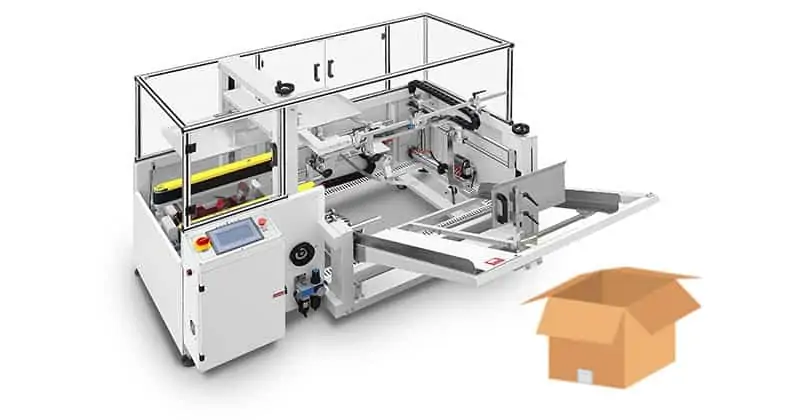
A Case Erecting Machine automates this preparation process by taking flat carton blanks and forming them into usable cases. By providing a consistent supply of properly shaped boxes, the equipment can help create a smoother transition between carton preparation and product filling.
From Flat Blank to Usable Case
Cartons are commonly supplied and stored as flat blanks because this saves space during transportation and storage. Before filling can begin, each blank must be transformed into a three-dimensional case.
The case erecting process typically involves several coordinated steps, including feeding the carton, opening it, squaring the panels, and securing the bottom so the case can maintain its shape.
Feeding Cartons Into the Machine
The first stage involves supplying individual carton blanks to the forming system. Consistent feeding is important because overlapping or incorrectly positioned blanks can cause interruptions.
The machine’s feeding mechanism is designed to separate and position cartons for the next stage. Carton dimensions, material quality, and storage conditions can all influence how reliably blanks are fed.
Opening the Carton
Once a carton blank enters the machine, it needs to be opened from its flat configuration. Mechanical components work with the carton panels and creases to create the basic case shape.
The quality of the carton is particularly important at this stage. Poorly formed score lines, damaged edges, or warped board can make the opening process less predictable.
Squaring the Case
After opening, the carton must be squared so that its panels and corners form the intended shape. A properly squared case provides a more stable container for products entering the filling operation.
Accurate squaring can also make downstream handling easier. Filling equipment generally performs more consistently when cases arrive with predictable dimensions and alignment.
Securing the Bottom
The bottom of the case needs to be closed or secured before products can be placed inside. Depending on the carton design and machine configuration, this may involve folding flaps and applying adhesive or using another approved closing method.
A secure bottom helps prevent the case from opening or losing its shape when it is transferred to the filling station.
Why Case Preparation Affects Filling
The condition of the carton entering the filling stage can have a direct effect on production. A case that is not properly formed may cause product loading difficulties, misalignment, or unnecessary machine stops.
Consistent case preparation allows filling equipment to work with cartons that have a more predictable structure. This can be particularly important in automated lines operating at higher production rates.
Carton Compatibility
Not every carton is suitable for every forming machine. Dimensions, board thickness, stiffness, scoring, and construction can influence how effectively a case can be erected.
Before introducing a new carton format, manufacturers should verify that its specifications fall within the machine’s recommended operating range. Sample testing can help identify potential feeding or forming issues before full-scale production.
Coordinating With Filling Equipment
Case erecting machines are often connected to conveyors and filling systems. Coordination between these stages helps maintain a steady flow of prepared cases.
For example, the erector may need to pause when the filling machine is temporarily unavailable. Communication between connected equipment can prevent cases from accumulating unnecessarily and help maintain balanced production.
Maintaining Reliable Case Formation
Regular maintenance supports consistent operation. Dust, loose board particles, worn components, and sensor issues can gradually affect feeding and forming accuracy.
A preventive maintenance routine may include inspecting moving parts, cleaning sensors, checking pneumatic components, and monitoring areas where carton debris tends to accumulate.
The Importance of Operator Settings
Machine settings should correspond to the carton format being processed. When switching between case sizes, operators may need to adjust guides, forming components, sensors, or other parameters.
Correct setup reduces the risk of skewed cases, incomplete opening, and jams. Operators should use the manufacturer’s recommended procedures rather than relying on approximate adjustments.
The Role of Techflow Pack
Selecting suitable case-forming equipment requires consideration of more than machine speed. Businesses should also evaluate carton compatibility, changeover requirements, available space, maintenance needs, and how the machine will integrate with existing filling equipment.
A well-matched system can make carton preparation more predictable while supporting the requirements of the wider packaging operation.
Creating a Smooth Filling Process
Case erection serves as a foundation for many automated packaging workflows. By consistently feeding, opening, squaring, and securing cartons, the process prepares cases for the next stage with less manual intervention.
When carton quality, machine configuration, maintenance, and line coordination are properly managed, manufacturers can create a more reliable transition from flat carton storage to efficient product filling.