

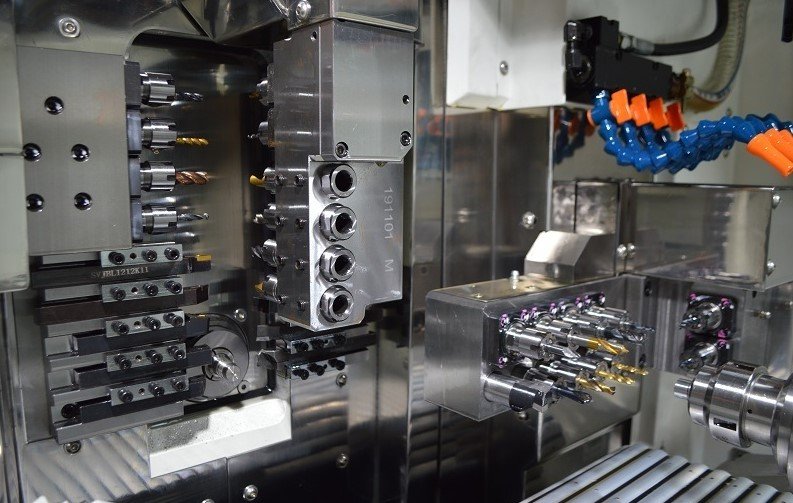
Production capacity plays a major role when selecting CNC equipment for small and precision components. A machine that cannot keep up with demand may create delays, while an oversized machine can increase investment and operating costs without delivering enough additional value.
When evaluating a swiss CNC lathe for sale, start by estimating your actual production requirements. Part volume, cycle time, operating hours, tooling, material supply, and automation all influence how many components the machine can produce efficiently.
Start With Your Monthly Production Target
The first step involves determining how many finished components your business needs each month. Review current orders, expected growth, and typical production fluctuations rather than relying only on your busiest month.
For example, a business producing 5,000 components per month has different equipment requirements from a manufacturer producing 50,000. Understanding this target helps narrow down suitable machine specifications.
You should also consider whether production involves one high-volume part or several different components. Frequent product changes may reduce the available machining time.
Calculate The Required Cycle Time
Cycle time refers to how long the machine takes to complete one component. It provides a useful starting point for estimating production capacity.
Suppose a component requires 90 seconds of machining time. A theoretical calculation could estimate output based on the available production hours. Real production, however, also includes setup, inspection, tool changes, material loading, and occasional downtime.
A practical capacity estimate should therefore account for these factors instead of using spindle running time alone.
Consider Your Available Machine Hours
The number of hours available each day has a direct effect on output. A single-shift operation may require a different capacity from a facility that runs two or three shifts.
When estimating your needs, consider:
- Working hours per shift
- Number of operating days
- Planned maintenance
- Setup and changeover time
- Operator availability
- Expected downtime
This approach gives you a more realistic production target.
Factor In Setup And Changeover Time
High production volume does not always mean continuous machining of one component. Manufacturers often switch between different part designs, materials, and tool configurations.
Every changeover consumes production time. Complex parts may require additional programming, tooling adjustments, inspection, and workholding preparation.
A machine that supports efficient setup procedures can help maintain useful production capacity when your product range includes multiple small components.
Look At Automation Options
Automation can influence practical production capacity significantly. Features such as automatic bar feeding can reduce interruptions caused by manual material loading.
For long production runs, automation helps the machine continue machining with fewer operator interventions. It also allows operators to oversee other tasks while the equipment handles repetitive operations.
The right automation level depends on your production volume, labor availability, part design, and desired operating schedule.
Match Capacity To Part Complexity
Two machines with similar spindle speeds may produce very different numbers of finished components. Part complexity determines how many machining operations each component requires.
A simple turned part may require only a few operations. A complex precision component may require turning, drilling, threading, milling, grooving, and other processes.
Multi-axis machining capabilities can help complete several operations within one setup. This may reduce handling and improve workflow for complex small parts.
Check Spindle Speed And Machining Performance
Spindle performance also affects production potential. Small precision components often require cutting conditions that differ from those used for larger workpieces.
A suitable spindle should provide the speed and stability required for your materials and part dimensions. High-speed machining capabilities may help reduce cycle times for appropriate applications.
However, maximum spindle speed alone should not determine your choice. Rigidity, tool performance, machine accuracy, and cutting stability also influence actual output.
Consider Tool Capacity
Tool capacity becomes increasingly important as part complexity grows. A machine with insufficient tooling options may require additional setups or frequent tool changes.
Adequate tool capacity allows more operations to remain within the same machining cycle. It can also support production flexibility when manufacturers handle multiple component designs.
Review the number and types of tools required for your regular jobs before selecting equipment.
Account For Material And Bar Feeding
Material handling can affect production capacity just as much as machining speed. Swiss-type CNC machines commonly process bar stock, making reliable material feeding important for continuous production.
Consider the diameter range of your usual materials and the compatibility of the machine with your preferred bar feeder. Efficient material handling can reduce interruptions during extended production runs.
Your material selection also affects cutting speeds, tooling, chip formation, and cycle times.
Leave Some Capacity For Future Growth
Selecting equipment based solely on today’s workload may create limitations later. Production requirements can increase as your customer base expands or new contracts arrive.
A small capacity buffer provides room for higher demand without immediately requiring another machine. However, excessive spare capacity can increase costs without providing a meaningful return.
A balanced approach considers current demand alongside realistic growth expectations.
Evaluate Capacity Per Machine
Production planning becomes easier when you calculate expected output per machine. Compare your required monthly volume with the practical output of each potential setup.
For instance, if one machine can reliably produce 20,000 components per month under your actual operating conditions, a 60,000-piece monthly requirement may require multiple machines or additional shifts.
This calculation also helps you determine whether automation or faster machining could reduce the number of machines required.
Think About Quality Alongside Quantity
High output has little value when parts fail inspection. Precision manufacturers need to balance production speed with dimensional accuracy and repeatability.
Aggressive cycle-time reductions may increase tool wear or affect surface finish when cutting conditions do not suit the material. Consistent quality should therefore remain part of every capacity calculation.
JSWAY focuses on CNC machining equipment designed for precision production applications. Reviewing machine specifications alongside your quality requirements can help you establish a realistic capacity target.
Compare Total Production Efficiency
Production capacity involves more than the number of parts produced per hour. A better evaluation considers the complete manufacturing process.
Look at machining time, setup requirements, tooling changes, material loading, inspection, maintenance, and operator involvement. These factors determine how much useful production you receive from the machine.
A slightly slower machine may deliver better overall productivity when it offers easier setup, reliable operation, and fewer interruptions.
Choose Capacity Based On Your Actual Workflow
The right production capacity depends on your part volume, cycle times, operating hours, complexity, and future demand. Start with your monthly requirements, then calculate realistic machine output using actual production conditions.
When comparing equipment, avoid selecting a machine based only on its maximum specifications. JSWAY CNC solutions can be evaluated according to the machining requirements, production targets, and precision needs of your application.
A well-matched machine gives you enough capacity to meet demand while maintaining quality, controlling operating costs, and leaving reasonable room for future growth.