
Selecting suitable food packaging is an important decision for restaurants, takeaway businesses, and food delivery services. Different meals have different packaging requirements depending on their temperature, texture, moisture content, and portion size. A container that works well for burgers may not be suitable for soups, fried snacks, or complete meal combinations.
Choosing the right Fast Food Boxes helps businesses protect food quality, improve presentation, and make transportation more convenient. The right packaging also reduces leakage, prevents unnecessary food damage, and supports a better customer experience. Understanding the needs of different meal categories makes it easier to select practical and reliable packaging solutions.
1. Understand the Food Packaging Requirements
Before selecting a food box, businesses should evaluate the characteristics of the meals they serve. Packaging requirements can vary significantly depending on the type of food and how it will be consumed.
Several important factors should be considered:
- Food temperature: Hot and cold meals may require different material properties and storage conditions.
- Moisture content: Foods containing sauces, oils, or liquids need suitable leak-resistant packaging.
- Food texture: Crispy products require packaging that helps manage steam and condensation.
- Portion size: The container should provide sufficient space without allowing excessive movement.
- Transportation time: Meals traveling longer distances may require stronger structures and more secure closures.
- Serving convenience: Packaging should be easy for customers to open, carry, and use.
Considering these factors before purchasing packaging can help restaurants avoid common problems.
2. Choosing the Right Boxes for Burgers
Burgers are among the most common takeaway food products. Their packaging needs to maintain the shape of the assembled burger while preventing ingredients from shifting during transportation.
Important Features to Consider
Burger boxes should have enough internal space to accommodate the bun, meat, vegetables, cheese, and sauces without compressing the ingredients.
A strong paperboard or suitable food-grade packaging structure can provide the necessary support. Grease-resistant materials are also useful because burgers may contain oils and sauces that can affect ordinary paper packaging.
Ventilation should be considered as well. Excessive trapped steam can make burger buns soft and affect the overall texture.
3. Selecting Boxes for French Fries and Fried Snacks
French fries, onion rings, chicken nuggets, and similar snacks require packaging that balances food protection with ventilation.
These products are usually served hot and can release steam after cooking. If moisture becomes trapped inside a completely sealed container, crispy foods may lose their texture.
Recommended Packaging Characteristics
- Open-top or appropriately ventilated designs.
- Grease-resistant paper materials.
- Lightweight structures for convenient handling.
- Suitable dimensions to prevent overcrowding.
- Stable bases that reduce accidental spilling.
For delivery orders, businesses should also consider how the snack containers will fit inside larger takeaway bags.
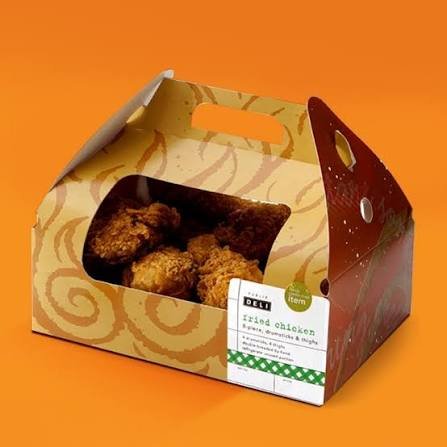
4. Choosing Packaging for Fried Chicken
Fried chicken requires containers that can support relatively heavy portions while helping maintain the product’s appearance and texture.
Packaging should be strong enough to hold multiple pieces without bending or losing its shape. Grease resistance is particularly important because fried chicken can release oil during storage and transportation.
Ventilation is another important consideration. Proper airflow can help reduce condensation, although packaging design alone cannot completely prevent moisture-related texture changes.
Restaurants should also consider whether individual serving boxes or larger family-sized containers are more appropriate for their menu.
5. Finding Suitable Boxes for Sandwiches and Wraps
Sandwiches and wraps are often prepared with soft bread, vegetables, cheese, meat, and sauces. Their packaging should protect these ingredients from crushing and excessive movement.
Key Selection Factors
A sandwich box should have dimensions that fit the product properly. Oversized containers may allow the sandwich to move around, while undersized packaging can compress its ingredients.
For wraps, rectangular or elongated packaging may provide a better fit. Some designs also allow customers to access part of the food without removing the entire product.
Food businesses should select materials that maintain their structure and are appropriate for the moisture content of the ingredients.
6. Selecting Boxes for Pizza and Similar Baked Foods
Pizza and other baked products require packaging that accommodates their shape, size, and serving temperature.
Pizza boxes are generally designed with a flat base and a protective top that provides sufficient internal space. The structure should remain stable when carrying the product and stacking multiple orders.
Corrugated cardboard is commonly used because its layered construction provides strength and cushioning.
For smaller baked products, such as pastries and garlic bread, compact paperboard containers may be more practical. Businesses should choose dimensions that protect the food without wasting unnecessary packaging material.
7. Choosing Containers for Rice and Complete Meals
Rice dishes, noodles, grilled meals, and combination platters often contain several ingredients. Their packaging should provide enough capacity while preventing different food components from mixing unnecessarily.
Consider Compartmentalized Designs
Compartmentalized meal boxes are useful when a dish includes rice, meat, vegetables, and side items. Separate sections help maintain the arrangement of the meal during transportation.
For meals containing sauces or gravies, businesses should check the container’s resistance to leakage and moisture.
A secure closure is also important because liquid-rich foods can spill if containers are tilted during delivery.
8. Selecting Packaging for Salads and Cold Meals
Cold meals have different packaging requirements from hot takeaway products. Salads, fruit portions, sandwiches, and chilled snacks need containers that help maintain cleanliness and protect delicate ingredients.
Suitable packaging should offer:
- Enough space to prevent vegetables and other ingredients from being compressed.
- Secure closures to reduce contamination risks.
- Materials suitable for the intended storage temperature.
- Transparent lids where product visibility is important.
- Appropriate resistance to moisture and condensation.
For salads served with dressing, separate sauce containers can help prevent ingredients from becoming soggy before consumption.
9. Choosing Boxes for Desserts and Bakery Products
Cakes, cookies, brownies, donuts, and pastries require packaging that protects their appearance and texture.
Delicate desserts can become damaged if containers are too small or lack sufficient structural support. Bakery boxes should therefore provide appropriate internal clearance and a stable base.
For products with icing or decorative toppings, sufficient height is important to prevent the packaging from touching the food.
Transparent windows can also be useful for displaying bakery products without opening the container.
10. Compare Different Food Packaging Materials
The material used in a food box influences its durability, appearance, and suitability for specific meals.
Paperboard
Paperboard is widely used for takeaway food packaging because it is lightweight, printable, and available in different thicknesses. It works well for many dry and moderately greasy food applications when appropriately designed.
Kraft Paper
Kraft paper is popular for its natural appearance and practical strength. It is commonly used for sandwiches, snacks, and selected takeaway meals.
Special treatments may be necessary when packaging foods with higher grease or moisture content.
Corrugated Cardboard
Corrugated cardboard features a fluted middle layer that provides additional structural support. It is particularly useful for larger containers and packaging that requires greater strength.
Coated Paper Packaging
Some food containers use specialized coatings to improve resistance to moisture and grease. However, businesses should check the coating’s food-contact suitability and its effect on recycling or disposal options.
11. Consider Food Safety and Packaging Standards
Food safety should always be a priority when selecting takeaway packaging. Materials must be appropriate for their intended food-contact applications and comply with relevant regulations.
Restaurants should pay attention to the following points:
- Confirm that materials are suitable for the intended food type.
- Check whether packaging can tolerate the expected serving temperature.
- Review the suitability of inks, adhesives, and protective coatings.
- Ensure packaging is stored in clean and dry conditions.
- Follow supplier instructions for handling and use.
Choosing appropriate materials helps reduce contamination risks and supports consistent food handling practices.
12. Evaluate Packaging Costs and Business Requirements
Price is an important purchasing factor, especially for restaurants that use large quantities of disposable containers.
However, selecting packaging based only on the lowest unit cost can create problems if the containers lack sufficient strength or functionality.
Businesses should compare packaging options according to their overall performance.
Important considerations include:
- Unit cost and bulk purchasing prices.
- Minimum order quantities.
- Material quality and durability.
- Customization and printing charges.
- Storage requirements.
- Supplier production capacity.
- Delivery schedules and consistency.
Testing samples before making a large purchase is a practical way to identify potential weaknesses and ensure the packaging meets actual restaurant requirements.
13. Look for Practical and Sustainable Packaging Options
Environmental considerations are becoming increasingly important in the food service industry. Many businesses are looking for packaging that reduces unnecessary material use while maintaining food protection.
Paper-based packaging, recyclable materials, and responsibly sourced fibers can be considered depending on the application and available waste management facilities.
Restaurants should also evaluate whether packaging is appropriately sized for their meals. Avoiding unnecessarily large containers can reduce material consumption and improve storage efficiency.
Compostable packaging may be another option where suitable composting facilities are available. Businesses should verify the relevant certifications and disposal requirements rather than assuming every paper-based or biodegradable product is environmentally preferable.
14. Test Packaging Before Placing Bulk Orders
Even when packaging specifications appear suitable, practical testing is important before purchasing large quantities.
Restaurants can evaluate samples using their actual menu items and typical delivery conditions.
A useful testing process includes:
- Checking whether the meal fits comfortably inside the container.
- Testing closures to identify potential leakage.
- Evaluating the packaging after holding hot or cold food.
- Checking for grease penetration and moisture damage.
- Assessing how containers perform during stacking and transportation.
- Gathering feedback from employees who handle orders.
These checks help businesses identify packaging problems early and select products that perform consistently.
The Importance of Working with a Reliable Packaging Supplier
A dependable packaging supplier can help restaurants identify suitable materials, dimensions, and designs for different food categories.
Businesses should evaluate a supplier’s product range, manufacturing capabilities, quality control procedures, customization services, and delivery reliability.
Clear communication about food applications and technical requirements also helps suppliers recommend more appropriate solutions.
Companies such as Uchampak operate in the food packaging sector, where product variety and application-specific designs are important considerations for businesses purchasing takeaway containers.
Conclusion
Choosing the right food boxes for different types of meals requires careful consideration of food characteristics, packaging materials, dimensions, and transportation conditions. Burgers need secure containers, fried snacks benefit from appropriate ventilation, and complete meals may require compartmentalized designs. Similarly, sandwiches, salads, desserts, and baked products each have their own packaging requirements.
By evaluating these factors, restaurants and takeaway businesses can select packaging that protects food quality, improves presentation, and supports efficient daily operations. Testing samples and working with reliable suppliers can further help businesses maintain consistent packaging standards while meeting customer expectations.