
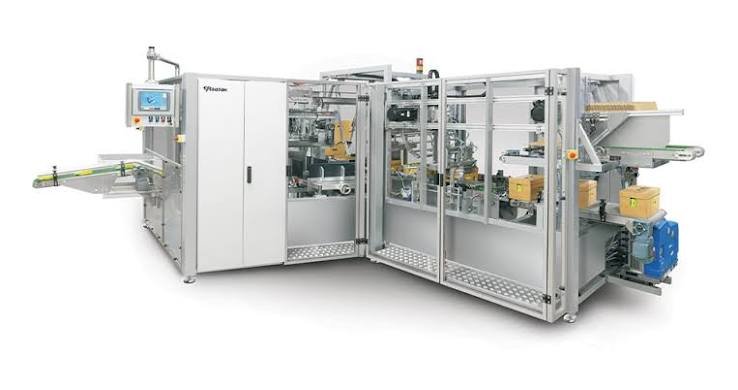
Packaging is an essential part of modern manufacturing because it prepares finished products for storage, transportation, distribution, and retail display. As production volumes increase, businesses need reliable systems to organize products, pack them into shipping containers, secure loads, and prepare orders for delivery. These final operations help maintain product quality while supporting efficient supply chain management.
Different industries have different packaging requirements depending on product size, weight, material, fragility, and distribution conditions. End of Line Packaging Machinery helps manufacturers automate essential processes such as case packing, carton sealing, labeling, palletizing, and stretch wrapping. Understanding how these systems are used across industries makes it easier to identify suitable technologies for specific production environments.
1. Food and Beverage Manufacturing
Food and beverage manufacturers often operate high-volume production lines that require consistent packaging speed and reliable product handling. Finished goods must be packed securely while meeting hygiene, labeling, and distribution requirements.
End-of-line equipment supports several operations in this industry.
Common Applications
- Case packing: Places packaged food products, bottles, cans, or cartons into shipping cases.
- Carton sealing: Closes corrugated boxes to prepare products for transportation.
- Multipack packaging: Groups individual products into larger retail or distribution packages.
- Palletizing: Arranges finished cases into organized pallet loads.
- Stretch wrapping: Secures palletized products for warehouse storage and shipping.
For example, a beverage manufacturer may use automatic case packing to organize bottles into cartons, followed by carton sealing, palletizing, and stretch wrapping. These connected processes help maintain consistent packaging arrangements and reduce repetitive manual handling.
Food manufacturers must also consider equipment materials, cleanability, and compatibility with applicable food safety procedures.
2. Pharmaceutical and Healthcare Industries
Pharmaceutical manufacturers require careful packaging processes because products often have strict identification, traceability, and handling requirements.
End-of-line machinery can support the final stages of packaging for medicine cartons, healthcare supplies, medical consumables, and other regulated products.
Typical applications include:
- Carton packing and case forming.
- Tamper-evident packaging operations.
- Label application and verification.
- Barcode printing and inspection.
- Product counting and checkweighing.
- Case sealing and pallet preparation.
Accuracy is particularly important in pharmaceutical packaging. Incorrect labels, missing identification information, or damaged cartons can create quality and compliance concerns.
Manufacturers should select equipment that supports their validated processes, documentation requirements, and applicable regulatory standards. Automated inspection and serialization technologies may also be integrated where required.
3. Cosmetics and Personal Care Manufacturing
Cosmetics and personal care products are available in many packaging formats, including bottles, tubes, jars, cartons, and multipacks. Their final packaging operations must protect products while maintaining an attractive presentation.
End-of-line machinery is commonly used to pack skincare products, shampoos, lotions, fragrances, makeup items, and personal hygiene products.
Typical Equipment Applications
Automatic case packing: Places individual product cartons or containers into shipping cases.
Carton sealing: Secures boxes for distribution and storage.
Labeling systems: Apply product identification, shipping, or logistics labels.
Robotic handling: Transfers products between packaging stations where suitable gripping systems are available.
Palletizing and wrapping: Prepares bulk shipments for warehouse handling.
Because cosmetic brands may produce many product variations, flexible equipment and convenient changeover features can be important selection criteria.
4. E-Commerce and Fulfillment Operations
Online retail has increased the need for efficient order preparation and shipping operations. E-commerce fulfillment centers process a wide variety of products and package configurations, often under tight delivery schedules.
End-of-line machinery helps organize completed orders before they enter the distribution network.
Common applications include:
- Automatic carton forming.
- Order consolidation and case packing.
- Shipping label application.
- Carton sealing.
- Dimension and weight measurement.
- Sorting and pallet preparation.
For example, an e-commerce facility may use carton erectors to prepare shipping boxes, automated systems to close completed packages, and print-and-apply labeling equipment to attach delivery information.
The ability to handle different carton sizes is particularly useful for fulfillment operations that process products of varying dimensions.
5. Electronics and Electrical Equipment Manufacturing
Electronic products often require packaging that protects sensitive components from physical damage, dust, moisture, and electrostatic discharge where applicable.
End-of-line machinery is used to prepare products such as computers, mobile devices, electrical accessories, cables, and household electronics for distribution.
Applications include:
- Packing electronic products into protective cartons.
- Arranging accessories and documentation.
- Sealing shipping boxes.
- Applying identification and tracking labels.
- Palletizing finished cartons.
- Wrapping bulk shipments for transportation.
Some electronic products require specialized inner packaging, cushioning materials, or antistatic protection before the outer shipping carton is sealed.
Manufacturers should ensure that automated handling equipment does not apply excessive pressure or cause damage to delicate products.
6. Automotive and Auto Parts Manufacturing
The automotive industry produces a wide range of components, from small fasteners and electrical parts to heavy mechanical assemblies. These products require different packaging arrangements depending on their size, weight, shape, and transportation requirements.
End-of-line systems help manufacturers organize finished components into shipping units.
Common applications include:
- Packing automotive parts into cartons or industrial containers.
- Counting and grouping small components.
- Sealing boxes for shipment.
- Labeling parts for identification and traceability.
- Palletizing heavy cartons or containers.
- Securing loads for warehouse transportation.
Robotic palletizing may be useful when handling heavy packages or repetitive stacking patterns. Conveyor systems can also connect packing stations with inspection and palletizing equipment.
The packaging method should provide suitable protection against movement, impact, corrosion, and other risks during storage and transportation.
7. Chemical and Industrial Product Manufacturing
Chemical and industrial manufacturers handle products in different forms, including powders, granules, liquids, and solid materials. Packaging requirements depend on product characteristics, container types, and safety considerations.
End-of-line equipment may support the packaging of sealed chemical containers, bags, drums, pails, and cartons.
Typical applications include:
- Case packing of smaller containers.
- Bag stacking and palletizing.
- Drum and pail handling.
- Carton sealing and labeling.
- Pallet wrapping.
- Load stabilization before shipment.
For products that require special handling, machinery must be suitable for the operating environment and packaging materials. Manufacturers should also consider dust control, chemical compatibility, ventilation, and relevant safety requirements.
8. Agriculture and Agricultural Processing
Agricultural processing facilities handle products such as seeds, grains, fertilizers, animal feed, and processed agricultural goods. These products may be packaged in bags, sacks, cartons, or larger containers.
End-of-line equipment supports the preparation of these packages for distribution to wholesalers, retailers, farms, and industrial customers.
Common applications include:
Bag palletizing: Arranges filled bags into organized pallet patterns.
Case packing: Groups smaller agricultural products into shipping cartons.
Conveyor transfer: Moves filled packages between weighing, inspection, and palletizing stations.
Stretch wrapping: Secures completed pallet loads for storage and transportation.
Agricultural packaging facilities often handle dusty or demanding operating conditions. Equipment selection should therefore account for durability, cleaning requirements, product characteristics, and the expected production environment.
9. Household Goods and Consumer Products
Household goods manufacturers produce items such as cleaning supplies, kitchen accessories, storage containers, home décor, and general consumer products.
These products may differ significantly in shape, size, weight, and packaging format. End-of-line machinery helps organize finished goods into shipping cartons and prepare them for distribution.
Typical applications include:
- Grouping multiple products into cases.
- Packing bottles and containers.
- Sealing corrugated cartons.
- Applying shipping labels.
- Palletizing mixed or uniform product cases.
- Wrapping completed pallet loads.
Manufacturers with frequent product changes may benefit from adjustable equipment and programmable packaging settings.
10. Building Materials and Construction Products
Building materials often involve heavy, bulky, or irregularly shaped products that require specialized packaging and handling.
Examples include tiles, flooring materials, hardware, insulation products, fittings, and selected construction accessories.
End-of-line machinery may be used for:
- Carton packing of tiles and fittings.
- Bundling construction accessories.
- Strapping and securing product packages.
- Palletizing heavy cartons.
- Stretch wrapping large loads.
- Preparing finished products for warehouse storage.
Equipment must be selected according to load capacity, package dimensions, and the physical properties of the materials. Heavy-duty conveyors and palletizing systems may be necessary for demanding applications.
11. Textile and Apparel Manufacturing
Textile and apparel manufacturers produce clothing, fabrics, household textiles, and accessories that require organized packaging before distribution.
Although many textile products are lightweight, they can have different packaging requirements depending on whether they are folded, rolled, bundled, or placed in protective bags.
Common end-of-line applications include:
- Grouping garments into cartons.
- Packing folded textiles.
- Sealing shipping boxes.
- Applying product and logistics labels.
- Sorting packages by order or destination.
- Palletizing cartons for bulk distribution.
Automated case packing and labeling can help larger apparel facilities manage high order volumes while maintaining organized shipping operations.
12. Logistics, Warehousing, and Distribution Centers
Warehouses and distribution centers receive finished goods from multiple manufacturers and prepare them for onward transportation. Their packaging requirements often focus on load stability, accurate identification, and efficient movement.
End-of-line machinery can support warehouse operations through:
- Conveyor-based carton movement.
- Automatic weighing and dimension measurement.
- Shipping label application.
- Carton sealing and sorting.
- Palletizing and depalletizing.
- Stretch wrapping and load stabilization.
These systems can be integrated with warehouse management and tracking technologies to improve package identification and material flow.
In facilities processing large quantities of goods, automation can reduce manual handling and help maintain consistent shipping procedures.
13. How Different Industries Choose Suitable Packaging Equipment
Although end-of-line systems perform similar basic functions, each industry must evaluate its own operational requirements before selecting machinery.
Important considerations include:
Product Characteristics
Manufacturers should examine product weight, dimensions, fragility, shape, and sensitivity to environmental conditions.
Packaging Format
The equipment must support the required cartons, bags, bottles, containers, pallets, and protective materials.
Production Capacity
Machine speed should match production output while allowing enough capacity for future business growth.
Hygiene and Safety Requirements
Food, pharmaceutical, and chemical applications may require specialized equipment designs and operating procedures.
Flexibility
Facilities handling several product types should consider adjustable settings, quick changeovers, and modular configurations.
Integration
New equipment should communicate and operate effectively with existing conveyors, inspection systems, filling lines, and warehouse processes.
14. Benefits of Industry-Specific End-of-Line Automation
Selecting equipment based on actual industry requirements can improve packaging operations in several ways.
Consistent packaging quality: Automated systems help maintain repeatable case formation, sealing, labeling, and pallet arrangements.
Reduced manual handling: Conveyors and automated handling equipment can limit repetitive lifting and product transfers.
Improved production flow: Connected machines help products move through final packaging stages with fewer interruptions.
Better shipment preparation: Palletizing and wrapping systems create organized loads that are easier to store and transport.
Greater operational visibility: Sensors and monitoring systems can provide information about machine status, production output, and potential faults.
The actual benefits depend on equipment configuration, operating conditions, maintenance practices, and the level of automation implemented.
Conclusion
End-of-line packaging machinery supports a wide range of industries, including food and beverage, pharmaceuticals, cosmetics, electronics, automotive manufacturing, agriculture, construction, and e-commerce. Although each sector has different packaging challenges, common requirements include secure case packing, accurate labeling, reliable sealing, organized palletizing, and safe transportation preparation.
Manufacturers should evaluate product characteristics, packaging materials, production volume, hygiene requirements, and integration needs before investing in automation. A carefully selected system can improve packaging consistency, reduce unnecessary handling, and support efficient distribution operations. Businesses exploring suitable packaging technologies can also consider industry resources from Techflow Pack when evaluating equipment options for their end-of-line processes.