

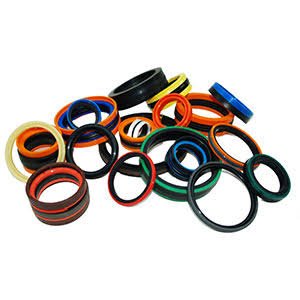
Hydraulic seals are essential components in industrial systems because they prevent fluid leakage, maintain pressure, and protect machinery from external contamination. They are used in construction equipment, agricultural machinery, manufacturing systems, mining vehicles, and many other applications. Producing reliable seals, however, involves several technical challenges related to material selection, product design, manufacturing accuracy, and quality control.
A professional Hydraulic Seals Manufacturer must address these challenges through appropriate engineering methods, controlled production processes, and comprehensive product testing. Understanding common manufacturing problems and their solutions helps equipment producers and industrial buyers evaluate sealing products more effectively and make informed decisions.
1. Selecting the Right Material for Different Applications
Material selection is one of the most important challenges in hydraulic seal manufacturing. Seals operate under different pressure levels, temperatures, movement speeds, and fluid conditions. A material that performs well in one hydraulic system may not be suitable for another.
For example, some materials may swell when exposed to incompatible fluids, while others may lose flexibility at low temperatures or deteriorate under excessive heat.
How Manufacturers Solve This Challenge
Manufacturers evaluate the operating conditions before selecting a suitable material. Common options include:
- Nitrile rubber (NBR): Commonly used with compatible petroleum-based hydraulic fluids.
- Polyurethane (PU): Offers strong abrasion resistance and mechanical durability.
- PTFE: Provides low friction and broad chemical resistance.
- Fluorocarbon (FKM): Suitable for applications requiring resistance to elevated temperatures and certain chemicals.
- EPDM: Used in applications involving compatible water-based fluids.
Material testing and compatibility evaluations help manufacturers verify whether a selected compound meets the requirements of the intended application.
2. Maintaining Dimensional Accuracy
<AsyncImage query=”precision measurement hydraulic rubber seal digital caliper industrial quality control” aspectRatio=”16:9″ width=”100%”/>
Hydraulic seals must fit accurately within their designated grooves and housings. Even small dimensional differences can affect installation, sealing contact, friction, and leakage performance.
Manufacturing variations may result from worn tooling, machine calibration problems, inconsistent material processing, or incorrect production settings.
How Manufacturers Solve This Challenge
Manufacturers use precision machining equipment and suitable measurement instruments to control product dimensions.
Common quality control methods include:
- Measuring inner and outer diameters.
- Checking cross-sectional dimensions.
- Inspecting seal lip geometry.
- Verifying groove-related measurements.
- Monitoring dimensional tolerances during production.
- Calibrating measuring instruments regularly.
Digital calipers, micrometers, optical measurement systems, and profile inspection equipment can help maintain dimensional consistency.
For customized seals, approved technical drawings should provide the reference for manufacturing and inspection.
3. Preventing Material Deformation
Hydraulic seals experience compression and mechanical stress during installation and operation. Over time, unsuitable materials or excessive operating conditions may cause permanent deformation.
Compression set is a particularly important concern because a seal needs sufficient recovery capability to maintain effective contact with its mating surfaces.
How Manufacturers Solve This Challenge
Manufacturers select materials with suitable compression characteristics and evaluate their performance through standardized testing.
Compression set testing helps determine how much permanent deformation remains after a material has been compressed under specified conditions.
Engineers may also review:
- Material hardness.
- Elastic recovery.
- Operating temperature.
- Compression levels.
- Seal geometry.
- Expected service cycles.
Appropriate material and design choices help reduce deformation-related sealing problems.
4. Controlling Friction and Wear
<AsyncImage query=”hydraulic cylinder piston rod seal assembly industrial mechanical components closeup” aspectRatio=”16:9″ width=”100%”/>
Hydraulic seals often operate in systems involving repeated movement. Contact between the seal and moving surfaces creates friction, which can gradually cause wear.
Excessive friction may generate heat, increase operating resistance, and accelerate material deterioration. On the other hand, insufficient contact pressure may lead to leakage.
How Manufacturers Solve This Challenge
Manufacturers balance sealing contact and friction through material selection and profile design.
Important considerations include:
- Seal lip geometry.
- Material hardness and elasticity.
- Surface finish of the mating components.
- Lubrication conditions.
- Movement speed.
- Operating pressure.
Materials such as polyurethane and PTFE may be considered for applications requiring particular wear or friction characteristics.
The complete sealing arrangement must be evaluated because performance depends on the interaction between the seal, housing, moving surface, and hydraulic fluid.
5. Preventing Seal Extrusion Under High Pressure
Seal extrusion occurs when sealing material is forced into the clearance gap between mating components under pressure.
This can damage the seal and eventually cause leakage or component failure. The risk may increase when pressure is high, material strength is insufficient, or system clearances are excessive.
How Manufacturers Solve This Challenge
Manufacturers evaluate pressure requirements, material properties, seal geometry, and extrusion gaps during product development.
Possible design solutions include:
- Selecting materials with suitable mechanical strength.
- Using appropriate seal profiles.
- Controlling housing and clearance dimensions.
- Incorporating backup rings where required.
- Evaluating pressure variations and peak loads.
Backup rings help support primary seals by reducing the risk of material being forced into clearance gaps.
The appropriate solution depends on the hydraulic system’s design and operating conditions.
6. Managing Temperature Variations
Hydraulic seals may experience significant temperature changes during equipment operation. High temperatures can accelerate material aging, while low temperatures may reduce flexibility.
These changes can affect the seal’s dimensions, mechanical properties, and ability to maintain effective contact.
How Manufacturers Solve This Challenge
Manufacturers identify the expected operating temperature range before selecting a material.
They may evaluate thermal resistance, low-temperature flexibility, fluid compatibility, and changes in mechanical properties after temperature exposure.
Testing under suitable temperature conditions helps determine whether the material is appropriate for the intended application.
Equipment buyers should provide both normal operating temperatures and any expected temperature extremes when requesting custom seals.
7. Avoiding Manufacturing Defects
Manufacturing defects can affect the appearance, dimensions, and performance of hydraulic seals.
Common defects include:
- Air bubbles or voids.
- Surface cracks.
- Uneven edges.
- Excessive molding flash.
- Incomplete filling.
- Irregular seal profiles.
- Cuts or deformation during handling.
Such problems may result from unsuitable processing conditions, contaminated materials, damaged molds, or inconsistent production procedures.
How Manufacturers Solve This Challenge
Manufacturers use controlled production settings and inspection procedures to reduce defect rates.
For molded seals, important process parameters may include material preparation, mold temperature, pressure, curing time, and cooling conditions.
For CNC-machined products, tool condition, cutting parameters, and machine accuracy require attention.
Visual inspection and dimensional checks help identify defects before products move to packaging and delivery.
8. Maintaining Consistent Quality Across Production Batches
Producing a small quantity of acceptable seals is different from maintaining consistent quality across thousands of components.
Variations in raw materials, production settings, tooling conditions, and machine performance can affect batch consistency.
This challenge is particularly important for equipment manufacturers that require repeated orders with matching specifications.
How Manufacturers Solve This Challenge
A structured quality management system helps maintain consistency across production runs.
Manufacturers can use:
- Approved material specifications.
- Documented production procedures.
- Batch identification systems.
- In-process inspection.
- Statistical process monitoring where appropriate.
- Final product verification.
- Corrective action procedures.
Statistical process control can help production teams identify patterns in manufacturing variation and take action before defects become widespread.
9. Controlling Contamination During Production
Dust, oil residues, metal particles, and other contaminants can affect hydraulic seal manufacturing.
Contamination may interfere with material processing, create surface defects, or become trapped in finished products.
How Manufacturers Solve This Challenge
Manufacturers maintain suitable housekeeping and material-handling procedures throughout production.
Important practices include:
- Keeping work areas clean.
- Storing materials in appropriate conditions.
- Protecting finished products during handling.
- Cleaning molds and manufacturing equipment.
- Inspecting products for visible contamination.
- Using suitable packaging materials.
These controls are especially important for sealing components used in hydraulic systems where cleanliness helps protect internal surfaces and moving parts.
10. Developing Seals for Customized Applications
Different hydraulic systems may require unique seal dimensions, profiles, and material properties. Standard products may not always fit specialized equipment.
Custom manufacturing creates additional challenges because engineers must interpret technical drawings, confirm measurements, select suitable materials, and determine the appropriate production method.
How Manufacturers Solve This Challenge
The process usually begins with a detailed application assessment.
Manufacturers collect information about:
- Cylinder bore and piston rod dimensions.
- Seal groove measurements.
- Operating pressure.
- Temperature range.
- Hydraulic fluid type.
- Movement speed.
- Environmental conditions.
- Required service life.
Engineers then develop a suitable design and may produce prototypes for dimensional or application evaluation before full production.
Clear communication between the customer and manufacturer helps reduce misunderstandings and unnecessary design changes.
11. Meeting Different Industry Requirements
Hydraulic seals are used in industries with very different operating conditions. A seal designed for an indoor industrial press may not be suitable for machinery operating in a dusty construction site or agricultural field.
| Industry | Common Manufacturing Challenge | Typical Solution |
|---|---|---|
| Construction | Dust, vibration, and heavy loads | Durable materials and contamination-control seals |
| Agriculture | Mud, moisture, and temperature changes | Suitable material selection and effective wiper designs |
| Mining | Abrasive particles and demanding operating conditions | Wear-resistant materials and protective sealing arrangements |
| Manufacturing | Repeated movement and consistent production demands | Controlled dimensions and process monitoring |
| Marine | Moisture and specific fluid exposure | Application-appropriate material compatibility |
| Material handling | High loads and repeated cylinder movement | Suitable pressure-resistant sealing designs |
Manufacturers need to understand the application rather than relying on a single standard design for every industry.
12. Ensuring Reliable Quality Testing
<AsyncImage query=”industrial rubber seal material hardness tensile testing laboratory equipment” aspectRatio=”16:9″ width=”100%”/>
Testing is essential for verifying that hydraulic seals meet established technical specifications.
However, selecting suitable tests can be challenging because different materials and applications require different evaluation methods.
Common testing procedures include:
Hardness Testing: Measures resistance to indentation and helps verify material consistency.
Tensile Testing: Evaluates material strength and elongation under controlled conditions.
Compression Set Testing: Measures permanent deformation after sustained compression.
Fluid Compatibility Testing: Examines changes in material properties after exposure to specified fluids.
Dimensional Inspection: Confirms that products meet approved measurements and tolerances.
Pressure and Leakage Testing: Evaluates sealing performance under specified operating conditions.
Manufacturers should use appropriate testing methods and clearly document the results. Relevant ASTM and ISO standards can provide established procedures for particular material and performance evaluations.
13. Managing Production Costs Without Reducing Quality
Manufacturing hydraulic seals involves material expenses, labor, equipment operation, tooling, testing, and packaging. Rising production costs can create pressure to reduce expenses.
However, lowering costs without proper evaluation may affect material quality, manufacturing accuracy, and product reliability.
How Manufacturers Solve This Challenge
Manufacturers can improve cost efficiency through better production planning and process management.
Useful approaches include:
- Reducing material waste.
- Improving machine utilization.
- Maintaining production equipment.
- Optimizing manufacturing cycles.
- Using suitable automation.
- Identifying defects early.
- Improving inventory management.
The objective should be to reduce unnecessary production expenses while maintaining the technical and quality requirements of the finished product.
14. Improving Delivery Times and Production Planning
Industrial customers often require hydraulic seals within specific timeframes, particularly when replacement parts are needed to restore machinery.
Custom orders can be more difficult to schedule because they may involve design evaluation, tooling preparation, material sourcing, and additional testing.
How Manufacturers Solve This Challenge
Effective production planning helps manufacturers coordinate different stages of the order process.
This may involve:
- Confirming technical specifications before production.
- Maintaining appropriate raw material inventory.
- Scheduling machine capacity.
- Monitoring production progress.
- Planning inspection and packaging.
- Communicating expected delivery dates.
Accurate planning can reduce avoidable delays and help customers manage maintenance schedules and equipment production requirements.
15. The Importance of Skilled Employees and Technical Expertise
Modern manufacturing equipment can improve accuracy and efficiency, but skilled employees remain essential.
Engineers are responsible for product design and material evaluation, while production operators monitor manufacturing conditions. Quality inspectors verify product dimensions and test results.
A lack of technical knowledge can lead to incorrect material recommendations, poor production settings, or inadequate inspection procedures.
Manufacturers can address this challenge through employee training, documented work instructions, technical supervision, and regular skills development.
Combining modern equipment with experienced personnel helps maintain more reliable manufacturing operations.
16. How Buyers Can Evaluate a Hydraulic Seal Manufacturer
Industrial buyers should consider more than product pricing when selecting a manufacturing partner.
A suitable manufacturer should demonstrate the ability to meet the technical and quality requirements of the intended application.
Important evaluation factors include:
- Material expertise: Can the manufacturer recommend materials based on fluid, temperature, and pressure requirements?
- Engineering capabilities: Can it produce seals from technical drawings or physical samples?
- Manufacturing accuracy: Does it use appropriate machinery and dimensional inspection methods?
- Quality control: Are raw materials and finished products checked against defined specifications?
- Testing capabilities: Can the company provide relevant material or performance test information?
- Production capacity: Can it handle the required order quantities and delivery schedules?
- Technical communication: Can it clarify specifications and address application-related questions?
Requesting relevant technical documents and inspection records can help buyers evaluate whether a manufacturer is suitable for their requirements.
Conclusion
Hydraulic seal manufacturing involves several challenges, including material selection, dimensional accuracy, friction control, pressure resistance, temperature management, and production consistency. Each issue requires an appropriate solution based on the seal’s design and intended operating environment.
Manufacturers address these challenges through engineering analysis, suitable material selection, controlled production methods, precision inspection, and application-specific testing. Strong quality management and skilled technical personnel also play important roles in maintaining product consistency.
For industrial buyers, understanding these manufacturing challenges makes it easier to evaluate suppliers and select sealing components that match their equipment requirements. A technically capable manufacturer with reliable production and inspection procedures can help support dependable hydraulic system operation across a wide range of industries.