

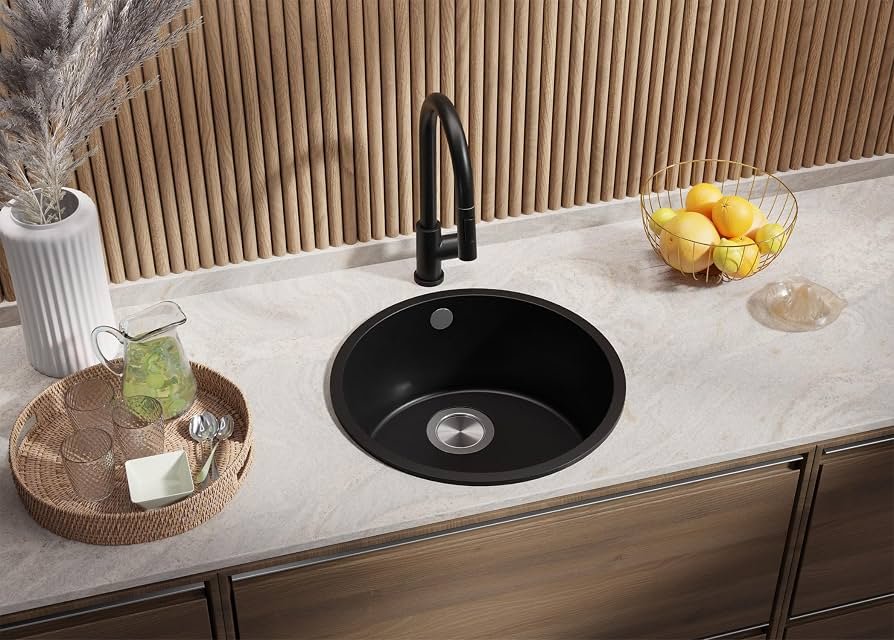
Choosing the right sink size can make everyday kitchen tasks easier and help create a more balanced countertop layout. A sink that is too small may limit washing space, while an oversized model can reduce valuable workspace.
When selecting a Round Granite Sink, homeowners should consider more than the basin’s appearance. Countertop dimensions, cabinet space, sink depth, and daily kitchen habits all play an important role in finding the right size.
Measure Your Available Countertop Space
Start by measuring the area where the sink will be installed. Check the countertop width and depth, as well as the distance between nearby cabinets, appliances, and walls.
Remember to leave enough surrounding counter space for food preparation and other kitchen activities. A sink should fit naturally into the layout rather than occupy more space than necessary.
Check the Cabinet Dimensions
The cabinet underneath the sink determines how large a model can be installed safely. Measure the cabinet’s interior width and check for drawers, supports, shelves, and plumbing that could limit available space.
Always compare these measurements with the manufacturer’s minimum cabinet requirements before purchasing a sink.
Choose the Right Sink Diameter
Round sinks are typically sized according to their diameter. A larger diameter provides more room for washing dishes and cookware, but it also requires more countertop and cabinet space.
For a compact kitchen, a smaller basin may provide a better balance between washing capacity and workspace. Larger kitchens can generally accommodate wider designs more comfortably.
Consider the Sink Depth
Diameter is not the only measurement that matters. The depth of the basin affects how much cookware it can hold and how comfortable it is to use.
A deeper sink can be useful for soaking large pots and reducing splashing. However, an excessively deep basin may require more bending, so consider the height and comfort of everyone who regularly uses the sink.
Think About Your Daily Kitchen Tasks
Your usual kitchen routine should guide the size you choose. If you frequently wash large pans, baking trays, or oversized cookware, additional basin space can be valuable.
For lighter daily use, a smaller round sink may provide all the capacity you need while leaving more room on the countertop.
Consider the Installation Method
The installation style can affect the required sink dimensions and countertop preparation. Undermount and top-mount installations may have different clearance and cutout requirements.
Before selecting a size, check the manufacturer’s installation specifications. This helps ensure that the chosen sink is compatible with the countertop and cabinet structure.
Leave Enough Room for the Faucet
Faucet placement should also be considered when determining the sink’s position and size. Make sure there is adequate space behind or beside the basin for the faucet and any accessories.
If you are replacing an existing sink, check whether the current faucet position will work with the new design. This can prevent unnecessary countertop modifications.
Balance Capacity With Counter Space
A larger sink is not automatically a better choice. While additional basin space can be useful, sacrificing too much preparation space may make the kitchen less convenient.
Try to find a size that provides enough room for your regular washing tasks while preserving a comfortable work area around the sink.
Consider Plumbing Clearance
The sink’s size and depth can influence the amount of room available underneath the countertop. Make sure the drain and plumbing connections will fit without interfering with cabinets or storage.
If the new sink has different dimensions from the existing one, plumbing adjustments may be necessary. Planning this before installation can help avoid unexpected complications.
Final Thoughts
Choosing the right size round granite sink requires a balance between basin capacity, available space, comfort, and installation requirements. Measuring the countertop and cabinet carefully is an important first step.
Consider how you use your kitchen every day, including the size of cookware you regularly wash and the amount of counter space you need for preparation. A properly sized sink can provide practical functionality without compromising the overall layout of the kitchen.